PUBLICAN BUILDER RICH BUSINESSMAN AND OMAGH BOMBING ACCUSED
Publican, builder, rich businessman - and Omagh bombing accused
Monaghan man Colm Murphy, the first man charged with the Omagh atrocity, built up considerable personal wealth during the last 10 years. Jerome Reilly profiles the secretive businessman and convicted terrorist accused in connection with the worst crime of the troubles
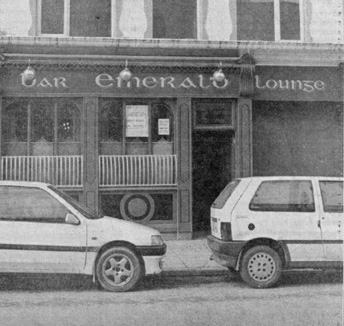
A reproduction Wild West-style repeater rifle hangs from the ceiling of the Emerald Bar in Dundalk above roughly plastered walls adorned with a copy of the Proclamation of Independence and other nationalist memorabilia.
On Thursday night, the Church Street pub had a fair smattering of customers drinking quietly at the bar - their voices rarely raised over Dave Fanning's radio show on high volume on the speakers and two muted TVs bringing the flickering footage of the day's BBC and RTE news.
Less than 48-hours before, the Emerald's owner, Colm Murphy had become the first person charged, north or south, in connection with the worst atrocity in the bloody history of the Northern troubles, the car bomb which tore the heart out of Omagh and robbed 29 people of their lives.
Murphy has been accused of conspiring with another person to cause an explosion likely to endanger life or cause serious injury to property in the State or elsewhere between August 13 and 16 last year.
The other charge laid against him is membership of an unlawful organisation, styling itself the Irish Republican Army, otherwise Oglaigh na hEireann on August 14 last year.
The publican and building contractor had nothing to say in relation to the charges and was remanded in custody until March 18.
In the interim, while Murphy awaits subsequent hearings on the most serious terrorist charges, it appears to be business as usual at the Emerald Bar.
Murphy may own the Church Street lounge, across the road from St Nicholas's Church, but he was an infrequent visitor, in keeping with a ultra low profile approach to his extensive business activities which allowed him to amass considerable personal wealth in a very short space of time.
Despite his middle age, Murphy's business career began in 1985 when he was 34-years-old.
He had a lot of catching up to do following periods in jail in relation to terrorist offences.
Murphy was convicted of firearms charges in 1972 and served a sentence in the high security Portlaoise jail.
Ten years later in 1982 he was convicted in the US of attempting to purchase guns for an illegal organisation. He was released from prison in the US before returning to Ireland in 1985 and he subsequently based himself in Dundalk.
His business interests include the pub, a substantial but highly controversial £1 million a year sub-contracting business which employed between 30 and 40 brick and blocklayers at one time and ownership of a tract of prime building land near Bettystown, Co Meath.
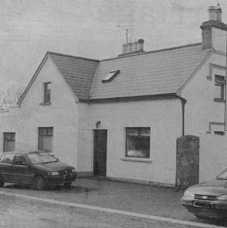
He also owns a modest but recently renovated bungalow home on a prime site at Jordan's Corner, Ravensdale, Dundalk, less than a mile from the border where the larger houses routinely make more than £200,000 at auction or private sale.
Murphy, who is married with grown up children, brought the Emerald about 10 years ago for about £100,000, a decent price at the time for a pub not in a prime locale in the border town.
With a deep sense of irony some locals jokingly refer to the enclave of careworn streets around the pub as Dundalk's "Latin quarter". Now the three-storey pub could be worth £250,000. Murphy used his own building workers to gut the place about two years ago, substantially remodelling the interior.
Colm Murphy incorporated a company Emerald Enterprises Limited in October 1990 naming his wife Anne Murphy (formerly Anne McGeeney from lnniskeen, Co Monaghan) as company secretary and a joint director with him.
Emerald Enterprises failed to make annual returns for the first seven years of trading. In December 1997 returns were filed for 1992, 1993, 1994 1995 and 1996 and a High Court Order reinstating the company was granted.
During the early 90s Murphy was also building up one of the largest sub-contracting businesses in the Irish construction business.
He set up a holding company, Mountkean Constructions Ltd, in 1994 but generally traded under his own name.
Mountkean Constructions, which was dissolved last December, had two directors, Murphy and a 45 year old Irish woman with an address at Flushing, New York.
Sources in the industry said Murphy ran a very tight ship. Although the work was primarily in Dublin most of his brickies were from around the border, Dundalk and his native town of Belleek in Co Monaghan.
The Murphy bus, packed with labourers and tradesmen which left the border counties at dawn was a familiar sight on some of the biggest construction sites in Dublin.
Murphy sub-contracted mostly for the highly respected building company the G & T Crampton Group and had a significant number of workers on site during the £11 million development at Dublin City University in Glasnevin around 1997.
Work was also carried out by Murphy on the £29 million development at the Smurfit Business School at the UCD Belfield Office Park in Clonskeagh as well as a number of other high profile prestige developments.
The business association between Crampton and the 48 year-old sub contractor was mutually beneficial.
Murphy's workers had a reputation for good quality work delivered on time. While the pub looked after itself, Murphy took a hands on approach to the building element of his business interests, according to sources in the trade.
Murphy sub-contracting business took a substantial knock in when it became embroiled in a bitter industrial relations dispute which led to pickets being placed on a number of Crampton building sites.
Although Crampton was the main contractor it did not employ block and bricklayers and subcontracted out the work.
The dispute began following allegations by three workers, members of the Building and Allied Trades Union,(BATU) who said they were sacked by their employer Murphy, who was subcontracting for Crampton.
The workers claimed during subsequent High Court hearings that Murphy or his agent wanted them to sign on the dole at the same time they were working for him.
The workers further claimed that they had always been paid "cash in hand" while working for Murphy.
When they insisted on being paid under the PAYE system they were dismissed, they alleged.
Crampton were blissfully unaware of this controversy brewing on their doorstep until the sacking led to pickets being mounted on their sites.
Injunctions were granted to Crampton preventing the three workers from picketing the £29 million office development under construction by the company at Clonskeagh.
However, the dispute rumbled on for some time spearheaded by a group styling itself "Building Workers Against the Black Economy" and supported by Independent Socialist TD Joe Higgins, until a settlement was reached between the building union, BATU and Crampton.
Shortly afterwards in early summer last year the association between Murphy and Crampton ended.
Despite such extensive and lucrative business interests Murphy adopted a tow key approach to business.
"He chose his friends carefully and you would never see him around the town. For someone who was involved in business he kept a very low profile."
Murphy's usual mode of transport was a blue Ford Transit van, in which he regularly travelled to his sites around Dublin.
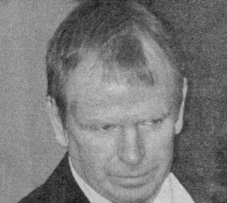
Acquaintances describe him as extremely quiet and reserved.
"He would just look through you. It was hard to get a word out of him," said one source who had business dealings with Murphy.
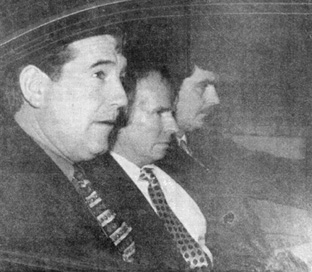
Murphy was arrested at his home at Ravensdale at 7.05am last Sunday under the Offences Against the State Act.
According to evidence given at the 10 minute hearing held amid tight security at the Special Criminal Court in Green Street, Dublin, on Tuesday he replied "nothing to say" after he was cautioned.
During the hearing, Murphy spoke only once, replying "yes" when asked if he was Colm Murphy.
The arrest and charge of the suspect follows more than six months of intensive investigations by the RUC and the Gardai
The Garda team, headed by assistant commissioner Kevin Carty was based in Carrickmacross and have been liaising daily with the RUC in Omagh, swopping intelligence and leads.
Gardai believe the arrest and charge of Murphy is a major development in one of the most difficult and serious cases ever investigated on the island.
Further Information
Related Images