BOLD AND BRAVE AND WELCOME
Bold and brave and welcome
Maurice Hayes
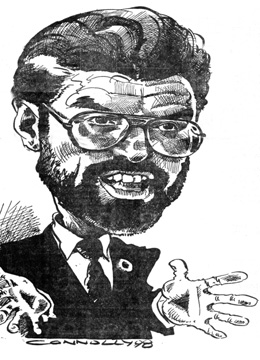
GERRY ADAMS'S statement has been welcomed by both British and Irish governments, and no wonder. It appears to be the first break in the ice which was threatening to prevent the new Executive from berthing. It may well mark the first visible sign of the thaw which will allow discussions to take place between the parties, specifically between Sinn Fein and Ulster Unionists, which would help to remove the main obstacles to political co-operation.
This is a remarkable statement by any standards as the reaction of the world's media has shown. It will be parsed and analysed by those searching for ambiguities, for equivocation, for examples of double talk or Provo-speak.
Most will take comfort from it, others, predictably will interpret it in order to confirm their own scepticism. Anybody who knows anything of the debate within republicanism will recognise it as a quantum leap. It would have been unimaginable at any time in the past 25 years and almost unbelieveable even two years ago.
Gerry Adams may not have granted the popular unionist demand for an unequivocal and unambiguous declaration that the war is over, but he has gone as near as damn it to saying so. The choice of words might be careful in order to raise Republican hackles as little as possible but it leaves no doubt about Sinn Fein's commitment to the political process. To say that violence is a thing of the past, over, done with, and gone, it is as clear a declaration of peace as most people should require. It is an indication of how far Sinn Fein have come in a short time and how far they have succeeded in moving the general republican movement with them. This is an achievement which should be recognised with some degree of generosity.
UNIONIST FEARS
Unfortunately, Sinn Fein are in a way caught by the ambivalence of their relationship with the IRA, and this will be used by sceptical unionists to damn them no matter what they say. Those who have argued that Sinn Fein and the IRA are inextricably linked, part of the same seamless garment, and who demanded that Sinn Fein should declare that the war was over, will now, paradoxically enough, discount and decry the present statement as coming from Sinn Fein the political party, and not from the IRA, the military wing. This is an example of Sinn Fein's declaration that they were separate from the IRA, having been denied and denounced for so long, now being taken at face value and used as a stick to beat them. The reaction of the anti-Agreement unionist parties is predictable enough, but the official unionist response is much more cautious, even mildly welcoming, and shows some appreciation of the political significance of the statement. It cannot be said enough that this is a most significant statement and this has been recognised by the two governments and by the US administration. The timing too is significant in several ways. It comes on the eve of the Clinton visit, obviously as a result of intensive diplomacy by the governments and inter-party discussions. It gives a special significance to the visit which Clinton, embattled as he is on other fronts, will be glad to capitalise on. There is little doubt that he will add his weight to that of Blair and Ahern to push both Unionists and Sinn Fein into a more accommodating frame of mind which will enable progress to be made on the political front. The timing is significant too because, by the time the Assembly resumes on September 14, the Chief Minister and his deputy need to have completed the rounds of talks with the parties which will determine the allocation of posts in the Executive. If this is not done, the North-South bodies cannot be set up by October which is an essential part of the Agreement and the changes to the Irish Constitution which are also integral to a successful outcome will not be enacted. In order to achieve movement it necessary for one side or the other to take the first step.
Gerry Adams has done this and his leadership of the republican movement and his willingness to take significant personal risks should be recognised.
In any case it should provide sufficient cover for David Trimble to meet the Sinn Fein leadership to discuss their potential role in the distribution of posts. It would indeed be preferable for Trimble and Adams to sit down at the same table and begin to engage in a way which enables them to expose their problems to each other and to begin to find a way around them.
DUMPING ARMS
However, and this is not to look a gift horse in the mouth, the Adams' declaration is unlikely, of itself, to be enough. It is enough to open up possibilities: it should be taken at face value by unionists and welcomed as a means of advancing a dialogue which will take serious account of their genuine concerns and seek to address them. In the end of the day however, the unionist attitude is likely to be that words, however well meant, however welcome, on their own are not enough. For Trimble to be able in the end, to sit in an Executive in which Sinn Fein are exercising executive power, some more tangible and more visible evidence of the abandonment of arms is likely to be necessary.
A COMPROMISE position could be reached if a distinction could be made between so-called defensive weapons and those that are manifestly designed for offence and for destruction. This would make a distinction between firearms on the one hand and Semtex on the other. Following Omagh, (irrational as it may be) the most emotive element in the unionist mind, is Semtex. The sudden appearance (or visible and audible disappearance) of a significant quantity of semtex would do more in the short term to allay unionist misgivings and suspicion than almost anything else.
Sinn Fein could help too by formally involving themselves in the work of the Decommissioning Body. Rumours of discussions between Martin McGuinness and General de Chastelaine are probably not unfounded, and maybe confirmed one of these days by the Sinn Fein negotiator becoming the accredited liaison between the Body and the IRA. This would be a welcome development and would confirm the significance of McGuinness's contribution to the progressive change in the position of the republican movement.
One welcome element to the recent IRA statement has been the commitment to help locate the bodies of the disappeared and to ease the pain of their families. If they were now to disavow knee-cappings and punishment beatings, to cease intimidations and expulsions and to allow those banished to return, then people would be more ready to believe that violence was indeed over, done with, gone. It won't all happen overnight, but at least the Adams statement gives considerable grounds for hope that progress can now be made.
Maurice Hayes
GERRY ADAMS'S statement has been welcomed by both British and Irish governments, and no wonder. It appears to be the first break in the ice which was threatening to prevent the new Executive from berthing. It may well mark the first visible sign of the thaw which will allow discussions to take place between the parties, specifically between Sinn Fein and Ulster Unionists, which would help to remove the main obstacles to political co-operation.
This is a remarkable statement by any standards as the reaction of the world's media has shown. It will be parsed and analysed by those searching for ambiguities, for equivocation, for examples of double talk or Provo-speak.
Most will take comfort from it, others, predictably will interpret it in order to confirm their own scepticism. Anybody who knows anything of the debate within republicanism will recognise it as a quantum leap. It would have been unimaginable at any time in the past 25 years and almost unbelieveable even two years ago.
Gerry Adams may not have granted the popular unionist demand for an unequivocal and unambiguous declaration that the war is over, but he has gone as near as damn it to saying so. The choice of words might be careful in order to raise Republican hackles as little as possible but it leaves no doubt about Sinn Fein's commitment to the political process. To say that violence is a thing of the past, over, done with, and gone, it is as clear a declaration of peace as most people should require. It is an indication of how far Sinn Fein have come in a short time and how far they have succeeded in moving the general republican movement with them. This is an achievement which should be recognised with some degree of generosity.
UNIONIST FEARS
Unfortunately, Sinn Fein are in a way caught by the ambivalence of their relationship with the IRA, and this will be used by sceptical unionists to damn them no matter what they say. Those who have argued that Sinn Fein and the IRA are inextricably linked, part of the same seamless garment, and who demanded that Sinn Fein should declare that the war was over, will now, paradoxically enough, discount and decry the present statement as coming from Sinn Fein the political party, and not from the IRA, the military wing. This is an example of Sinn Fein's declaration that they were separate from the IRA, having been denied and denounced for so long, now being taken at face value and used as a stick to beat them. The reaction of the anti-Agreement unionist parties is predictable enough, but the official unionist response is much more cautious, even mildly welcoming, and shows some appreciation of the political significance of the statement. It cannot be said enough that this is a most significant statement and this has been recognised by the two governments and by the US administration. The timing too is significant in several ways. It comes on the eve of the Clinton visit, obviously as a result of intensive diplomacy by the governments and inter-party discussions. It gives a special significance to the visit which Clinton, embattled as he is on other fronts, will be glad to capitalise on. There is little doubt that he will add his weight to that of Blair and Ahern to push both Unionists and Sinn Fein into a more accommodating frame of mind which will enable progress to be made on the political front. The timing is significant too because, by the time the Assembly resumes on September 14, the Chief Minister and his deputy need to have completed the rounds of talks with the parties which will determine the allocation of posts in the Executive. If this is not done, the North-South bodies cannot be set up by October which is an essential part of the Agreement and the changes to the Irish Constitution which are also integral to a successful outcome will not be enacted. In order to achieve movement it necessary for one side or the other to take the first step.
Gerry Adams has done this and his leadership of the republican movement and his willingness to take significant personal risks should be recognised.
In any case it should provide sufficient cover for David Trimble to meet the Sinn Fein leadership to discuss their potential role in the distribution of posts. It would indeed be preferable for Trimble and Adams to sit down at the same table and begin to engage in a way which enables them to expose their problems to each other and to begin to find a way around them.
DUMPING ARMS
However, and this is not to look a gift horse in the mouth, the Adams' declaration is unlikely, of itself, to be enough. It is enough to open up possibilities: it should be taken at face value by unionists and welcomed as a means of advancing a dialogue which will take serious account of their genuine concerns and seek to address them. In the end of the day however, the unionist attitude is likely to be that words, however well meant, however welcome, on their own are not enough. For Trimble to be able in the end, to sit in an Executive in which Sinn Fein are exercising executive power, some more tangible and more visible evidence of the abandonment of arms is likely to be necessary.
A COMPROMISE position could be reached if a distinction could be made between so-called defensive weapons and those that are manifestly designed for offence and for destruction. This would make a distinction between firearms on the one hand and Semtex on the other. Following Omagh, (irrational as it may be) the most emotive element in the unionist mind, is Semtex. The sudden appearance (or visible and audible disappearance) of a significant quantity of semtex would do more in the short term to allay unionist misgivings and suspicion than almost anything else.
Sinn Fein could help too by formally involving themselves in the work of the Decommissioning Body. Rumours of discussions between Martin McGuinness and General de Chastelaine are probably not unfounded, and maybe confirmed one of these days by the Sinn Fein negotiator becoming the accredited liaison between the Body and the IRA. This would be a welcome development and would confirm the significance of McGuinness's contribution to the progressive change in the position of the republican movement.
One welcome element to the recent IRA statement has been the commitment to help locate the bodies of the disappeared and to ease the pain of their families. If they were now to disavow knee-cappings and punishment beatings, to cease intimidations and expulsions and to allow those banished to return, then people would be more ready to believe that violence was indeed over, done with, gone. It won't all happen overnight, but at least the Adams statement gives considerable grounds for hope that progress can now be made.
Further Information
Publisher: IRISH INDEPENDENT
Ref: II/211
Published Date: 02-Sep-98
Related Images