TOWN FALLS SILENT TO REMEMBER ATROCITY
Town falls silent to remember atrocity
Teardrops and rain mingle as community lays bare its grief
NICOLA ANDERSON
AT 3.10pm, Omagh stood still, in a silence broken only by the gentle patter of rain on the pavement and the hum of the outside broadcast units beaming this solemn scene to the rest of the island.
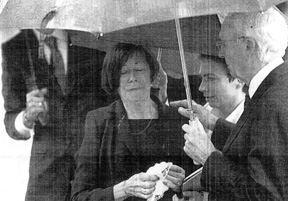
Onlookers bowed their heads, teardrops mingling seamlessly with raindrops amid their bitter grief.
The minute's silence in remembrance was all but redundant - for how could the people of Omagh ever forget the burden of devastating pain and anger which has remained with them for the past decade?
For too many of its citizens, the bomb destroyed their lives, their families, their trust and -for some - their future.
Big, abundant pots of summer annuals make a valiant attempt at cheeriness in the centre of town, where the sales are still in full swing and travel agents advertise the tempting availability of the Turkish lira and US dollar.
The union jack flutters from the courthouse, while in its shadow, in typical juxtaposition, a small newsagents showcases jaunty singing leprechauns and heavily decorated bodhrans in its window.
Elegantly
Nobody could accuse Omagh of being a beautiful town and yet Market Street winds as gracefully and elegantly as a river, from the courthouse down towards the spot where tragedy struck 10 years ago.
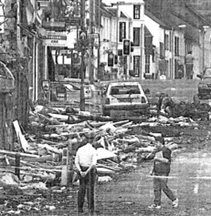
If you look closely, the scars can still be seen on the subtle faultline where the old buildings meet the newly plastered and defiantly gaily painted, closest to where the bomb went off on a sunny summer's morning on August 15, 1998. That day, people unwittingly browsed the shops, unaware of the lethal danger lurking just feet away in the form of a 500lb bomb in the boot of a Vauxhall Cavalier.
The scars on the people of Omagh were all to easy to see yesterday morning, as a man in a well-worn black leather jacket trudged up Market Street and heaved a heavy sigh of depression that sounded all too loudly heartfelt amid the hush of the day.
If an entire town could be said to be suffering from post-traumatic stress disorder, it could, perhaps, be said about Omagh.
On intermittent street corners, PSNI officers kept a casual, though watchful, eye on people's movements, as preparations for the afternoon's memorial service got under way.
Shoppers continued about their business before most of the town's premises closed at 2.30pm, but their voices were muted, their faces downcast.
"How can we forget? The blood flowed down that street. When they planted that bomb, they tore the heart from the town," said one young mother, clutching her young son by the hand, her face twisting bitterly as she spoke.
Another man gazed into the distance as he fought back emotions that rose too easily to the surface as he recalled how he had heard the bang as the bomb went off from his home, though it was four miles away. His children had rushed in, saying it was thunder.
"It was a beautiful sunny day - one of the best days of the summer," he said, adding: "It's still very upsetting for people, 10 years on."
About the bitter controversy that has sadly torn the town in two, with many relatives of those killed or maimed in the blast refusing to attend the ceremony yesterday, he said "the less said the better".
The relatives took the decision not to attend because they said the memorial failed to fully identify the perpetrators, merely describing the victims as "murdered by a dissident republican car bomb", without mentioning the Real IRA specifically.
It is a bitterness understood by Terry Waite, the former Beirut hostage who spoke at the memorial about how no one who had experienced deep suffering could underestimate the power it had.
"It can blind individuals to reason. It can cause them to cry out for revenge. It can tear communities apart," he said.
Optimistic
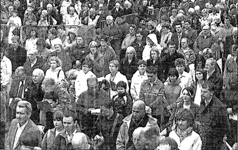
Omagh District Council had optimistically mentioned possible attendance figures of 10,000. In the end, a combination of heavy rain and heavier emotions reduced those numbers to a maximum of 1,000. The ceremony started shortly after 3pm, with music by the joint Omagh Waterford Peace Choir, and chief executive of the council Daniel McSorley read extracts from the Omagh memorial narrative, which took a total of 80 meetings to agree the wording of, and is inscribed on plaques on the walls of the new circular memorial garden.
The focus of the garden is a high-tech "heliostat" which tracks the sunshine and bounces it off 31 poles -representing each of the lives lost - to light up a cracked crystal heart lying at the centre of the glass memorial, marking the spot where the bomb went off.
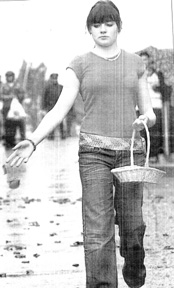
After the minute's silence, guests watched by video link as 12 local children scattered red rose petals on the streets as a symbol of the bloodshed, to a lone piper's mournful lament, before the music switched to a more upbeat tempo.
The message that Omagh wishes to send out was perhaps best summed up in a reading from an anonymous mother, who lost her child in the bombing: "It can be painful to face the facts of our experience and the crisis it has created, yet this is the first step to becoming whole again."
Teardrops and rain mingle as community lays bare its grief
NICOLA ANDERSON
AT 3.10pm, Omagh stood still, in a silence broken only by the gentle patter of rain on the pavement and the hum of the outside broadcast units beaming this solemn scene to the rest of the island.
Onlookers bowed their heads, teardrops mingling seamlessly with raindrops amid their bitter grief.
The minute's silence in remembrance was all but redundant - for how could the people of Omagh ever forget the burden of devastating pain and anger which has remained with them for the past decade?
For too many of its citizens, the bomb destroyed their lives, their families, their trust and -for some - their future.
Big, abundant pots of summer annuals make a valiant attempt at cheeriness in the centre of town, where the sales are still in full swing and travel agents advertise the tempting availability of the Turkish lira and US dollar.
The union jack flutters from the courthouse, while in its shadow, in typical juxtaposition, a small newsagents showcases jaunty singing leprechauns and heavily decorated bodhrans in its window.
Elegantly
Nobody could accuse Omagh of being a beautiful town and yet Market Street winds as gracefully and elegantly as a river, from the courthouse down towards the spot where tragedy struck 10 years ago.
If you look closely, the scars can still be seen on the subtle faultline where the old buildings meet the newly plastered and defiantly gaily painted, closest to where the bomb went off on a sunny summer's morning on August 15, 1998. That day, people unwittingly browsed the shops, unaware of the lethal danger lurking just feet away in the form of a 500lb bomb in the boot of a Vauxhall Cavalier.
The scars on the people of Omagh were all to easy to see yesterday morning, as a man in a well-worn black leather jacket trudged up Market Street and heaved a heavy sigh of depression that sounded all too loudly heartfelt amid the hush of the day.
If an entire town could be said to be suffering from post-traumatic stress disorder, it could, perhaps, be said about Omagh.
On intermittent street corners, PSNI officers kept a casual, though watchful, eye on people's movements, as preparations for the afternoon's memorial service got under way.
Shoppers continued about their business before most of the town's premises closed at 2.30pm, but their voices were muted, their faces downcast.
"How can we forget? The blood flowed down that street. When they planted that bomb, they tore the heart from the town," said one young mother, clutching her young son by the hand, her face twisting bitterly as she spoke.
Another man gazed into the distance as he fought back emotions that rose too easily to the surface as he recalled how he had heard the bang as the bomb went off from his home, though it was four miles away. His children had rushed in, saying it was thunder.
"It was a beautiful sunny day - one of the best days of the summer," he said, adding: "It's still very upsetting for people, 10 years on."
About the bitter controversy that has sadly torn the town in two, with many relatives of those killed or maimed in the blast refusing to attend the ceremony yesterday, he said "the less said the better".
The relatives took the decision not to attend because they said the memorial failed to fully identify the perpetrators, merely describing the victims as "murdered by a dissident republican car bomb", without mentioning the Real IRA specifically.
It is a bitterness understood by Terry Waite, the former Beirut hostage who spoke at the memorial about how no one who had experienced deep suffering could underestimate the power it had.
"It can blind individuals to reason. It can cause them to cry out for revenge. It can tear communities apart," he said.
Optimistic
Omagh District Council had optimistically mentioned possible attendance figures of 10,000. In the end, a combination of heavy rain and heavier emotions reduced those numbers to a maximum of 1,000. The ceremony started shortly after 3pm, with music by the joint Omagh Waterford Peace Choir, and chief executive of the council Daniel McSorley read extracts from the Omagh memorial narrative, which took a total of 80 meetings to agree the wording of, and is inscribed on plaques on the walls of the new circular memorial garden.
The focus of the garden is a high-tech "heliostat" which tracks the sunshine and bounces it off 31 poles -representing each of the lives lost - to light up a cracked crystal heart lying at the centre of the glass memorial, marking the spot where the bomb went off.
After the minute's silence, guests watched by video link as 12 local children scattered red rose petals on the streets as a symbol of the bloodshed, to a lone piper's mournful lament, before the music switched to a more upbeat tempo.
The message that Omagh wishes to send out was perhaps best summed up in a reading from an anonymous mother, who lost her child in the bombing: "It can be painful to face the facts of our experience and the crisis it has created, yet this is the first step to becoming whole again."
Further Information
Publisher: IRISH INDEPENDENT
Ref: II10An/07
Published Date: 16-Aug-08
Related Images