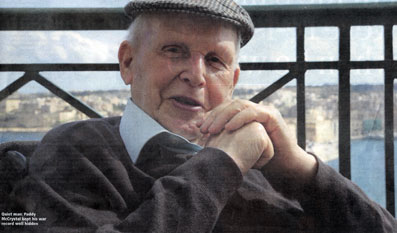
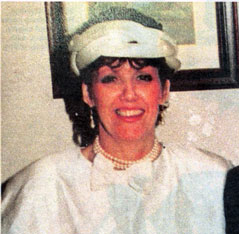
THIS IS THE LATE PADDY MCCRYSTAL
This is the late Paddy McCiystal, a nationalist who was a British Army war hero and POW... his remarkable story only came to light when his daughter died in the Omagh bomb
For years the unassuming telephone engineer hid his regimental tattoos, but a visit from a former Army colleague after the funeral finally revealed his daring military exploits. Ivan Little reports
To the haunting strains of a piper's lament, they laid the quiet man that was Paddy McCrystal to rest on a cold and frosty moming seven months ago in the most tranquil of places in Tyrone, not far from where he had buried his beloved daughter Geraldine who was killed in the Omagh bomb attack twelve-and-a-half years earlier.
And the mourners who also heard a bugler playing the Last Post and Danny Boy at Drumragh cemetery couldn't help but think that if it hadn't been for that dreadful atrocity, they would
never have got to know the man they thought they knew so well because he would probably have taken his secrets to the grave with him. For 92-year-old Paddy - nick-name Packie - was a hero. A reluctant hero who'd fought and nearly died in the British Army but, because of his nationalist background, he never told anyone in his family about his astonishing and selfless service for the Crown before and during the Second World War.
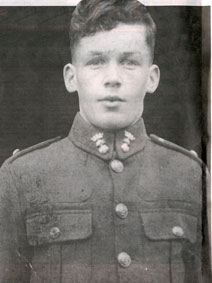
In his nine years in the Royal Irish Fusiliers, which he joined in 1937 as a 17-year-old at St Lucia Barracks in Omagh. Packie was injured during an air raid in Malta, served as a personal guard for General Montgomery in Palestine and was held as a prisoner of war by the Germans.
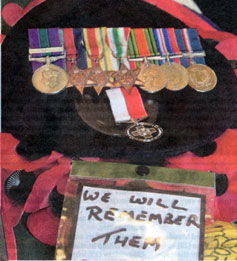
And in the process the man from Beragh, who was one of 16 children, earned himself a chest full of medals which he tried to keep covered up during his first remembrance service 68 years after he left the Army.
But Packie was no stranger to covering up. "And if Omagh hadn't happened, he would have kept on keeping quiet about his military background" says Mary McCartan who has now chronicled her great-uncle's life story in a moving new book called A Long Road to Freedom: An Irishman's Cry For Peace.
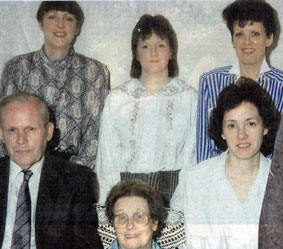
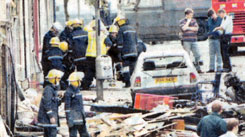
It was only after Packie's 43-year-old daughter Geraldine Breslin was killed in the Real IRA atrocity in Omagh in August 1998 that the truth about the unassuming telephone engineer's hidden past began to unravel.
Mary says: "After Geraldine's passing, a man came to the house and said to Packie's daughters that it was awful that he had lost a daughter like that after all the bombing he had gone through.
They didn't know what he was talking about but it transpired that he was an old Army colleague.
"Bit by bit, Packie started opening up - at the age of 79! His daughter Kate got his medals reissued and the Duchess of Abercorn came to the house to present them to him. Kate encouraged him to go to his first remembrance service in 2004 but at first he wore a coat over the medals until in the middle of it all he thought 'Why should 1 hide them' and took the coat off.
"I think some folk didn't believe Packie. After all he was a well-known figure around the town - a quiet modest man who'd lived a quiet modest life. And people wondered how he'd got the medals.
Then in the last couple of years he began looking to get his story written and he said I was the girl to do it. It has been an amazing journey - emotional and sentimental."
Packie's military career started on the island of Malta and he was there throughout the infamous two year siege by Hitler and Mussolini who bombarded it with thousands of air raids in what was an unsuccessful bid to gain control of the strategically important shipping lanes around it.
Packie, who like everyone else on the island had little food throughout the siege, witnessed what they call the Miracle of Mosta in 1942 when a 200kg Luftwaffe bomb pierced the famous dome of the village church where 300 people were taking refuge but didn't explode. Packie was hiding outside the church.
But his luck ran out just before he was due to leave Malta. Mary says: "He received head injuries in an air raid but his colleagues patched him up because, if he had gone to hospital, he would have been separated from them."
Packie who had been one of General Montgomery's 'minders' during peace-keeping duties in Palestine, left Malta with a hat covering his wounds but his next posting was an equally challenging one - on the Greek island of Leros in the Aegean Sea and again it was bombarded by the Germans who eventually captured it in November 1943.
Along with hundreds of other soldiers, Packie was transported on an horrific 15-day train journey to Germany where he was held as a prisoner of war for 18 gruelling months.
"And one of his jobs was to help bury the tens of thousands of civilians who died in Dresden after the allies devastated the city with bombing raids," says Mary. "It took him three months."
Packie tried to escape from his POW camp but he was captured and ended up in solitary confinement.
On the Fusiliers' return to Northern Ireland, the soldiers were welcomed home as heroes by the Orange Order who gave them £5 each. But Packie McCrystal, who could have done with the money, chose instead to melt back into his own community. "He was a Catholic and a nationalist and he didn't say anything to anyone about his military past, even to Mary, the girl he married," says his great-niece.
The one-time swimmer and runner for his regiment was involved in yet another cover-up... of his arms. "He had tattoos which would have identified him as a British soldier," says Mary "So he never rolled his sleeves up again in public."
Packie returned to Tyrone a very different and wiser man from the inexperienced youth who left it. "He knew very little about the world when he set off on his travels. But he came home with a new way of seeing both sides of the story and an understanding of world politics.
"In his book,he wanted to leave a powerful legacy of peace behind him, a message that revenge will never lead anywhere," says Mary. Late last year, just after taking a turn at the memorial service for the Omagh bomb victims, Packie announced to his family that he was going back to Malta to revisit his old haunts.
"When people discovered he had been with the Fusiliers they shouted Faugh A Ballagh, the regiment's battle cry and they thanked him for protecting their island but on the day before he was due to leave he had a massive heart attack,
"They thought he mightn't make it but he did," says Mary "And it transpired that the hospital he was brought to was in the same place where he was injured in the air raid all those years ago. We stayed with him and he directed me to carry out more research while he was recuperating. And it was during that time that he told us for the first how close he was to the bomb at Mosta."
More revelations followed as Packie conversed with hospital staff in Maltese and spoke freely in German with a doctor who accompanied him home.
"He said he learnt the language from the guards in the POW camp. We never knew that either!" says Mary who read every word of the finished book to Packie after she had completed it.
But she added a postscript to the book after he passed away in January with his family around him. And at Drumragh graveyard hundreds of people braved subzero temperatures to see the war veteran being accorded a military burial which he would never had but for a bombing far far away from the frontline of his war.
Members of the Royal British Legion carried the regimental colours beside his coffin which had his medals and beret sitting proudly on top of it.
For Mary McCartan, the publication of Packie's book has been a rewarding and enriching experience.
"I'm glad 1 helped him do what he needed to do and leave something behind for history. His mantra was that people had to move on with the living and there was no point in lying down with the dead."
But Packie will get the chance soon to give his testimony from beyond the grave. Before he passed away, he recorded interviews for other family members who are hoping to make a documentary about the quite remarkable life of Omagh's quiet man ...
Further Information
Related Images