GARDEN SHINES AS A RAY OF HOPE
Garden shines a ray of hope
Memorial and bombsite connected with constant beam of sunlight
BY VICTORIA O'HARA
vo'hara@belfasttelegraph.co.uk
THE men tasked with creating a memorial marking the 10th anniversary of the Omagh bomb - the single worst terrorist atrocity in Northern Ireland - today reveal it was the most important but toughest job they have ever undertaken.
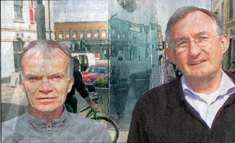
Due to be unveiled today, artist Sean Hillen and landscape architect Desmond Fitzgerald had the enormous responsibility of building a vision of remembrance for the 31 people who lost their lives, including unborn twins.
More than 300 people were physically injured and more than 1,000 were traumatised.
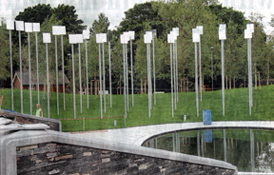
Now, a decade after the town was devastated, the Garden of Light will stand in the heart of the community as a lasting symbol marking the past tragedy.
However, its development has sparked controversy with some families refusing to attend the official opening of the memorial.
But the men, who began the project last April, say they are proud of their work which is also designed to evoke feelings of hope for the future.
After winning a national competition to build the memorial, the men interlinked two designs, a garden and a glass sculpture on the bomb site by one element - light.
The central theme for the design was that "light unites us all in that it makes all life possible".
Mr Hillen, who is based in Dublin but is originally from Newry, said: "One of the big parts of the brief was to connect the bomb site to the garden in both ways and of course the sunlight is a beautiful way to do that."
A heliostatic mirror in the memorial park tracks the sun, and directs a constant beam of sunlight onto 31 small mirrors, each etched with the name of a victim.
They in turn bounce the light via another hidden mirror onto a heart-shaped crystal in an obelisk at the bomb site, which is almost constantly in the shade.
Mr Hillen continued: "The approach to the artwork was that it could remember and honour the victims and offer something to the wider community by attempting to simply, uninhibitedly and vividly express the enormity of the loss and the natural feeling, and the outpouring, of compassion for them.
"I had known about the sun tracking technology and had been keeping it up my sleeve for some public sculpture work, but I didn't know what.
"Then suddenly I realised it was suitable for Omagh.
"We really had to prove that we could do it and that it was thought through. I personally really, really believe in it.
" I even find myself moved just talking about it.
"This image of the heart was hard fought for. But I think it's a really wonderful thing to put a symbol of love at that point, which is in lots of ways a symbol of a terrible kind of suffering and verging on evil to be honest.
While Mr Fitzgerald, from Dublin, said it was important to create a lasting landmark of hope for the people in Omagh.
"There had been so much misery, I think we had to bring a certain lightness and something positive and move forward," he said.
"But apart from that we are very intent in making what was once a scene of terrible tragedy into as beautiful an area as possible."
Mr Hillen said he did feel pressure during the major project: "I knew the importance of it, and I knew it would be under a great deal of scrutiny and I knew that there were an awful lot of constituencies to please with it.
"And beyond it simply being adequate I wanted it to be really marvellous, not least because I wanted it to be something redeeming and positive for the victims for the community at large and for Omagh in particular.
"It is a memorial primarily, but it has to answer to the future. I think this is a life's work, it is probably the most important thing I will ever do, it was definitely the toughest to date."
Mr Hillen acknowledged that it was a delicate and sensitive project, which was organised by the Omagh Memorial Working Group,
which consisted of community groups, churches, local government and business interests.
However, controversy has surrounded the project with some victims' families not planning on attending the memorial service.
Some were unhappy with the wording of a plaque, while others did not agree with the involvement of some politicians.
The council said the ceremony would provide "an opportunity for the bereaved, the injured, the emergency and support services and all of those affected by the bomb to come together with the wider community in an act of remembrance". "We didn't meet with any
of the victims' families about the project, but it was open to their comment," Mr Hillen said.
"And if anyone had wanted to meet we were available to meet. It was a very delicate situation."
Memorial and bombsite connected with constant beam of sunlight
BY VICTORIA O'HARA
vo'hara@belfasttelegraph.co.uk
THE men tasked with creating a memorial marking the 10th anniversary of the Omagh bomb - the single worst terrorist atrocity in Northern Ireland - today reveal it was the most important but toughest job they have ever undertaken.
Due to be unveiled today, artist Sean Hillen and landscape architect Desmond Fitzgerald had the enormous responsibility of building a vision of remembrance for the 31 people who lost their lives, including unborn twins.
More than 300 people were physically injured and more than 1,000 were traumatised.
Now, a decade after the town was devastated, the Garden of Light will stand in the heart of the community as a lasting symbol marking the past tragedy.
However, its development has sparked controversy with some families refusing to attend the official opening of the memorial.
But the men, who began the project last April, say they are proud of their work which is also designed to evoke feelings of hope for the future.
After winning a national competition to build the memorial, the men interlinked two designs, a garden and a glass sculpture on the bomb site by one element - light.
The central theme for the design was that "light unites us all in that it makes all life possible".
Mr Hillen, who is based in Dublin but is originally from Newry, said: "One of the big parts of the brief was to connect the bomb site to the garden in both ways and of course the sunlight is a beautiful way to do that."
A heliostatic mirror in the memorial park tracks the sun, and directs a constant beam of sunlight onto 31 small mirrors, each etched with the name of a victim.
They in turn bounce the light via another hidden mirror onto a heart-shaped crystal in an obelisk at the bomb site, which is almost constantly in the shade.
Mr Hillen continued: "The approach to the artwork was that it could remember and honour the victims and offer something to the wider community by attempting to simply, uninhibitedly and vividly express the enormity of the loss and the natural feeling, and the outpouring, of compassion for them.
"I had known about the sun tracking technology and had been keeping it up my sleeve for some public sculpture work, but I didn't know what.
"Then suddenly I realised it was suitable for Omagh.
"We really had to prove that we could do it and that it was thought through. I personally really, really believe in it.
" I even find myself moved just talking about it.
"This image of the heart was hard fought for. But I think it's a really wonderful thing to put a symbol of love at that point, which is in lots of ways a symbol of a terrible kind of suffering and verging on evil to be honest.
While Mr Fitzgerald, from Dublin, said it was important to create a lasting landmark of hope for the people in Omagh.
"There had been so much misery, I think we had to bring a certain lightness and something positive and move forward," he said.
"But apart from that we are very intent in making what was once a scene of terrible tragedy into as beautiful an area as possible."
Mr Hillen said he did feel pressure during the major project: "I knew the importance of it, and I knew it would be under a great deal of scrutiny and I knew that there were an awful lot of constituencies to please with it.
"And beyond it simply being adequate I wanted it to be really marvellous, not least because I wanted it to be something redeeming and positive for the victims for the community at large and for Omagh in particular.
"It is a memorial primarily, but it has to answer to the future. I think this is a life's work, it is probably the most important thing I will ever do, it was definitely the toughest to date."
Mr Hillen acknowledged that it was a delicate and sensitive project, which was organised by the Omagh Memorial Working Group,
which consisted of community groups, churches, local government and business interests.
However, controversy has surrounded the project with some victims' families not planning on attending the memorial service.
Some were unhappy with the wording of a plaque, while others did not agree with the involvement of some politicians.
The council said the ceremony would provide "an opportunity for the bereaved, the injured, the emergency and support services and all of those affected by the bomb to come together with the wider community in an act of remembrance". "We didn't meet with any
of the victims' families about the project, but it was open to their comment," Mr Hillen said.
"And if anyone had wanted to meet we were available to meet. It was a very delicate situation."
Further Information
Publisher: BELFAST TELEGRAPH
Ref: BT10An/26
Published Date: 15-Aug-08
Related Images