WHY OMAGH MEMORIAL ROW IS SO SAD
Why Omagh memorial row is so sad
MAURICE HAYES
COLUMNIST
featureseditor@belfasttelegraph.co.uk
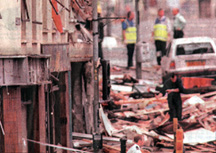
This Friday marks the 10th anniversary of the Omagh bombing, the single worst atrocity of the Northern troubles. Twenty-nine people murdered and unborn twins in the womb, a town ripped apart, a holiday shopping street turned into a scene of unimaginable carnage. Ten years on, it is no easier for the families of the victims.
Their loss does not diminish; the passage of time does little to assuage the hurt, the sense of outrage, the horror and the injustice of it all.
People are left to grieve in their own way.
Given the worldwide interest in the event, and the recurring echoes of the atrocity, some have had to do their grieving in public, and continue to do so.
Dealing with the past is one of the perennial problems of a society emerging slowly from conflict - it is when the past and the present become entangled that real problems arise.
In the immediate aftermath of the atrocity, the people of Omagh found a way of dealing with tragedy which combined stoicism, compassion and dignity. This was community spirit at its best, preserving a sense of solidarity in the face of an unprovoked and heinous act of terror.
Above all, there was the shining example, especially in the context of a deeply divided society in the North, of a community determined not to allow itself to be split, committed to the preservation of neighbourliness and a sense of dignity.
When Omagh needed leadership, there came forward the local council and its officials; the churches; the doctors and staff who cared for the dead and dying; the counsellors who helped to pick up the pieces; the teachers and the ordinary people of the town and district who refused to allow themselves to become embittered or divided. How sad it is then that the dedication of a memorial to those who died should be a cause for controversy, rather than a dignified milestone in the progress of the community from unspeakable tragedy to a better future, a fitting memorial to those who perished, and an assurance that their sacrifice would not be forgotten for generations to come.
In a way, it exemplifies the tension that often exists between public ritual which is formalised, bound by protocol, by considerations of policy and political correctness; and private grief which is personal, deeply felt and unchanneled - and often impatient with the restrictions imposed by convention and the public space.
Nevertheless, on the great solemn occasions when the cenotaph is erected, the memorial stone unveiled, they do generally find a way of combining deep feeling with dignity.
Not, it appears, in Omagh. A group representing a sizeable minority of the bereaved families has decided to boycott the official opening and to have an alternative ceremony of their own.
The Support and Self-help Group has been remarkably persistent over the decade in their search for justice, for the discovery of those responsible for the outrage that robbed them of families and their future, and to have them brought to trial, convicted and imprisoned.
To the outside observer, they have become possessed by their cause to the degree that they cannot find the release from pain that they seek.
They have, indeed, suffered the frustration of a botched and rightly criticised police investigation, and the inability of the legal systems, North and South, to secure more than a single conviction in criminal trials, but they do also display an almost infinite capacity to find fault with governments, agencies and individuals who do not come up to their expectations.
In the present case, it is the District Council that has come under fire. They are responsible for commissioning the memorial and the arrangements for the dedication.
The dissenting families do not particularly like the design or the surrounding gardens, they object strongly to the fact that the wording on the monument is neutral in tone, less directly condemnatory of groups and individuals than they would have wished, and they do not agree that representatives of all political parties on the council should be invited to attend.
The council would seem to have handled a difficult and potentially divisive issue with a good deal of sensitivity, while struggling to maintain the dignity of the occasion and the support and participation of a community united in grief and respect.
They consulted widely, and when it appeared that opinion was divided on some issues, they appointed mediators. The two men chosen, a senior Presbyterian cleric and a well-known Jesuit priest, are both recognised for their integrity, their wisdom, their ability to empathise with those who have been hurt, and their track record in similar situations across the North over many years.
In the event, they came up with a series of recommendations for settlement, all of which were accepted unanimously by all parties on the council. For most people, that would have been the end of it, as it was for the local churches and for the majority of victim families who were not participants in the support group.
But they could see no possibility of compromise between their private grief (with which everyone would empathise) and the public duty of the council in attempting to express civic solidarity with them in a new and developing political situation. Another form of grieving, not an option for all, however, is exemplified by a man who lost three generations of his family in the blast (including the unborn twins). Michael Grimes has written a delightful memoir of Beragh, his native place.
Entirely without bitterness, he is quoted in a local paper as saying: "What can you do but keep going? I have no answer to it and neither has anyone else."
Justice, it seems, is as elusive as ever.
MAURICE HAYES
COLUMNIST
featureseditor@belfasttelegraph.co.uk
This Friday marks the 10th anniversary of the Omagh bombing, the single worst atrocity of the Northern troubles. Twenty-nine people murdered and unborn twins in the womb, a town ripped apart, a holiday shopping street turned into a scene of unimaginable carnage. Ten years on, it is no easier for the families of the victims.
Their loss does not diminish; the passage of time does little to assuage the hurt, the sense of outrage, the horror and the injustice of it all.
People are left to grieve in their own way.
Given the worldwide interest in the event, and the recurring echoes of the atrocity, some have had to do their grieving in public, and continue to do so.
Dealing with the past is one of the perennial problems of a society emerging slowly from conflict - it is when the past and the present become entangled that real problems arise.
In the immediate aftermath of the atrocity, the people of Omagh found a way of dealing with tragedy which combined stoicism, compassion and dignity. This was community spirit at its best, preserving a sense of solidarity in the face of an unprovoked and heinous act of terror.
Above all, there was the shining example, especially in the context of a deeply divided society in the North, of a community determined not to allow itself to be split, committed to the preservation of neighbourliness and a sense of dignity.
When Omagh needed leadership, there came forward the local council and its officials; the churches; the doctors and staff who cared for the dead and dying; the counsellors who helped to pick up the pieces; the teachers and the ordinary people of the town and district who refused to allow themselves to become embittered or divided. How sad it is then that the dedication of a memorial to those who died should be a cause for controversy, rather than a dignified milestone in the progress of the community from unspeakable tragedy to a better future, a fitting memorial to those who perished, and an assurance that their sacrifice would not be forgotten for generations to come.
In a way, it exemplifies the tension that often exists between public ritual which is formalised, bound by protocol, by considerations of policy and political correctness; and private grief which is personal, deeply felt and unchanneled - and often impatient with the restrictions imposed by convention and the public space.
Nevertheless, on the great solemn occasions when the cenotaph is erected, the memorial stone unveiled, they do generally find a way of combining deep feeling with dignity.
Not, it appears, in Omagh. A group representing a sizeable minority of the bereaved families has decided to boycott the official opening and to have an alternative ceremony of their own.
The Support and Self-help Group has been remarkably persistent over the decade in their search for justice, for the discovery of those responsible for the outrage that robbed them of families and their future, and to have them brought to trial, convicted and imprisoned.
To the outside observer, they have become possessed by their cause to the degree that they cannot find the release from pain that they seek.
They have, indeed, suffered the frustration of a botched and rightly criticised police investigation, and the inability of the legal systems, North and South, to secure more than a single conviction in criminal trials, but they do also display an almost infinite capacity to find fault with governments, agencies and individuals who do not come up to their expectations.
In the present case, it is the District Council that has come under fire. They are responsible for commissioning the memorial and the arrangements for the dedication.
The dissenting families do not particularly like the design or the surrounding gardens, they object strongly to the fact that the wording on the monument is neutral in tone, less directly condemnatory of groups and individuals than they would have wished, and they do not agree that representatives of all political parties on the council should be invited to attend.
The council would seem to have handled a difficult and potentially divisive issue with a good deal of sensitivity, while struggling to maintain the dignity of the occasion and the support and participation of a community united in grief and respect.
They consulted widely, and when it appeared that opinion was divided on some issues, they appointed mediators. The two men chosen, a senior Presbyterian cleric and a well-known Jesuit priest, are both recognised for their integrity, their wisdom, their ability to empathise with those who have been hurt, and their track record in similar situations across the North over many years.
In the event, they came up with a series of recommendations for settlement, all of which were accepted unanimously by all parties on the council. For most people, that would have been the end of it, as it was for the local churches and for the majority of victim families who were not participants in the support group.
But they could see no possibility of compromise between their private grief (with which everyone would empathise) and the public duty of the council in attempting to express civic solidarity with them in a new and developing political situation. Another form of grieving, not an option for all, however, is exemplified by a man who lost three generations of his family in the blast (including the unborn twins). Michael Grimes has written a delightful memoir of Beragh, his native place.
Entirely without bitterness, he is quoted in a local paper as saying: "What can you do but keep going? I have no answer to it and neither has anyone else."
Justice, it seems, is as elusive as ever.
Further Information
Publisher: BELFAST TELEGRAPH
Ref: BT10An/11
Published Date: 12-Aug-08
Related Images