HOW THIS FAMILY FELL APART
HOW THIS FAMILY FELL APART
THE MOTHER'S STORY
Marion Radford (62) has five surviving children and eight grandchildren. She separated from her husband when her children were young. She says:
"When I think of Alan I think of somebody who was very kind. He didn't answer back a lot, was very good natured and saw the best in people. The day he died, he was talking about this alcoholic woman he was helping. I was going on about drinking - I don't drink - but he told me not to judge. You don't know the facts,' he said. He was an amazing boy.
We always went shopping together on Saturday afternoon. That afternoon we weren't buying anything in particular or doing a big grocery shop. We visited the electrical shop first, then went to the Northern Bank. It was about five to three.
We couldn't get down the road and a woman said, You won't get through now, there's a bomb scare'. I remarked to Alan, 'I'm sick of this country, you can't even go out shopping on a Saturday without a bomb scare'.
I began to feel uneasy and said maybe we should make our way out of town. But he went across the road, and I looked in at the jeweller's.
I was still uneasy, and thought, Why are you in a jeweller's shop if there's a bomb?'.
When I came out, I saw girls closing the shop door. There were a lot of people standing about. I said to Alan, 'Maybe we should go to Dunne's stores.' If we'd gone to Dunne's, we'd have been safe. But I went to the Salad Bowl for some lettuce and tomatoes, and Alan said, 'I'll go up the road. See you later'. I never saw him again.
In the shop, with my tomatoes and money in my hand, I had a strong feeling of something wrong. I thought, 'I'm going to get Alan and get out'. Then I heard the bomb. After that there was just an eerie silence. All I could think was maybe I'm dreaming.
There was glass stuck in my head and I took it out. I was covered with blood.
I really thought that Alan would be protected because good people are protected, but it doesn't work like that. I managed to phone home to say I was all right. Later, I came home still hoping that he'd return.
As the night wore on, I was told to go to bed by my girls, and had some sort of sleeping pill. I felt a lovely peace as I shut the bedroom door. I thought I heard Alan shout 'Mum', in fact I know he shouted 'Mum'. And I thought, 'He's dead'.
The next day, there was all this scurrying about and the family obviously knew something. My eldest daughter said, 'Alan has died'. I couldn't go and see him, and when they brought him back, I couldn't believe my 16-year-old son was being brought home in a coffin.
I miss Alan all the time. There are unbearable days, tolerable days, and some days I think I'm looking forward to seeing Alan again.
What makes it harder is that the ones who are responsible have not been caught for this. It's so disheartening that terrorists are still running around the country.
My faith (Mormon) has helped tremendously, although sometimes the people in my faith expect me to have moved on more, which hurts. I didn't grieve at first because of the shock of it, and had to go on anti-depressants as I wasn't sleeping. There's not great counselling here, which is surprising for a country that's been through a lot. I still have Alan's clothes and we talk about him all the time.
He's still my son. My granddaughter, Maya, will say to his picture, 'Uncle Alan up the sky.'
I lost my son, my best friend, everything.
I know I'll see him again, but it seems a long time to wait. I often wish I could wake up and find it was all a bad dream. Now I know it isn't."
JANE HARDY
THE BROTHER'S STORY
Alan's brother, Paul Radford (39), worked at Donegal Meats. He was out jogging minutes before the bomb went off. He says:
"I moved to England in March '99, six months after the bombing. I couldn't stick it here. Even my local pub was a reminder. As you walk out into the street, that's where it happened.
No one has ever got over it. At the time, when you woke up, you hoped it wasn't happening. I never got over it and don't think I ever will. I went for a jog 10 minutes before the bomb. I heard the explosion and ran home. My sister, Claire, was there and said: Your mum's been caught in the explosion.' My friend David Graham appeared out of nowhere. We drove along the road near the hospital. We saw the buses going up. We could see people in them so we followed. When we arrived we got on the bus. There were injured people everywhere. I don't want to see anything like that again. It was unbelievable. One person was screaming and a policeman just started going backwards. I said calm down but how do you keep calm in that situation?
People I knew were on the bus and in the hospital, burnt and with limbs missing. I knew nearly half the victims.
I met my mum. She was covered in blood but she kept on saying 'find Alan'. Alan was in the street and the fact that I was up helping other people bugs me to this day. I thought I'd help out at the hospital and maybe find him but every time I went to the wards there were people running all over the place.
After I left the hospital I went to the leisure centre. There was a young guy there who I knew, a civilian police worker, who asked if the blood on my clothes was mine. I gave him Alan's description. I went to the local Army barracks at about 9pm to try to get in touch with two friends in the security forces. But they wouldn't give us access. We spent all night looking for Alan. I couldn't stand still. I knew he was dead. Having seen some of the injuries and knowing where he was standing I knew that anyone standing that close would not survive. I never spoke to my mum after the hospital. I didn't want to talk about what was going on. I feared the worst but didn't want to tell my mother he was dead. You just cannot say it.
On Sunday morning we were at the leisure centre. Anyone who lost a relative was asked to wait at the back of a room. You knew everyone there had lost someone.
I asked a policeman I knew to tell me what was going on. He said: 'Your brother is dead.' I walked towards the wall and started crying. I never cry but that just knocked me for six. I didn't want my mother to identify Alan so I said I would do it.
I had two friends there and we waited for the mini bus to take us into the barracks.
We went into a tent and a detective said: 'We believe this body is Alan's.' I told my sister to stay there and went in alone.
As I walked in his hair was sticking out of the top. As soon as I saw the hair I knew it was him, he had this way of styling it, kind of haphazard. I just cracked up. My sister, Elaine, came through because she could hear me and she said: 'Look what they have done to him.'
My four-year-old daughter Louise and wife Samantha keep me going. I had trouble sleeping afterwards.
I still have, so I try and find jobs that will keep me up late. Once you see things like that, they don't leave you. I cannot believe it has been 10 years."
SIMON CREER
THE OLDER SISTER'S STORY
Alan's sister, Carol Radford (36), a homemaker, was about to take her daughters shopping in town when she heard the explosion. She says:
"Alan was going to be a chef and had enrolled at Omagh College. He was really excited about that. The last time I saw him was the night before. He'd been minding my children and had heated up a pie in the microwave. He also left them a packet of sweets; he was that kind of boy. Some boys are right wee scallies but not Alan.
Sometimes when I went out he would cut the grass and hoover the floors. If there was someone who needed help he would help out.
The next day, I was at a neighbour's house when Alan and mum went into the town. I was waiting for my girls to come back from getting their hair cut. It was that time of year so we were getting them ready for school. They had just come back from town when we heard the most amazing bang.
A neighbour came out and said there had been a bomb but we continued into the town. We got as far as the local primary school but had to stop because the sirens were blaring and there were emergency vehicles everywhere. You could tell something had happened. I started to cry then, remembering that my mum and Alan had gone into Omagh.
I decided to go in and check on everyone.
My mum managed to make a call before all the phones crashed saying that she was ok, injured but ok, but that Alan was missing.
My brother, Paul, was out jogging. He went to the hospital and met a girl that he knew. She said she'd seen Alan and he was ok. But that was a case of mistaken identity. So he told my mum that Alan was ok.
Paul stayed in the hospital to help out. He said he was carrying arms and legs that it was like something out of a movie. There was a naked girl screaming for help. They said they would come back. When they did she was dead. He feels bad because when he was helping out he could have been helping his brother.
I was waiting at my mother's house and she came back covered in blood. She was just in pure shock and acting crazy. She got the ironing board out and said Alan would be all right. We started to call round the hospitals to try and find Alan. We clung to any kind of hope. That night passed without hearing anything. By the Sunday there was hardly anyone left at the leisure centre which was providing information about missing people.
When we found out, I remember my mum just screaming. I couldn't move out of my chair. I was in shock. My sister's daughter comforted her grandmother. Paul went to a temporary morgue in the Army barracks to identify the body. He says before they even pulled back the sheet he could tell it was Alan because of his wavy hair. He says he will never get the look in Alan's eyes out of his head. Paramedics said they were the worst injuries they had seen. It was Tuesday when Alan's body came back to the house. Paul wouldn't let anyone see him before he had. The wounds were that bad he didn't want us to see.
The funeral broke my brother. Paul was lowering the coffin into the ground and he was just breaking down - it was terrible to watch."
SIMON CREER
THE YOUNGER SISTER'S STORY
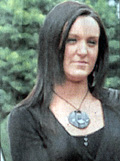
Claire Radford (25) is a full-time mother and younger sister of Alan, who died in the Omagh bombing. She says:
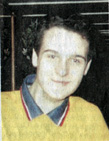
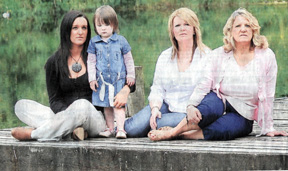
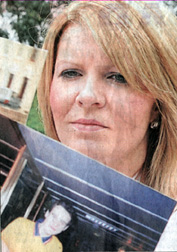
"My daughter, Maya, who's two, knows Alan - I don't want her not to know who her uncle was. I take her up to the grave and she loves putting flowers on for Uncle Alan. Also I don't want her growing up uneasy about death. You need to be prepared, especially considering the way Alan died. Alan and I were very close, there was just over a year between us. The only time we were apart was on Friday evenings and Saturdays, when I was in town with my friends. Alan was more of a home bird. We never really had arguments, but if I'd done something to annoy mum, he called me names. After daddy left, Alan matured and took on the role of the man of the house. He had to. He didn't speak about it but just said 'I'll help my mother'. He was always a busy bee, and the photo we've got of him in his yellow jumper shows his personality. Every person's life he affected was affected in a good way.
There would always be laughter with Alan about, never shouting and fighting. I don't recall us fighting but we'd have a brother and sister chat before we went to bed. He was brilliant at school, and I knew all the gossip. And Alan confided everything in me. We would walk to school together, then meet up at lunchtime. My life just crumbled as soon as that bomb exploded. I was sitting on a wall outside our house which I felt vibrate, and my stomach turned.'
Then the phone went and mum said she was ok. But we thought 'Where is Alan?' We just knew then.
The funeral was private with close family and friends, and was held in the house. We sang Nearer My God To Thee, and two girls from the Church sang Boyzone's No Matter What - the lines No matter what they tell us/however they attack spoke volumes about Alan, when he was bullied at school. They also meant something to mum, with people not understanding her religion, Mormonism.
Alan loved Celine Dion, so we also had Fly. In fact, one of the last CDs he bought was Celine Dion's Because You Love Me. He used to call me his Celine Dion and made me promise I'd do something with my voice.
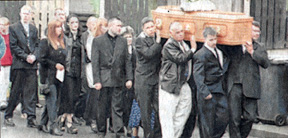
I remember leaving the house and you couldn't see the park, it was awash with people. Then Alan's coffin went into the ground, and we returned home to desperation and isolation. You then had to deal with him not being there.
After Alan died, I took to drink and put mum through hell; I just went off the rails. I wouldn't pick up the phone and tell her where I was. Being at home without Alan was nothing. It also hurt me to see mum in pain.
Since then, there's not a day I don't think about Alan - recently I was at the sink, crying, and Maya asked me why. I said I was missing Uncle Alan. I miss hearing his laugh - it was such a genuine laugh, really comical. Sadly, because of being on anti-depressants, my memory of some of the things we used to do has gone. They just numb you, and don't help you to move on, but I guess I'll be on them forever.
I wrote several poems after he died; including one which begins The two of us shared life/the good times and the bad/shared dreams together/the fun we used to have ... Alan meant everything to me. He was my wee rock."
JANE HARDY
THE MOTHER'S STORY
Marion Radford (62) has five surviving children and eight grandchildren. She separated from her husband when her children were young. She says:
"When I think of Alan I think of somebody who was very kind. He didn't answer back a lot, was very good natured and saw the best in people. The day he died, he was talking about this alcoholic woman he was helping. I was going on about drinking - I don't drink - but he told me not to judge. You don't know the facts,' he said. He was an amazing boy.
We always went shopping together on Saturday afternoon. That afternoon we weren't buying anything in particular or doing a big grocery shop. We visited the electrical shop first, then went to the Northern Bank. It was about five to three.
We couldn't get down the road and a woman said, You won't get through now, there's a bomb scare'. I remarked to Alan, 'I'm sick of this country, you can't even go out shopping on a Saturday without a bomb scare'.
I began to feel uneasy and said maybe we should make our way out of town. But he went across the road, and I looked in at the jeweller's.
I was still uneasy, and thought, Why are you in a jeweller's shop if there's a bomb?'.
When I came out, I saw girls closing the shop door. There were a lot of people standing about. I said to Alan, 'Maybe we should go to Dunne's stores.' If we'd gone to Dunne's, we'd have been safe. But I went to the Salad Bowl for some lettuce and tomatoes, and Alan said, 'I'll go up the road. See you later'. I never saw him again.
In the shop, with my tomatoes and money in my hand, I had a strong feeling of something wrong. I thought, 'I'm going to get Alan and get out'. Then I heard the bomb. After that there was just an eerie silence. All I could think was maybe I'm dreaming.
There was glass stuck in my head and I took it out. I was covered with blood.
I really thought that Alan would be protected because good people are protected, but it doesn't work like that. I managed to phone home to say I was all right. Later, I came home still hoping that he'd return.
As the night wore on, I was told to go to bed by my girls, and had some sort of sleeping pill. I felt a lovely peace as I shut the bedroom door. I thought I heard Alan shout 'Mum', in fact I know he shouted 'Mum'. And I thought, 'He's dead'.
The next day, there was all this scurrying about and the family obviously knew something. My eldest daughter said, 'Alan has died'. I couldn't go and see him, and when they brought him back, I couldn't believe my 16-year-old son was being brought home in a coffin.
I miss Alan all the time. There are unbearable days, tolerable days, and some days I think I'm looking forward to seeing Alan again.
What makes it harder is that the ones who are responsible have not been caught for this. It's so disheartening that terrorists are still running around the country.
My faith (Mormon) has helped tremendously, although sometimes the people in my faith expect me to have moved on more, which hurts. I didn't grieve at first because of the shock of it, and had to go on anti-depressants as I wasn't sleeping. There's not great counselling here, which is surprising for a country that's been through a lot. I still have Alan's clothes and we talk about him all the time.
He's still my son. My granddaughter, Maya, will say to his picture, 'Uncle Alan up the sky.'
I lost my son, my best friend, everything.
I know I'll see him again, but it seems a long time to wait. I often wish I could wake up and find it was all a bad dream. Now I know it isn't."
JANE HARDY
THE BROTHER'S STORY
Alan's brother, Paul Radford (39), worked at Donegal Meats. He was out jogging minutes before the bomb went off. He says:
"I moved to England in March '99, six months after the bombing. I couldn't stick it here. Even my local pub was a reminder. As you walk out into the street, that's where it happened.
No one has ever got over it. At the time, when you woke up, you hoped it wasn't happening. I never got over it and don't think I ever will. I went for a jog 10 minutes before the bomb. I heard the explosion and ran home. My sister, Claire, was there and said: Your mum's been caught in the explosion.' My friend David Graham appeared out of nowhere. We drove along the road near the hospital. We saw the buses going up. We could see people in them so we followed. When we arrived we got on the bus. There were injured people everywhere. I don't want to see anything like that again. It was unbelievable. One person was screaming and a policeman just started going backwards. I said calm down but how do you keep calm in that situation?
People I knew were on the bus and in the hospital, burnt and with limbs missing. I knew nearly half the victims.
I met my mum. She was covered in blood but she kept on saying 'find Alan'. Alan was in the street and the fact that I was up helping other people bugs me to this day. I thought I'd help out at the hospital and maybe find him but every time I went to the wards there were people running all over the place.
After I left the hospital I went to the leisure centre. There was a young guy there who I knew, a civilian police worker, who asked if the blood on my clothes was mine. I gave him Alan's description. I went to the local Army barracks at about 9pm to try to get in touch with two friends in the security forces. But they wouldn't give us access. We spent all night looking for Alan. I couldn't stand still. I knew he was dead. Having seen some of the injuries and knowing where he was standing I knew that anyone standing that close would not survive. I never spoke to my mum after the hospital. I didn't want to talk about what was going on. I feared the worst but didn't want to tell my mother he was dead. You just cannot say it.
On Sunday morning we were at the leisure centre. Anyone who lost a relative was asked to wait at the back of a room. You knew everyone there had lost someone.
I asked a policeman I knew to tell me what was going on. He said: 'Your brother is dead.' I walked towards the wall and started crying. I never cry but that just knocked me for six. I didn't want my mother to identify Alan so I said I would do it.
I had two friends there and we waited for the mini bus to take us into the barracks.
We went into a tent and a detective said: 'We believe this body is Alan's.' I told my sister to stay there and went in alone.
As I walked in his hair was sticking out of the top. As soon as I saw the hair I knew it was him, he had this way of styling it, kind of haphazard. I just cracked up. My sister, Elaine, came through because she could hear me and she said: 'Look what they have done to him.'
My four-year-old daughter Louise and wife Samantha keep me going. I had trouble sleeping afterwards.
I still have, so I try and find jobs that will keep me up late. Once you see things like that, they don't leave you. I cannot believe it has been 10 years."
SIMON CREER
THE OLDER SISTER'S STORY
Alan's sister, Carol Radford (36), a homemaker, was about to take her daughters shopping in town when she heard the explosion. She says:
"Alan was going to be a chef and had enrolled at Omagh College. He was really excited about that. The last time I saw him was the night before. He'd been minding my children and had heated up a pie in the microwave. He also left them a packet of sweets; he was that kind of boy. Some boys are right wee scallies but not Alan.
Sometimes when I went out he would cut the grass and hoover the floors. If there was someone who needed help he would help out.
The next day, I was at a neighbour's house when Alan and mum went into the town. I was waiting for my girls to come back from getting their hair cut. It was that time of year so we were getting them ready for school. They had just come back from town when we heard the most amazing bang.
A neighbour came out and said there had been a bomb but we continued into the town. We got as far as the local primary school but had to stop because the sirens were blaring and there were emergency vehicles everywhere. You could tell something had happened. I started to cry then, remembering that my mum and Alan had gone into Omagh.
I decided to go in and check on everyone.
My mum managed to make a call before all the phones crashed saying that she was ok, injured but ok, but that Alan was missing.
My brother, Paul, was out jogging. He went to the hospital and met a girl that he knew. She said she'd seen Alan and he was ok. But that was a case of mistaken identity. So he told my mum that Alan was ok.
Paul stayed in the hospital to help out. He said he was carrying arms and legs that it was like something out of a movie. There was a naked girl screaming for help. They said they would come back. When they did she was dead. He feels bad because when he was helping out he could have been helping his brother.
I was waiting at my mother's house and she came back covered in blood. She was just in pure shock and acting crazy. She got the ironing board out and said Alan would be all right. We started to call round the hospitals to try and find Alan. We clung to any kind of hope. That night passed without hearing anything. By the Sunday there was hardly anyone left at the leisure centre which was providing information about missing people.
When we found out, I remember my mum just screaming. I couldn't move out of my chair. I was in shock. My sister's daughter comforted her grandmother. Paul went to a temporary morgue in the Army barracks to identify the body. He says before they even pulled back the sheet he could tell it was Alan because of his wavy hair. He says he will never get the look in Alan's eyes out of his head. Paramedics said they were the worst injuries they had seen. It was Tuesday when Alan's body came back to the house. Paul wouldn't let anyone see him before he had. The wounds were that bad he didn't want us to see.
The funeral broke my brother. Paul was lowering the coffin into the ground and he was just breaking down - it was terrible to watch."
SIMON CREER
THE YOUNGER SISTER'S STORY
Claire Radford (25) is a full-time mother and younger sister of Alan, who died in the Omagh bombing. She says:
"My daughter, Maya, who's two, knows Alan - I don't want her not to know who her uncle was. I take her up to the grave and she loves putting flowers on for Uncle Alan. Also I don't want her growing up uneasy about death. You need to be prepared, especially considering the way Alan died. Alan and I were very close, there was just over a year between us. The only time we were apart was on Friday evenings and Saturdays, when I was in town with my friends. Alan was more of a home bird. We never really had arguments, but if I'd done something to annoy mum, he called me names. After daddy left, Alan matured and took on the role of the man of the house. He had to. He didn't speak about it but just said 'I'll help my mother'. He was always a busy bee, and the photo we've got of him in his yellow jumper shows his personality. Every person's life he affected was affected in a good way.
There would always be laughter with Alan about, never shouting and fighting. I don't recall us fighting but we'd have a brother and sister chat before we went to bed. He was brilliant at school, and I knew all the gossip. And Alan confided everything in me. We would walk to school together, then meet up at lunchtime. My life just crumbled as soon as that bomb exploded. I was sitting on a wall outside our house which I felt vibrate, and my stomach turned.'
Then the phone went and mum said she was ok. But we thought 'Where is Alan?' We just knew then.
The funeral was private with close family and friends, and was held in the house. We sang Nearer My God To Thee, and two girls from the Church sang Boyzone's No Matter What - the lines No matter what they tell us/however they attack spoke volumes about Alan, when he was bullied at school. They also meant something to mum, with people not understanding her religion, Mormonism.
Alan loved Celine Dion, so we also had Fly. In fact, one of the last CDs he bought was Celine Dion's Because You Love Me. He used to call me his Celine Dion and made me promise I'd do something with my voice.
I remember leaving the house and you couldn't see the park, it was awash with people. Then Alan's coffin went into the ground, and we returned home to desperation and isolation. You then had to deal with him not being there.
After Alan died, I took to drink and put mum through hell; I just went off the rails. I wouldn't pick up the phone and tell her where I was. Being at home without Alan was nothing. It also hurt me to see mum in pain.
Since then, there's not a day I don't think about Alan - recently I was at the sink, crying, and Maya asked me why. I said I was missing Uncle Alan. I miss hearing his laugh - it was such a genuine laugh, really comical. Sadly, because of being on anti-depressants, my memory of some of the things we used to do has gone. They just numb you, and don't help you to move on, but I guess I'll be on them forever.
I wrote several poems after he died; including one which begins The two of us shared life/the good times and the bad/shared dreams together/the fun we used to have ... Alan meant everything to me. He was my wee rock."
JANE HARDY
Further Information
Publisher: BELFAST TELEGRAPH
Ref: BT10An/10
Published Date: 12-Aug-08
Related Images