COULD DISPUTED DNA PROBE STILL HELP CATCH BOMBERS
Could disputed DNA probe still help catch bombers?
Tragic dad says new report re-opens forensic possibility
BY CHRIS THORNTON
CHIEF REPORTER
cthornton@belfasttelegraph.co.uk
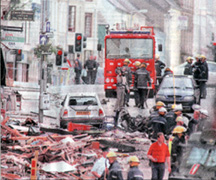
THE father of an Omagh bomb victim has called on Sir Hugh Orde to spell out whether the revival of a specialist DNA technique could mean any more prosecutions for the 1998 massacre.
Victor Barker, whose 12-year-old son James died in the blast, said a Home Office report that okayed low copy number DNA testing earlier this month has re-opened questions about whether tiny forensic traces could be used to catch the bombers. The technique was called into question by Mr Justice Weir's December judgment clearing Sean Hoey, the man accused of building the bomb.
The Prosecution Service subsequently dropped a number of other criminal cases because the judge had cast doubt on the system. Police also suspended use of low copy number DNA.
But two weeks ago a group of Home Office specialists said the system is scientifically valid and reliable.
The chairman of the review group, Professor Brian Caddy, said he was "absolutely certain that there's no problem in putting this before the court".
Mr Barker said the report prompted him to get in touch with the PSNI Chief Constable's office to see if there is any more evidence that might be tested in relation to the Omagh case.
After Hoey's acquittal, Sir Hugh had signalled that 10 years after Omagh the bombers were unlikely to be caught.
But Mr Barker said: "The provisos to that were someone coming forward or there being any further DNA evidence. They need to make it clear if there is anything of benefit available.
"Hugh Orde did say on the last occasion, after the acquittal, that they would examine material very carefully to see if there was anything available that could be used in a future prosecution."
Mr Barker said he was told recently that the Omagh investigation team would be coming to see him with information about the case, but yesterday he said he has still not received any word about his specific requests concerning low copy number DNA: "I have received no communication from Hugh Orde. I would have thought I would have received some kind of telephone call," he added.
The Omagh case was one of the first major tests for low copy number DNA. Prosecutors tried to link Hoey to a series of dissident republican bombs.
Mr Justice Weir criticised the police for "slapdash" handling of the forensic evidence, meaning he considered it spoiled before it was even tested by experts. But he also expressed doubts about the nature of low copy number DNA. He noted that there was no international standard for its use, and that while it has been approved as a means of collecting intelligence in the US, it not accepted as evidence in American courts.
The PSNI said Sir Hugh will respond to Mr Barker in due course.
Tragic dad says new report re-opens forensic possibility
BY CHRIS THORNTON
CHIEF REPORTER
cthornton@belfasttelegraph.co.uk
THE father of an Omagh bomb victim has called on Sir Hugh Orde to spell out whether the revival of a specialist DNA technique could mean any more prosecutions for the 1998 massacre.
Victor Barker, whose 12-year-old son James died in the blast, said a Home Office report that okayed low copy number DNA testing earlier this month has re-opened questions about whether tiny forensic traces could be used to catch the bombers. The technique was called into question by Mr Justice Weir's December judgment clearing Sean Hoey, the man accused of building the bomb.
The Prosecution Service subsequently dropped a number of other criminal cases because the judge had cast doubt on the system. Police also suspended use of low copy number DNA.
But two weeks ago a group of Home Office specialists said the system is scientifically valid and reliable.
The chairman of the review group, Professor Brian Caddy, said he was "absolutely certain that there's no problem in putting this before the court".
Mr Barker said the report prompted him to get in touch with the PSNI Chief Constable's office to see if there is any more evidence that might be tested in relation to the Omagh case.
After Hoey's acquittal, Sir Hugh had signalled that 10 years after Omagh the bombers were unlikely to be caught.
But Mr Barker said: "The provisos to that were someone coming forward or there being any further DNA evidence. They need to make it clear if there is anything of benefit available.
"Hugh Orde did say on the last occasion, after the acquittal, that they would examine material very carefully to see if there was anything available that could be used in a future prosecution."
Mr Barker said he was told recently that the Omagh investigation team would be coming to see him with information about the case, but yesterday he said he has still not received any word about his specific requests concerning low copy number DNA: "I have received no communication from Hugh Orde. I would have thought I would have received some kind of telephone call," he added.
The Omagh case was one of the first major tests for low copy number DNA. Prosecutors tried to link Hoey to a series of dissident republican bombs.
Mr Justice Weir criticised the police for "slapdash" handling of the forensic evidence, meaning he considered it spoiled before it was even tested by experts. But he also expressed doubts about the nature of low copy number DNA. He noted that there was no international standard for its use, and that while it has been approved as a means of collecting intelligence in the US, it not accepted as evidence in American courts.
The PSNI said Sir Hugh will respond to Mr Barker in due course.
Further Information
Publisher: BELFAST TELEGRAPH
Ref: BT/1085
Published Date: 24-Apr-08
Related Images