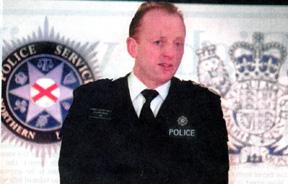
WILL SIR HUGH ACT ON JUDGE'S COMMENTS
Will Sir Hugh act on judge's comments?
Ten years on, the Omagh investigation is still in disarray. Chief Reporter Chris Thornton analyses how Sean Hoey's acquittal has created a new problem for Sir Hugh Orde.
Mr Justice Weir's forensic judgment in the Omagh trial had one wide and immediate effect, apart from freeing Sean Hoey, when it was delivered last month. After the judge questioned the value of Low Copy Number DNA as evidence, police across the UK said they were suspending the testing of it.
The judge had another, even sharper rebuke in his findings, but in this case Sir Hugh Orde has not yet seen it worthy of any sort of suspension.
Mr Justice Weir said baldly that two police officers lied in the course of their evidence in the case, apparently to beef up some already questionable DNA evidence. The judge described it as a "deliberate and calculated deception", and cast his suspicions wider by saying it was one "in which others concerned in the investigation and preparation of this case for trial beyond these two witnesses may also have played a part".
After meeting the Policing Board, Sir Hugh said he is concerned by the judge's "observations" and "opinion". But the PSNI admitted at the same time that the two officers identified by the judge - Chief Inspector Philip Marshall and Constable Fiona Cooper - remain on duty.
So how has the Chief Constable demonstrated his concern? Last week he linked it to the start of a Police Ombudsman investigation into the two officers - "I am concerned. That's why it went to the Police Ombudsman" - when the material in the public domain indicates it was Mr Justice Weir who got that investigation started, not Sir Hugh.
The Chief Constable pointed out that the two officers concerned "have a right to a fair hearing, too". They may get it: the Police Ombudsman passed files on the case to the Prosecution Service last August. But Sir Hugh also suggested he is powerless to act without a recommendation from the Ombudsman's office. "They have not made that recommendation," he said, "therefore I have nothing to act on."
Yet it is not unknown for officers facing serious allegations to be suspended from duty, without that being taken as a presumption of guilt. Indeed, in 2003, the then Security Minister Jane Kennedy told Parliament that the Chief Constable "has responsibility for the suspension of any police officers", and in the previous 14 months had suspended 11. Last year, two officers were suspended while they were investigated for drink driving over Christmas. In 2004, an officer was suspended from duty while an investigation was carried out into the use of CS spray.
Sir Hugh also said he's puzzled by the judge's reference to the possibility that other officers could have been involved in the "deception." He's written to the Lord Chief Justice to ask for "urgent clarification" because "I don't understand that bit".
The judge did not identify any further specific wrongdoing, but he says in the judgment that the problems with the DNA evidence were so obvious to "one or more police officers" that attempts were made to alter evidence.
Sir Hugh and other senior officers have tried to isolate the situation by arguing it is not directly related to Omagh - even though the court was told the questionable statements by the two officers were provided specifically for the Omagh inquiry.
Sir Hugh talks a lot about "current policing" versus the start of the Omagh investigation under the RUC. The problem for him is that while most of the problems with the Omagh case do reflect on the RUC, this situation reflects directly on "current policing".
"It's not just two officers out there, it's 7,500, 8,000 officers providing a policing service," he argued last week. "Just take a step back and see what the Ombudsman says." In the meantime, two officers branded liars by a High Court judge still wear the PSNI's uniform every day.
Ten years on, the Omagh investigation is still in disarray. Chief Reporter Chris Thornton analyses how Sean Hoey's acquittal has created a new problem for Sir Hugh Orde.
Mr Justice Weir's forensic judgment in the Omagh trial had one wide and immediate effect, apart from freeing Sean Hoey, when it was delivered last month. After the judge questioned the value of Low Copy Number DNA as evidence, police across the UK said they were suspending the testing of it.
The judge had another, even sharper rebuke in his findings, but in this case Sir Hugh Orde has not yet seen it worthy of any sort of suspension.
Mr Justice Weir said baldly that two police officers lied in the course of their evidence in the case, apparently to beef up some already questionable DNA evidence. The judge described it as a "deliberate and calculated deception", and cast his suspicions wider by saying it was one "in which others concerned in the investigation and preparation of this case for trial beyond these two witnesses may also have played a part".
After meeting the Policing Board, Sir Hugh said he is concerned by the judge's "observations" and "opinion". But the PSNI admitted at the same time that the two officers identified by the judge - Chief Inspector Philip Marshall and Constable Fiona Cooper - remain on duty.
So how has the Chief Constable demonstrated his concern? Last week he linked it to the start of a Police Ombudsman investigation into the two officers - "I am concerned. That's why it went to the Police Ombudsman" - when the material in the public domain indicates it was Mr Justice Weir who got that investigation started, not Sir Hugh.
The Chief Constable pointed out that the two officers concerned "have a right to a fair hearing, too". They may get it: the Police Ombudsman passed files on the case to the Prosecution Service last August. But Sir Hugh also suggested he is powerless to act without a recommendation from the Ombudsman's office. "They have not made that recommendation," he said, "therefore I have nothing to act on."
Yet it is not unknown for officers facing serious allegations to be suspended from duty, without that being taken as a presumption of guilt. Indeed, in 2003, the then Security Minister Jane Kennedy told Parliament that the Chief Constable "has responsibility for the suspension of any police officers", and in the previous 14 months had suspended 11. Last year, two officers were suspended while they were investigated for drink driving over Christmas. In 2004, an officer was suspended from duty while an investigation was carried out into the use of CS spray.
Sir Hugh also said he's puzzled by the judge's reference to the possibility that other officers could have been involved in the "deception." He's written to the Lord Chief Justice to ask for "urgent clarification" because "I don't understand that bit".
The judge did not identify any further specific wrongdoing, but he says in the judgment that the problems with the DNA evidence were so obvious to "one or more police officers" that attempts were made to alter evidence.
Sir Hugh and other senior officers have tried to isolate the situation by arguing it is not directly related to Omagh - even though the court was told the questionable statements by the two officers were provided specifically for the Omagh inquiry.
Sir Hugh talks a lot about "current policing" versus the start of the Omagh investigation under the RUC. The problem for him is that while most of the problems with the Omagh case do reflect on the RUC, this situation reflects directly on "current policing".
"It's not just two officers out there, it's 7,500, 8,000 officers providing a policing service," he argued last week. "Just take a step back and see what the Ombudsman says." In the meantime, two officers branded liars by a High Court judge still wear the PSNI's uniform every day.
Further Information
Publisher: BELFAST TELEGRAPH
Ref: BT/1054
Published Date: 07-Jan-08
Related Images