EX-SOLDIERS TO GET ACCESS TO TRAUMA SUPPORT TEAM
Ex-soldiers to get access to trauma support team
BY LESLEY-ANNE HENRY
REHABILITATION treatments to help former police officers suffering psychological distress and physical pain are due to be extended to former soldiers, the Belfast Telegraph can reveal today.
The Police Rehabilitation and Retraining Trust (PRRT) is expected to roll out its clinical services for retired members of the Royal Irish Regiment's home service battalion and Ulster Defence Regiment early next year.
The PRRT is a government-funded organisation based at Holywood, Co Down. It was set up in 1999 to provide an education and training service for people who are leaving the police and preparing for the transition into civilian life.
The facility, dubbed a centre of excellence for the security forces, is unique to Northern Ireland.
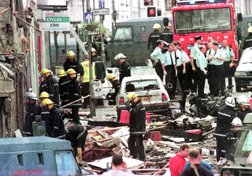
Police officers and soldiers served side by side since 1969 and witnessed at first hand the devastation at many of the province's worst atrocities, including Bloody Friday, Omagh, the Enniskillen and Greysteel massacres.
Edward Gorrige, PRRT chief executive, said: "It is an indication of how beneficial our clinical outcomes have been for our police clients. The MoD wanted, quite rightly, the same excellent standard of aftercare for their former UDR and RIR soldiers. Essentially we will be offering physiotherapy and psychological therapies to eligible soldiers and their families."
Currently PRRT offers psychological therapy, physiotherapy and careers advice to retired or retiring police officers to help them cope with civilian life.
The self-referral unit treats up to 350 officers a year for conditions including Post Traumatic Stress Disorder (PTSD), anxiety and depression often attributed to years of distressing service.
It was set up in 1999 to give safety-conscious security personnel an alternative to the NHS.
Consultant psychotherapist Alastair Black said: "What happens is an officer picks up the phone and comes through to us directly and within seven working days he is sitting down with a clinician to assess their need.
"The army that we will be seeing, members of the Royal Irish and UDR, have served shoulder to shoulder with the police and therefore have attended a lot of the same traumas, have been under threat in a lot of the same ways."
He noted that retirement often acted as a catalyst for mental troubles to surface.
Added Mr Black: "Once they actually stop serving they end up sitting at home with very little to think about and too much time to think about it in. So these things often come to the surface.
"There's often also a trigger at retirement almost like a grieving process. Because of the nature of policing itself people often lose quite a bit of their identity and a lot of their self esteem along with the job and actually stepping outside of that can often be a big trigger for looking back and reflecting and then these issues can come to the surface. The police population is very unique in that they are living in the place where they were traumatised and where they served. They are surrounded by triggers all the time in the media reports, political changes, anniversaries." And among the triggers are shootings of two police officers last week and PRRT has had a number of calls directly related to the incidents.
PRRT has the advantage of having physical and psychological treatments under one roof.
Among the most common physical problems are back and neck injuries - which some officers attribute to wearing flack jackets in cramped conditions.
Morna McGibben, head of physiotherapy at PRRT, said: "A lot of our clients will not just have had one hurt, they have endured a series of injuries over their service - it could be a number of road traffic accidents or a number of assaults. And some of them have more serious injuries as a result of shootings or bomb attacks."
She said PRRT offered an opportunity for officers to be open about exactly how they sustained an injury.
"If there is just a curtain between you and the next person then you may not want to be as forthcoming about how you were injured," she said.
BY LESLEY-ANNE HENRY
REHABILITATION treatments to help former police officers suffering psychological distress and physical pain are due to be extended to former soldiers, the Belfast Telegraph can reveal today.
The Police Rehabilitation and Retraining Trust (PRRT) is expected to roll out its clinical services for retired members of the Royal Irish Regiment's home service battalion and Ulster Defence Regiment early next year.
The PRRT is a government-funded organisation based at Holywood, Co Down. It was set up in 1999 to provide an education and training service for people who are leaving the police and preparing for the transition into civilian life.
The facility, dubbed a centre of excellence for the security forces, is unique to Northern Ireland.
Police officers and soldiers served side by side since 1969 and witnessed at first hand the devastation at many of the province's worst atrocities, including Bloody Friday, Omagh, the Enniskillen and Greysteel massacres.
Edward Gorrige, PRRT chief executive, said: "It is an indication of how beneficial our clinical outcomes have been for our police clients. The MoD wanted, quite rightly, the same excellent standard of aftercare for their former UDR and RIR soldiers. Essentially we will be offering physiotherapy and psychological therapies to eligible soldiers and their families."
Currently PRRT offers psychological therapy, physiotherapy and careers advice to retired or retiring police officers to help them cope with civilian life.
The self-referral unit treats up to 350 officers a year for conditions including Post Traumatic Stress Disorder (PTSD), anxiety and depression often attributed to years of distressing service.
It was set up in 1999 to give safety-conscious security personnel an alternative to the NHS.
Consultant psychotherapist Alastair Black said: "What happens is an officer picks up the phone and comes through to us directly and within seven working days he is sitting down with a clinician to assess their need.
"The army that we will be seeing, members of the Royal Irish and UDR, have served shoulder to shoulder with the police and therefore have attended a lot of the same traumas, have been under threat in a lot of the same ways."
He noted that retirement often acted as a catalyst for mental troubles to surface.
Added Mr Black: "Once they actually stop serving they end up sitting at home with very little to think about and too much time to think about it in. So these things often come to the surface.
"There's often also a trigger at retirement almost like a grieving process. Because of the nature of policing itself people often lose quite a bit of their identity and a lot of their self esteem along with the job and actually stepping outside of that can often be a big trigger for looking back and reflecting and then these issues can come to the surface. The police population is very unique in that they are living in the place where they were traumatised and where they served. They are surrounded by triggers all the time in the media reports, political changes, anniversaries." And among the triggers are shootings of two police officers last week and PRRT has had a number of calls directly related to the incidents.
PRRT has the advantage of having physical and psychological treatments under one roof.
Among the most common physical problems are back and neck injuries - which some officers attribute to wearing flack jackets in cramped conditions.
Morna McGibben, head of physiotherapy at PRRT, said: "A lot of our clients will not just have had one hurt, they have endured a series of injuries over their service - it could be a number of road traffic accidents or a number of assaults. And some of them have more serious injuries as a result of shootings or bomb attacks."
She said PRRT offered an opportunity for officers to be open about exactly how they sustained an injury.
"If there is just a curtain between you and the next person then you may not want to be as forthcoming about how you were injured," she said.
Further Information
Publisher: BELFAST TELEGRAPH
Ref: BT/1046
Published Date: 23-Nov-07
Related Images