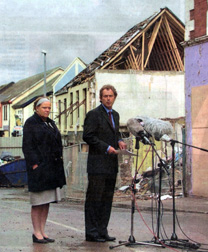
TONY'S SHUTTLE DIPLOMACY FINALLY PAYS OFF AFTER A RECORD 37 VISITS
Tony's shuttle diplomacy finally pays off after a record 37 visits
CHRIS THORNTON
Political Correspondent
When he arrived in Belfast two weeks after becoming Prime Minister, Tony Blair said it was "no accident" that he had chosen Northern Ireland for his first official engagement outside London. "I do intend to be back," he added. "We intend to be here for quite a long time."
There were moments over the next decade when that seemed like a rash thing to have said. Now it looks like destiny.
Tony Blair came to Northern Ireland 37 times between that day - ten years ago next Wednesday, as it happens - when he first stepped into the peace process and this past Tuesday, when he stepped away as it all probably drew to a close.
He came more often than any of his predecessors, and there were also scores of meetings inside Downing Street devoted to the peace process, as well as talks on the fringes of international summits.
But all that was a natural outcome of his extraordinary personal dedication: when he said on that first day that he had come to seek "a lasting and fair political settlement", it turned out he wasn't just spouting platitudes on the stump.
Ireland had entangled and distracted British Prime Ministers for a century and a half before Blair. If he has succeeded, his successors will have a lot to thank him for.
He came with some advantages. John Major, as Mr Blair has always acknowledged, did much of the important spade work in the peace process, bringing the IRA to its initial ceasefire. As a Labour leader, he had links to Irish nationalism that previous Prime Ministers did not.
But crucially he also had a landslide: the scale of Labour's victory in 1997 ensured that he would not be handcuffed by parliamentary arithmetic. Because he would not find himself relying on unionist MPs to preserve his Government and paying their price in return, he had more freedom to pursue a new settlement.
If he was optimistic, he quickly learned how trying Northern Ireland can be. On his first visit, he opened up talks between officials and Sinn Fein. A month later, the IRA repaid him by murdering John Graham and David Johnston, two RUC officers on foot patrol in Lurgan.
The restoration of the IRA ceasefire in July paved the way for Blair to shake hands with Gerry Adams in a private meeting at Stormont. But he saw the other side of the difficulties facing him: a tour of the Connswater shopping centre in east Belfast after the handshake saw him draw a barrage of abuse from Protestant shoppers.
He stuck with it, and that persistence is recognised as one of the strengths the Prime Minister brought to the process. Less than a year after assuming office, he and Taoiseach Bertie Ahern had secured the Good Friday Agreement with the pro-Agreement parties.
The relationship with Ahern would be an extraordinarily important part of the next ten years. The cooperation on Northern Ireland led to greater cooperation in Europe, and the closest Anglo-Irish relations since Irish independence.
The referendum campaign that followed the Agreement showed another side of Blair - his tendency to over-egg. In an effort to secure unionist support for the Agreement against the No campaign, he made his famous set of written pledges in Coleraine. They included the promise that "those who use or threaten violence excluded from the government of Northern Ireland" - a pledge that unionists would repeatedly use against him when the IRA was implicated in paramilitary activity and their support for the Agreement began to evaporate.
For some, this was a Blair weakness - short-termism to get him past one obstacle, without considering that he could be creating another problem in the future. His supporters argued that he was displaying a clear strength by being willing to take the necessary steps to get over a hurdle.
The highs of the Agreement and referendum were followed by the extraordinary low of Omagh. By perpetrating the worst bombing in Northern Ireland, the Real IRA came close to derailing the ongoing efforts to establish the devolved administration.
The end of that year saw the momentum fade. It took talks and more talks, the passage of deadlines and absolute deadlines, before the Executive was established in December 2000. Those two years of seemingly endless negotiations revealed another Blair talent: the aptitude for the soft landing.
Every looming crisis was somehow pushed down the line into further negotiations. The only progress was incremental and frustratingly slow, but that was preferable to a fatal collapse.
The end of 2002 the lowest period for the peace process, introducing five years of direct rule.
Blair's interventions set out solving the problem of the IRA - decommissioning was finished and the end of their campaign declared - but he began to lose unionists.
The Blair magic wasn't working any more. In October 2003, he engineered the second act of IRA decommissioning - punctuated by a spoken report from a dishevelled General John de Chastelain - but it backfired. Trimble was displaced a month later by Ian Paisley.
A year later, at Leeds Castle and with the attempted introduction of the Comprehensive Agreement, the Blair and Ahern intervention failed again. Flying in to seal the deal no longer seemed to work.
Unionist reaction to the Northern Bank robbery seemed to highlight the distance from a settlement.
At this point, the Prime Minister seems to have made a strategic withdrawal. He was available to talk to the parties, but he did not come to Northern Ireland throughout 2005 - the only year of his premiership that did not include a visit.
Instead, he sent Peter Hain to an essentially downgraded Northern Ireland Office, thrown in with Wales. This gave unionists a taste of what disinterested direct rule would look like: higher taxes and no say in how the money would be spent.
He came back in April last year, but only to announce the existence of what had always been previously denied: Plan B, involving greater cross-border cooperation. This ultimately turned out to be the spur or cover that Ian Paisley needed to enter government with Sinn Fein. And this week - on the road to retirement - Tony Blair came back to see his ten-year-old promise finally come true.
CHRIS THORNTON
Political Correspondent
When he arrived in Belfast two weeks after becoming Prime Minister, Tony Blair said it was "no accident" that he had chosen Northern Ireland for his first official engagement outside London. "I do intend to be back," he added. "We intend to be here for quite a long time."
There were moments over the next decade when that seemed like a rash thing to have said. Now it looks like destiny.
Tony Blair came to Northern Ireland 37 times between that day - ten years ago next Wednesday, as it happens - when he first stepped into the peace process and this past Tuesday, when he stepped away as it all probably drew to a close.
He came more often than any of his predecessors, and there were also scores of meetings inside Downing Street devoted to the peace process, as well as talks on the fringes of international summits.
But all that was a natural outcome of his extraordinary personal dedication: when he said on that first day that he had come to seek "a lasting and fair political settlement", it turned out he wasn't just spouting platitudes on the stump.
Ireland had entangled and distracted British Prime Ministers for a century and a half before Blair. If he has succeeded, his successors will have a lot to thank him for.
He came with some advantages. John Major, as Mr Blair has always acknowledged, did much of the important spade work in the peace process, bringing the IRA to its initial ceasefire. As a Labour leader, he had links to Irish nationalism that previous Prime Ministers did not.
But crucially he also had a landslide: the scale of Labour's victory in 1997 ensured that he would not be handcuffed by parliamentary arithmetic. Because he would not find himself relying on unionist MPs to preserve his Government and paying their price in return, he had more freedom to pursue a new settlement.
If he was optimistic, he quickly learned how trying Northern Ireland can be. On his first visit, he opened up talks between officials and Sinn Fein. A month later, the IRA repaid him by murdering John Graham and David Johnston, two RUC officers on foot patrol in Lurgan.
The restoration of the IRA ceasefire in July paved the way for Blair to shake hands with Gerry Adams in a private meeting at Stormont. But he saw the other side of the difficulties facing him: a tour of the Connswater shopping centre in east Belfast after the handshake saw him draw a barrage of abuse from Protestant shoppers.
He stuck with it, and that persistence is recognised as one of the strengths the Prime Minister brought to the process. Less than a year after assuming office, he and Taoiseach Bertie Ahern had secured the Good Friday Agreement with the pro-Agreement parties.
The relationship with Ahern would be an extraordinarily important part of the next ten years. The cooperation on Northern Ireland led to greater cooperation in Europe, and the closest Anglo-Irish relations since Irish independence.
The referendum campaign that followed the Agreement showed another side of Blair - his tendency to over-egg. In an effort to secure unionist support for the Agreement against the No campaign, he made his famous set of written pledges in Coleraine. They included the promise that "those who use or threaten violence excluded from the government of Northern Ireland" - a pledge that unionists would repeatedly use against him when the IRA was implicated in paramilitary activity and their support for the Agreement began to evaporate.
For some, this was a Blair weakness - short-termism to get him past one obstacle, without considering that he could be creating another problem in the future. His supporters argued that he was displaying a clear strength by being willing to take the necessary steps to get over a hurdle.
The highs of the Agreement and referendum were followed by the extraordinary low of Omagh. By perpetrating the worst bombing in Northern Ireland, the Real IRA came close to derailing the ongoing efforts to establish the devolved administration.
The end of that year saw the momentum fade. It took talks and more talks, the passage of deadlines and absolute deadlines, before the Executive was established in December 2000. Those two years of seemingly endless negotiations revealed another Blair talent: the aptitude for the soft landing.
Every looming crisis was somehow pushed down the line into further negotiations. The only progress was incremental and frustratingly slow, but that was preferable to a fatal collapse.
The end of 2002 the lowest period for the peace process, introducing five years of direct rule.
Blair's interventions set out solving the problem of the IRA - decommissioning was finished and the end of their campaign declared - but he began to lose unionists.
The Blair magic wasn't working any more. In October 2003, he engineered the second act of IRA decommissioning - punctuated by a spoken report from a dishevelled General John de Chastelain - but it backfired. Trimble was displaced a month later by Ian Paisley.
A year later, at Leeds Castle and with the attempted introduction of the Comprehensive Agreement, the Blair and Ahern intervention failed again. Flying in to seal the deal no longer seemed to work.
Unionist reaction to the Northern Bank robbery seemed to highlight the distance from a settlement.
At this point, the Prime Minister seems to have made a strategic withdrawal. He was available to talk to the parties, but he did not come to Northern Ireland throughout 2005 - the only year of his premiership that did not include a visit.
Instead, he sent Peter Hain to an essentially downgraded Northern Ireland Office, thrown in with Wales. This gave unionists a taste of what disinterested direct rule would look like: higher taxes and no say in how the money would be spent.
He came back in April last year, but only to announce the existence of what had always been previously denied: Plan B, involving greater cross-border cooperation. This ultimately turned out to be the spur or cover that Ian Paisley needed to enter government with Sinn Fein. And this week - on the road to retirement - Tony Blair came back to see his ten-year-old promise finally come true.
Further Information
Publisher: BELFAST TELEGRAPH
Ref: BT/1035
Published Date: 10-May-07
Related Images