THE PM WHO BROUGHT REPUBLICANS IN FROM COLD
The PM who brought republicans in from cold
BY BEN LOWRY
THERE was little indication that Tony Blair would take such an intensive interest in Northern Ireland when he became Labour leader in 1994.
He visited the province later that year, and again two years afterwards in December 1996 when he met with the major Northern Ireland parties except Sinn Fein, at a time when the IRA was not on ceasefire.
But Mr Blair moved quickly to bring republicans in from the cold after he was elected to 10 Downing Street in May 1997. The IRA murdered two policemen in Lurgan in June 1997, then declared a second ceasefire the following
month and within three months of that Mr Blair had met and shaken hands with Gerry Adams. Two months further on, Sinn Fein were in Downing Street.
Over the decade of his premiership, Mr Blair visited the province a total of 37 times, meaning that on average he flew into Northern Ireland once every quarter.
Eight of the visits were crammed into a six month period straddling the Belfast Agreement of Easter 1998, including a joint visit with his predecessor John Major to promote the deal.
But in recent years the trips have dried up - Mr Blair's visit to Northern Ireland on Tuesday was his first in ten months, bringing to an end one of the longest stretches of his premiership in which he did not make a trip to the province.
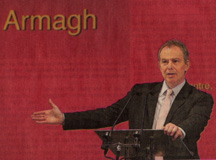
There was only one longer period of his tenure as Prime Minister when he stayed away from Northern Ireland, and that was between December 2004 and April 2006. That 16-month absence from Ulster coincided with a period of political stalemate following the Northern Bank robbery, and ended when he travelled to Armagh with Bertie Ahern to reaffirm the then deadline of November for a deal.
Perhaps the Prime Minister finally had been feeling demoralised with Northern Ireland during those absent months - some years earlier, after the alleged IRA spying ring was uncovered in October 2002, he had delivered one of his most significant speeches, at the Belfast Harbour Commissioners, telling republicans that they could not continue to be half-in, half-out of the political process.
But Mr Blair's involvement was far greater than the sum of his visits here. He visited Dublin too, and invited the main political parties at Downing Street on scores of occasions.
Mr Blair, alongside his counterpart Taoiseach Bertie Ahern, hosted three major sets of talks on the British mainland, all aimed at reviving the stalled political process in Northern Ireland.
The first of these summits was at Weston Park in Shropshire in July 2001.
Three years later, in September 2004, Mr Blair was at Leeds Castle in Kent for the failed talks there.
But the key meeting was at St Andrew's last autumn, when Mr Blair again presided over talks with the local politicians, paving the way for Tuesday's historic scenes at Stormont.
On three occasions Mr Blair accompanied US Presidents to Northern Ireland, two of those times with Bill Clinton. But perhaps his most striking coup was persuading George W Bush - who has less of an interest in Northern Ireland affairs than his White House predecessor - to hold a "war and peace" summit in Hillsborough Castle in April 2003. This was just as American troops were taking Baghdad, and allied victory in the Gulf War seemed assured.
On September 3, 1998, Mr Blair attended the Waterfront Hall with President Clinton. Later on the same visit, they went to the site of the Omagh bomb, which had exploded weeks earlier.
Mr Blair's first visit to Northern Ireland as Prime Minister was on May 16 1997, just over a fortnight after he was elected to 10 Downing Street. He wasn't back in the province for another five months, when he had the historic first Sinn Fein meeting.
It was a critical moment in a process that culminated in extraordinary scenes in Belfast this week.
BY BEN LOWRY
THERE was little indication that Tony Blair would take such an intensive interest in Northern Ireland when he became Labour leader in 1994.
He visited the province later that year, and again two years afterwards in December 1996 when he met with the major Northern Ireland parties except Sinn Fein, at a time when the IRA was not on ceasefire.
But Mr Blair moved quickly to bring republicans in from the cold after he was elected to 10 Downing Street in May 1997. The IRA murdered two policemen in Lurgan in June 1997, then declared a second ceasefire the following
month and within three months of that Mr Blair had met and shaken hands with Gerry Adams. Two months further on, Sinn Fein were in Downing Street.
Over the decade of his premiership, Mr Blair visited the province a total of 37 times, meaning that on average he flew into Northern Ireland once every quarter.
Eight of the visits were crammed into a six month period straddling the Belfast Agreement of Easter 1998, including a joint visit with his predecessor John Major to promote the deal.
But in recent years the trips have dried up - Mr Blair's visit to Northern Ireland on Tuesday was his first in ten months, bringing to an end one of the longest stretches of his premiership in which he did not make a trip to the province.
There was only one longer period of his tenure as Prime Minister when he stayed away from Northern Ireland, and that was between December 2004 and April 2006. That 16-month absence from Ulster coincided with a period of political stalemate following the Northern Bank robbery, and ended when he travelled to Armagh with Bertie Ahern to reaffirm the then deadline of November for a deal.
Perhaps the Prime Minister finally had been feeling demoralised with Northern Ireland during those absent months - some years earlier, after the alleged IRA spying ring was uncovered in October 2002, he had delivered one of his most significant speeches, at the Belfast Harbour Commissioners, telling republicans that they could not continue to be half-in, half-out of the political process.
But Mr Blair's involvement was far greater than the sum of his visits here. He visited Dublin too, and invited the main political parties at Downing Street on scores of occasions.
Mr Blair, alongside his counterpart Taoiseach Bertie Ahern, hosted three major sets of talks on the British mainland, all aimed at reviving the stalled political process in Northern Ireland.
The first of these summits was at Weston Park in Shropshire in July 2001.
Three years later, in September 2004, Mr Blair was at Leeds Castle in Kent for the failed talks there.
But the key meeting was at St Andrew's last autumn, when Mr Blair again presided over talks with the local politicians, paving the way for Tuesday's historic scenes at Stormont.
On three occasions Mr Blair accompanied US Presidents to Northern Ireland, two of those times with Bill Clinton. But perhaps his most striking coup was persuading George W Bush - who has less of an interest in Northern Ireland affairs than his White House predecessor - to hold a "war and peace" summit in Hillsborough Castle in April 2003. This was just as American troops were taking Baghdad, and allied victory in the Gulf War seemed assured.
On September 3, 1998, Mr Blair attended the Waterfront Hall with President Clinton. Later on the same visit, they went to the site of the Omagh bomb, which had exploded weeks earlier.
Mr Blair's first visit to Northern Ireland as Prime Minister was on May 16 1997, just over a fortnight after he was elected to 10 Downing Street. He wasn't back in the province for another five months, when he had the historic first Sinn Fein meeting.
It was a critical moment in a process that culminated in extraordinary scenes in Belfast this week.
Further Information
Publisher: BELFAST TELEGRAPH
Ref: BT/1033
Published Date: 10-May-07
Related Images