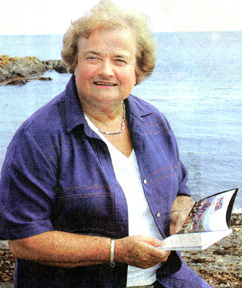
OMAGH, HILLSBOROUGH, GREYSTEEL, SHANKILL, LONDON, ... THIS IS MARION'S WORLD
Omagh, Hillsborough, Greysteel, Shankill, London ... this is Marion's world
Dr Marion Gibson, (64), a trauma specialist from Belfast, is Queen's University's Graduate of the Year. Dr Gibson, a widow and consultant director of Staffcare, tells Karen Ireland how she has used years of experience of atrocities here to help victims worldwide, including those who lost loved ones in South east Asia and, more recently, London.
I often say trauma follows me. I always seem to end up in the right place at the right time - but that's how I know this is exactly what I am meant to do with my life. I've seen a lot of trauma over the years and helped many people pick up the pieces from things no human being should ever have to go through.
But I believe there is something to be learnt from every experience - and ways for those lessons to help others.
I've been involved in the aftermath of events such as the tsunami, the Omagh bomb, the Shankill Road bomb, Hillsborough, Greysteel ... sadly, the list goes on and continues to go on.
Just last month, the day after I received my award from Queen's, I was giving a talk to a specialist resilience team in London on emergency strategies when news of the bombings came through.
People always ask how I can do this type of job day in and day out. I have terrific support from my family and friends, particularly my son Paul, his wife Gail, and my two precious grandchildren, Leon (7) and Max (5). They are my life and I can always rely on them to help me switch off and keep me occupied.
Also, I've learnt a lot over the years, like when to ask for help - you have to accept you can't do everything and learn to say no sometimes.
After London, I was asked to go to Egypt following the bombings there, but I knew it wasn't the right thing to do because I just wasn't ready.
Someone else would have had more to give and could do more than me at that time.
But in London on July 7,1 had to calmly go back into a room full of people and tell them that what we had just been talking about in theory had become a reality.
As always, I was amazed at the way people pulled together and got on with things. That happens, you know, people see what needs to be done in a time of crisis and they just do it. I've seen it all over the world.
One of the things which impressed me most in the aftermath of the London bombings was the dignity and sensitivity with which the relatives of the dead were handled.
I was taken to where the team had made a temporary mortuary for the bodies. I saw it as a member of family or a loved one would see it, and what had been created in a short space of time was amazing and a real tribute to the team. In the midst of all that chaos and tragedy was this calm, special place with fresh flowers, private rooms and little gardens.
Everything was handled with the utmost care and respect. In my eyes nothing had been neglected or left to chance; every small detail was thought of and taken care of.
I hadn't planned to become a trauma specialist, the job kind of found me. Ironically, given my recent honour, I didn't want to go to university either. When I left school all I wanted was to become a nurse. I started training but, at the same time, I met and fell in love with my late husband.
Tom was a minister and had just been appointed as a curate in Liverpool. He was adamant that I stayed here and finished my nursing studies but, in the end, we wanted to be together, so I left and went to Liverpool to become a minister's wife.
A few years later Tom got a post in east Belfast and we returned home to work in Northern Ireland at the height of the Troubles.
It was at this time I developed a passion for people and for helping to support victims. Our church hall was open all night and we saw the impact the violence was having on men, women and children from all walks of life. My own world was turned upside down in the 70s when Tom was diagnosed with cancer. But, as was his way, he wanted to keep up appearances and to continue to work, which he did up until three weeks before he died.
I think Tom's courage and strength has helped me to this day to cope with everything I have been faced with since. As a minister's wife I knew I was going to lose my home and my livelihood with Tom's death, so we moved to a small bungalow and I started to work as a playgroup leader before going back to nursing.
Through nursing and working with victims and talking to them in the middle of the night, I became more and more interested in people and the impact of trauma on their lives.
I started to study social work and, through secondments and placements, I finally qualified.
I worked my way up. As a single mum I relied greatly on support from family and friends, but I studied night and day and finally became head of social work at Belfast City Hospital.
One of the biggest turning points for me was being asked to go out as part of a team to the site of the Kegworth air disaster. When we came home again, I felt like I had nothing left to give. I was struggling to cope and couldn't switch off - but who does someone who helps other people turn to when they themselves are struggling?
I didn't know, but I wanted someone to talk to and I wanted it done quickly and confidentially. I didn't want it to affect what people thought of me or my ability to continue my job.
I did indeed get help - but then I started to think that others must be in a similar situation but not be as lucky as I was in finding the right person or knowing where to look.
So I started thinking about counselling services and support for staff and for carers. Out of this the vision of Staffcare was born, a facility which started out with eight part-time counsellors. We now have over 250 councellors all over the UK and Ireland.
Through this we have been in the background in many major incidents such as Dunblane and Omagh, but everything we do is behind the scenes. No one really knows we are there and that's the way it should be. Companies employ us and we counsel and support their staff on a confidential basis.
I love what I do. I always have. I'm supposed to be slowing down a bit now and hope to take on more of a consultancy role, but I remember when I celebrated my PhD and my 60th birthday in the same year, Paul saying to me: "Mum, your brain will seize up if you stop learning now." I think that's why getting the award from Queen's has meant so much to me. It is a tribute to the fact that you are never too old to learn - after all, I was a late starter and all sorts of opportunities have been opened up to me.
Over the years my heart has ached for some of the people I have met and sometimes the hardest thing is knowing that you only have a short time to make a big difference in people's lives.
After the tsunami, I went over with the Red Cross and we only had 14 days so we had to make every second of that count.
I met so many remarkable people, people who in the face of the worst circumstances imaginable were showing so much resilience and courage.
I built up bonds which I hope will last a lifetime. In particular, there was one young Thai woman who had lost her English husband and their three small children.
We became very close and I felt so proud to become part of her life and privileged to watch her slowly start to heal one day and one step at a time. I think I probably learned as much from her, and she helped me as much as I helped her.
Dr Marion Gibson is also author of Order from Chaos: Responding to Traumatic Events.
Dr Marion Gibson, (64), a trauma specialist from Belfast, is Queen's University's Graduate of the Year. Dr Gibson, a widow and consultant director of Staffcare, tells Karen Ireland how she has used years of experience of atrocities here to help victims worldwide, including those who lost loved ones in South east Asia and, more recently, London.
I often say trauma follows me. I always seem to end up in the right place at the right time - but that's how I know this is exactly what I am meant to do with my life. I've seen a lot of trauma over the years and helped many people pick up the pieces from things no human being should ever have to go through.
But I believe there is something to be learnt from every experience - and ways for those lessons to help others.
I've been involved in the aftermath of events such as the tsunami, the Omagh bomb, the Shankill Road bomb, Hillsborough, Greysteel ... sadly, the list goes on and continues to go on.
Just last month, the day after I received my award from Queen's, I was giving a talk to a specialist resilience team in London on emergency strategies when news of the bombings came through.
People always ask how I can do this type of job day in and day out. I have terrific support from my family and friends, particularly my son Paul, his wife Gail, and my two precious grandchildren, Leon (7) and Max (5). They are my life and I can always rely on them to help me switch off and keep me occupied.
Also, I've learnt a lot over the years, like when to ask for help - you have to accept you can't do everything and learn to say no sometimes.
After London, I was asked to go to Egypt following the bombings there, but I knew it wasn't the right thing to do because I just wasn't ready.
Someone else would have had more to give and could do more than me at that time.
But in London on July 7,1 had to calmly go back into a room full of people and tell them that what we had just been talking about in theory had become a reality.
As always, I was amazed at the way people pulled together and got on with things. That happens, you know, people see what needs to be done in a time of crisis and they just do it. I've seen it all over the world.
One of the things which impressed me most in the aftermath of the London bombings was the dignity and sensitivity with which the relatives of the dead were handled.
I was taken to where the team had made a temporary mortuary for the bodies. I saw it as a member of family or a loved one would see it, and what had been created in a short space of time was amazing and a real tribute to the team. In the midst of all that chaos and tragedy was this calm, special place with fresh flowers, private rooms and little gardens.
Everything was handled with the utmost care and respect. In my eyes nothing had been neglected or left to chance; every small detail was thought of and taken care of.
I hadn't planned to become a trauma specialist, the job kind of found me. Ironically, given my recent honour, I didn't want to go to university either. When I left school all I wanted was to become a nurse. I started training but, at the same time, I met and fell in love with my late husband.
Tom was a minister and had just been appointed as a curate in Liverpool. He was adamant that I stayed here and finished my nursing studies but, in the end, we wanted to be together, so I left and went to Liverpool to become a minister's wife.
A few years later Tom got a post in east Belfast and we returned home to work in Northern Ireland at the height of the Troubles.
It was at this time I developed a passion for people and for helping to support victims. Our church hall was open all night and we saw the impact the violence was having on men, women and children from all walks of life. My own world was turned upside down in the 70s when Tom was diagnosed with cancer. But, as was his way, he wanted to keep up appearances and to continue to work, which he did up until three weeks before he died.
I think Tom's courage and strength has helped me to this day to cope with everything I have been faced with since. As a minister's wife I knew I was going to lose my home and my livelihood with Tom's death, so we moved to a small bungalow and I started to work as a playgroup leader before going back to nursing.
Through nursing and working with victims and talking to them in the middle of the night, I became more and more interested in people and the impact of trauma on their lives.
I started to study social work and, through secondments and placements, I finally qualified.
I worked my way up. As a single mum I relied greatly on support from family and friends, but I studied night and day and finally became head of social work at Belfast City Hospital.
One of the biggest turning points for me was being asked to go out as part of a team to the site of the Kegworth air disaster. When we came home again, I felt like I had nothing left to give. I was struggling to cope and couldn't switch off - but who does someone who helps other people turn to when they themselves are struggling?
I didn't know, but I wanted someone to talk to and I wanted it done quickly and confidentially. I didn't want it to affect what people thought of me or my ability to continue my job.
I did indeed get help - but then I started to think that others must be in a similar situation but not be as lucky as I was in finding the right person or knowing where to look.
So I started thinking about counselling services and support for staff and for carers. Out of this the vision of Staffcare was born, a facility which started out with eight part-time counsellors. We now have over 250 councellors all over the UK and Ireland.
Through this we have been in the background in many major incidents such as Dunblane and Omagh, but everything we do is behind the scenes. No one really knows we are there and that's the way it should be. Companies employ us and we counsel and support their staff on a confidential basis.
I love what I do. I always have. I'm supposed to be slowing down a bit now and hope to take on more of a consultancy role, but I remember when I celebrated my PhD and my 60th birthday in the same year, Paul saying to me: "Mum, your brain will seize up if you stop learning now." I think that's why getting the award from Queen's has meant so much to me. It is a tribute to the fact that you are never too old to learn - after all, I was a late starter and all sorts of opportunities have been opened up to me.
Over the years my heart has ached for some of the people I have met and sometimes the hardest thing is knowing that you only have a short time to make a big difference in people's lives.
After the tsunami, I went over with the Red Cross and we only had 14 days so we had to make every second of that count.
I met so many remarkable people, people who in the face of the worst circumstances imaginable were showing so much resilience and courage.
I built up bonds which I hope will last a lifetime. In particular, there was one young Thai woman who had lost her English husband and their three small children.
We became very close and I felt so proud to become part of her life and privileged to watch her slowly start to heal one day and one step at a time. I think I probably learned as much from her, and she helped me as much as I helped her.
Dr Marion Gibson is also author of Order from Chaos: Responding to Traumatic Events.
Further Information
Publisher: BELFAST TELEGRAPH
Ref: BT/0973
Published Date: 26-Aug-05
Related Images