WILL THE BOMBERS EVER BE BROUGHT TO JUSTICE?
WILL THE BOMBERS EVER BE BROUGHT TO JUSTICE?
By Ciaran McGuigan
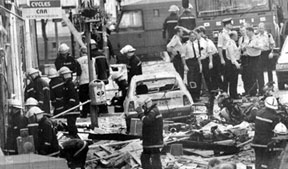
THE Real IRA bomb which ripped through the heart of Omagh on this day two years ago marked the largest single atrocity in Northern Ireland's troubled history. And the hunt to find those responsible for the 29 deaths- and to bring them to justice- has been the biggest investigation ever undertaken by the RUC and one of the largest by any police force in the world.
It has seen RUC officers and their Garda counterparts amass a huge amount of information about the events of August 15, 1998 and the days preceding. But it has led to only one man - an alleged minor player in the huge conspiracy - being charged.
The names of half-a-dozen or so chief suspects have been known to investigators for over a year - the man who mixed the bomb, the man who built the timer and power unit, those who drove the 300lb bomb into Omagh and those who made a series of fatally inaccurate telephone warnings. Much of the information has emerged from the US National Security Agency's massive 'listening' base at Men-with Hill in North Yorkshire. A staggering 500 million telephone calls - made before, during and after the terrorist attack - have been-scrutinised by staff at the base and the NSA's headquarters at Fort Meade in Maryland.
But while this information has allowed the RUC and Garda investigating teams to map out the exact events and participants, in terms of securing convictions it is next to useless. Tapped telephone conversations are not admissible as evidence in court.
In a bid to secure the vital information, an incredible 6,000 potential witnesses have been interviewed by police with more than 3,500
door-to-door inquiries made and about 2,600 statements recorded. A team from the Anti-Terrorist branch of the Metropolitan Police in London travelled to Omagh and helped the RUC remove over 60 tons of rubble through which officers painstakingly sifted to unearth clues.
And teams of forensic scientists have examined some 400 items, including the two telephone boxes from which warning calls were made. They were able to reconstruct parts of the bomb and tell police that the timing device was held in a plastic lunch box.
As a result of these efforts some 78 people have been questioned on both sides of the border - 55 by Garda and 23 by the RUC.
But only one man has been charged. He will stand trial in Dublin next January on charges of conspiracy to cause explosions and membership of an illegal organisation. Nearly 2,000 of the 3,200 or so murders committed during the Troubles remain unsolved. Like the vast majority of those crimes, the silence of those who know who are responsible has prevented conviction.
As the second anniversary of the bombing arrives, RUC officers remain silent on the progress of the investigation and the ongoing review into that investigation at the request of the families of the 29 victims. But they are only too aware of the need for concrete evidence to charge and convict those they firmly believe were behind the bomb.
Eric Anderson, the RUC Deputy Chief Constable leading the investigation, said recently: "We probably know half-a-dozen' who were involved. The problem is producing a case that convicts them. It's one thing to know who did it and another to produce evidence to put them away."
That frustration is shared by his counterparts over the border. In a recent interview Garda Commissioner Pat Byrne said: "Intelligence is no good. If I could prosecute people for all the intelligence information I had on them... a lot more would be in jail.
"There is a price to be paid for democracy that a person is innocent until proven guilty."
Two years on, it is increasingly unlikely the main perpetrators will ever be brought to justice.
By Ciaran McGuigan
THE Real IRA bomb which ripped through the heart of Omagh on this day two years ago marked the largest single atrocity in Northern Ireland's troubled history. And the hunt to find those responsible for the 29 deaths- and to bring them to justice- has been the biggest investigation ever undertaken by the RUC and one of the largest by any police force in the world.
It has seen RUC officers and their Garda counterparts amass a huge amount of information about the events of August 15, 1998 and the days preceding. But it has led to only one man - an alleged minor player in the huge conspiracy - being charged.
The names of half-a-dozen or so chief suspects have been known to investigators for over a year - the man who mixed the bomb, the man who built the timer and power unit, those who drove the 300lb bomb into Omagh and those who made a series of fatally inaccurate telephone warnings. Much of the information has emerged from the US National Security Agency's massive 'listening' base at Men-with Hill in North Yorkshire. A staggering 500 million telephone calls - made before, during and after the terrorist attack - have been-scrutinised by staff at the base and the NSA's headquarters at Fort Meade in Maryland.
But while this information has allowed the RUC and Garda investigating teams to map out the exact events and participants, in terms of securing convictions it is next to useless. Tapped telephone conversations are not admissible as evidence in court.
In a bid to secure the vital information, an incredible 6,000 potential witnesses have been interviewed by police with more than 3,500
door-to-door inquiries made and about 2,600 statements recorded. A team from the Anti-Terrorist branch of the Metropolitan Police in London travelled to Omagh and helped the RUC remove over 60 tons of rubble through which officers painstakingly sifted to unearth clues.
And teams of forensic scientists have examined some 400 items, including the two telephone boxes from which warning calls were made. They were able to reconstruct parts of the bomb and tell police that the timing device was held in a plastic lunch box.
As a result of these efforts some 78 people have been questioned on both sides of the border - 55 by Garda and 23 by the RUC.
But only one man has been charged. He will stand trial in Dublin next January on charges of conspiracy to cause explosions and membership of an illegal organisation. Nearly 2,000 of the 3,200 or so murders committed during the Troubles remain unsolved. Like the vast majority of those crimes, the silence of those who know who are responsible has prevented conviction.
As the second anniversary of the bombing arrives, RUC officers remain silent on the progress of the investigation and the ongoing review into that investigation at the request of the families of the 29 victims. But they are only too aware of the need for concrete evidence to charge and convict those they firmly believe were behind the bomb.
Eric Anderson, the RUC Deputy Chief Constable leading the investigation, said recently: "We probably know half-a-dozen' who were involved. The problem is producing a case that convicts them. It's one thing to know who did it and another to produce evidence to put them away."
That frustration is shared by his counterparts over the border. In a recent interview Garda Commissioner Pat Byrne said: "Intelligence is no good. If I could prosecute people for all the intelligence information I had on them... a lot more would be in jail.
"There is a price to be paid for democracy that a person is innocent until proven guilty."
Two years on, it is increasingly unlikely the main perpetrators will ever be brought to justice.
Further Information
Publisher: BELFAST TELEGRAPH
Ref: BT/0750
Published Date: 15-Aug-00
Related Images