FEELINGS IN THE RUC RANKS ON THE EVE OF THE PATTEN REPORT
FEELINGS IN THE RUC RANKS ON THE EVE OF THE PATTEN REPORT
Interviews: Kathryn Torney
quote
When I first came round I was on morphine for a week or so and had a sense of jubilation that I had survived. I did not understand the gravity of my injuries and the effect they would have on my life and that of my family. At least my four children still have a father - there are more than 300
families with just a picture to look at."
quote
"Omagh was a tragedy, but it is not the only tragedy to have taken place in Northern Ireland. My colleagues have been doing the duties I performed on that day for years. They may not have been on the same scale as Omagh, but they have occurred with frightening frequency."
Patten Report
THE Patten plan for policing will lead to drastic changes for, thousands of police officers currently serving in Northern Ireland. The proposals, exclusively revealed by the Belfast Telegraph, include re-naming the force The Police Service of Northern Ireland and the introduction of a new badge. All officers will be asked to take a new oath which makes no reference to the Queen and the Union Flag will be taken down from stations. But, on the eve of publication of the Patten Report, what do serving RUC officers feel about impending change? We talked to several of them. The first is Liam Byrne who has served in the RUC for the past 19 years and is an inspector in the newly set up team for auto crime, which deals with the problem of 'joyriding'.
INSPECTOR BYRNE(38) is one of the minority of Catholics in the RUC. They make up just 8% of the total regular officers and full-time Reserve.
He said: "I have tremendous loyalty to an organisation I have spent most of my adult life in. However I am realistic about the difficulties, particularly with the nationalist community. "Being a person from a nationalist background has also always had added difficulties for people who are in the RUC but I am hopeful that that will change.
"In the wake of the ceasefires there is the opportunity for policing in Northern Ireland to return to the core quality of life issues.
"I am proud of the strong tradition of policing in Ireland which provided a template for policing in the UK and worldwide, and the symbols are part of that long tradition.
"I would see a break from that tradition as causing some concern to me unless a name change, change of uniform and so on would improve the quality of the service we can provide."
Insp Byrne said that the current mood among officers awaiting the release of the Patten proposals is apprehensive.
"The RUC are honest, hard-working, diligent people who have ordinary lives to lead and mortgages to pay.
"But we are professionals and are willing to take on new challenges that can be positively displayed as impacting for the betterment of the community. "I think that perhaps it is the time for people from my background to reconsider their attitude to policing and to reassess issues such as working in partnership and entering a career in policing."
CHERITH NEILL is likely to be one of the first new officers in the post-Patten era of the RUC. The 22-year-old is currently undergoing training and has only been in the force 12 weeks. In her squad of 54 there are only 15 women and in the total force women make up around 10% of the regular officers and full-time Reserve.
"I think that if any organisation wants to be successful it has to move with the times but change also has to be justified," she said.
"I think women have a definite role to play within the force. The small proportion of women in the RUC is being addressed, but these things take time. "It will be harder for me to be emotional about issues like a name change than for a lot of people who have been with the police for years and have pride in their name and their uniform.
"But if we can do a better job as a result of the changes then we will get better results."
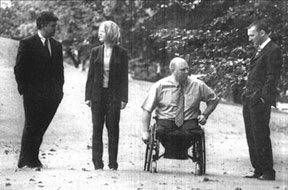
PAUL SLAINE joined the RUC in 1988.
Four years later he lost both his legs in an IRA mortar attack in Newry. Terrorists fired at the police car he was driving, killing the female
constable sitting beside him - 34-year-old Colleen McMurray.
"It is absolutely horrific what happened to Colleen. I don't think any of her family or friends will ever come to terms with it," he said.
Paul spent eight weeks in hospital and a further year at home recuperating but he returned to serve in the RUC in 1993.
"When I first came round I was on morphine for a week or so and had a sense of jubilation that I had survived. I did not understand the gravity of my injuries and the effect they would have on my life and that of my family.
"I then went into a bit of a trough and could not accept that I would have any degree of normal life again.
"There have been over 300 police officers killed over the last 30 years of the Troubles and over 9,000 injured - some lost their sight, others have lost limbs and some are, like me, confined to a wheelchair.
"At least my four children still have a father - there are more than 300 families with just a picture to look at.
"They only have a headstone to visit in the graveyard with the RUC crest on it.
"A lot of people find it hard to accept that the change of name, badge and so on can be so emotive, but to some families it is all they have."
When asked how he felt about changes to the RUC, he said he would be disappointed if the name of the force was changed.
"I don't think terrorists have succeeded with what they set out to do 30 years ago with bombs, bullets, intimidation and fear. It would be sad if a report could fulfill their wishes. "It is quite easy to sit in your living room watching television pictures of contentious marches where officers have been forced to intervene and criticise them - but I know how difficult these situations can be.
"I think the people should consider the sacrifices that have been made by so many people in the RUC. At times we are just used as a political football
NORMAN HASLETT (30) is a constable with the neighbourhood unit in Omagh and played a vital role following the devastating blast which rocked the town last August. "It was a horrific day from start to finish," he said. "We had to tend to the injured and take the people killed in the bomb to a temporary mortuary.
"We then had the responsibility of attempting to identify the people who had died and other police officers had the horrendous task of informing the relatives.
"We were there, had a duty to perform and performed it but it was hard to deal with. "Omagh was a tragedy, but it is not the only tragedy to have taken place in Northern Ireland.
"My colleagues have been doing the duties I performed on that day for years. They may not have been on the same scale as Omagh, but they have occurred with frightening frequency."
Even after the report comes out, Const Haslett said, there will still be a job to be done.
"There are certain aspects to the rumours about the report that I do not like but we are professionals and we will get on with the job."
Interviews: Kathryn Torney
quote
When I first came round I was on morphine for a week or so and had a sense of jubilation that I had survived. I did not understand the gravity of my injuries and the effect they would have on my life and that of my family. At least my four children still have a father - there are more than 300
families with just a picture to look at."
quote
"Omagh was a tragedy, but it is not the only tragedy to have taken place in Northern Ireland. My colleagues have been doing the duties I performed on that day for years. They may not have been on the same scale as Omagh, but they have occurred with frightening frequency."
Patten Report
THE Patten plan for policing will lead to drastic changes for, thousands of police officers currently serving in Northern Ireland. The proposals, exclusively revealed by the Belfast Telegraph, include re-naming the force The Police Service of Northern Ireland and the introduction of a new badge. All officers will be asked to take a new oath which makes no reference to the Queen and the Union Flag will be taken down from stations. But, on the eve of publication of the Patten Report, what do serving RUC officers feel about impending change? We talked to several of them. The first is Liam Byrne who has served in the RUC for the past 19 years and is an inspector in the newly set up team for auto crime, which deals with the problem of 'joyriding'.
INSPECTOR BYRNE(38) is one of the minority of Catholics in the RUC. They make up just 8% of the total regular officers and full-time Reserve.
He said: "I have tremendous loyalty to an organisation I have spent most of my adult life in. However I am realistic about the difficulties, particularly with the nationalist community. "Being a person from a nationalist background has also always had added difficulties for people who are in the RUC but I am hopeful that that will change.
"In the wake of the ceasefires there is the opportunity for policing in Northern Ireland to return to the core quality of life issues.
"I am proud of the strong tradition of policing in Ireland which provided a template for policing in the UK and worldwide, and the symbols are part of that long tradition.
"I would see a break from that tradition as causing some concern to me unless a name change, change of uniform and so on would improve the quality of the service we can provide."
Insp Byrne said that the current mood among officers awaiting the release of the Patten proposals is apprehensive.
"The RUC are honest, hard-working, diligent people who have ordinary lives to lead and mortgages to pay.
"But we are professionals and are willing to take on new challenges that can be positively displayed as impacting for the betterment of the community. "I think that perhaps it is the time for people from my background to reconsider their attitude to policing and to reassess issues such as working in partnership and entering a career in policing."
CHERITH NEILL is likely to be one of the first new officers in the post-Patten era of the RUC. The 22-year-old is currently undergoing training and has only been in the force 12 weeks. In her squad of 54 there are only 15 women and in the total force women make up around 10% of the regular officers and full-time Reserve.
"I think that if any organisation wants to be successful it has to move with the times but change also has to be justified," she said.
"I think women have a definite role to play within the force. The small proportion of women in the RUC is being addressed, but these things take time. "It will be harder for me to be emotional about issues like a name change than for a lot of people who have been with the police for years and have pride in their name and their uniform.
"But if we can do a better job as a result of the changes then we will get better results."
PAUL SLAINE joined the RUC in 1988.
Four years later he lost both his legs in an IRA mortar attack in Newry. Terrorists fired at the police car he was driving, killing the female
constable sitting beside him - 34-year-old Colleen McMurray.
"It is absolutely horrific what happened to Colleen. I don't think any of her family or friends will ever come to terms with it," he said.
Paul spent eight weeks in hospital and a further year at home recuperating but he returned to serve in the RUC in 1993.
"When I first came round I was on morphine for a week or so and had a sense of jubilation that I had survived. I did not understand the gravity of my injuries and the effect they would have on my life and that of my family.
"I then went into a bit of a trough and could not accept that I would have any degree of normal life again.
"There have been over 300 police officers killed over the last 30 years of the Troubles and over 9,000 injured - some lost their sight, others have lost limbs and some are, like me, confined to a wheelchair.
"At least my four children still have a father - there are more than 300 families with just a picture to look at.
"They only have a headstone to visit in the graveyard with the RUC crest on it.
"A lot of people find it hard to accept that the change of name, badge and so on can be so emotive, but to some families it is all they have."
When asked how he felt about changes to the RUC, he said he would be disappointed if the name of the force was changed.
"I don't think terrorists have succeeded with what they set out to do 30 years ago with bombs, bullets, intimidation and fear. It would be sad if a report could fulfill their wishes. "It is quite easy to sit in your living room watching television pictures of contentious marches where officers have been forced to intervene and criticise them - but I know how difficult these situations can be.
"I think the people should consider the sacrifices that have been made by so many people in the RUC. At times we are just used as a political football
NORMAN HASLETT (30) is a constable with the neighbourhood unit in Omagh and played a vital role following the devastating blast which rocked the town last August. "It was a horrific day from start to finish," he said. "We had to tend to the injured and take the people killed in the bomb to a temporary mortuary.
"We then had the responsibility of attempting to identify the people who had died and other police officers had the horrendous task of informing the relatives.
"We were there, had a duty to perform and performed it but it was hard to deal with. "Omagh was a tragedy, but it is not the only tragedy to have taken place in Northern Ireland.
"My colleagues have been doing the duties I performed on that day for years. They may not have been on the same scale as Omagh, but they have occurred with frightening frequency."
Even after the report comes out, Const Haslett said, there will still be a job to be done.
"There are certain aspects to the rumours about the report that I do not like but we are professionals and we will get on with the job."
Further Information
Publisher: BELFAST TELEGRAPH
Ref: BT/0726
Published Date: 08-Sep-99
Related Images