WHY I TOOK ON THE REAL IRA BOMBERS
Why I took on the Real IRA bombers
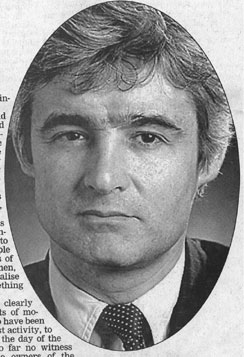
JOHN Ware has a persistent mobile phone. The Panorama journalist ,who on Monday night named four men suspected of bombing Omagh in 1998, is interrupted three times during our interview.
Television can be a luvvie-ish' business, he says apologetically, as friends buzz to congratulate him on the programme. But one of the calls is important. It's a BBC colleague, telling him that Northern Ireland Secretary Peter Mandelson has 'endorsed' the corporation's decision to screen his Panorama film. Ware is delighted and rather astonished by this development.
The delight is easy to explain. Ware has spent the last week or so negotiating his way through a storm of controversy. The Panorama office has been deluged with letters from lawyers acting on behalf of the men he named.
Last Friday, the High Court in Belfast rejected an attempt by the husband of one of the Omagh victims to injunct the programme. And on Monday, Mr Justice Kerr threw out an eleventh-hour application to block the film, this time from the Northern Ireland Human Rights Commission, which claimed not only that naming suspects would prejudice any eventual criminal trial but that it had implications for 'the personal safety and right to life' of those men who were identified.
The Tory spokesman on Northern Ireland, Andrew McKay, meanwhile, launched a personal attack on Ware: "I deprecate journalists with large egos who self-indulgently make such programmes knowing full well that the chances of a successful conviction will be much reduced by them naming the suspects," he said.
It's been an intensely difficult seven days.
Ware has his own selection of choice words for McKay, but is primarily keen to dismiss the issue of prejudice.
"Let's turn the question back on him," he says. "Who is going to be prejudiced? There's no jury-it would be a judge-only trial. Is he saying that a judge can be influenced by a television programme?"
Of course, the judge-only Diplock Courts grant an automatic right of appeal on points of law or fact, but the subsequent appeal case is also heard by three judges, not by a jury.
But what about the Human Rights Commission complaint? The fact that the programme not only named the suspects, but showed their faces and their places of work surely puts them at risk of revenge attack - which isn't justice as it ought to be practised.
Besides, is it truly the role of programme makers to interfere in security service operations quite so blatantly, crudely even?
Ware is impassioned on both points. He says that the programme would not have aired 'if we felt there was a real danger to the lives of these men' (though how one calculates that danger he doesn't say).
"This wasn't a fishing expedition," he says. "Only when we were sure that there was a very well-founded case for suspicion did we go ahead."
He is not, incidentally, willing to discuss the role played by the RUC, or other security services, in the making of the programme, though he does, significantly perhaps, praise the 'tremendously professional' investigation carried out by police in both Northern Ireland and the Republic.
Equally, he believes that it's exactly the role of public service broadcasting companies to make films like his. "The pressure was very heavy on the BBC," he says. "But everyone was very clearheaded and robust and determined to transmit this programme. It is the quintessential role of the BBC to do this kind of thing."
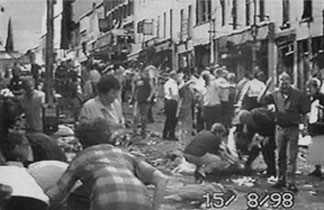
He expresses his own motives, and by implication those of the BBC, eloquently. "Omagh was so dreadful. Every terrorist murder is, and every family goes through what the families in Omagh went through, and are still going through. But the sheer scale of Omagh -it was a cruel, wicked ambush coming as it did during the ceasefire. It killed people of all faiths, mainly women.
"We talked to lots and lots of relatives and these were broken people, people who were trying to summon the courage to put then-lives back together and in some cases failing.
"I just thought this is such a bloody outrage, so plainly wrong."
The programme was designed, he says, to encourage witnesses to come forward - people who, seeing the faces of the four named men, might suddenly realise that they know something important.
Though the film clearly traces the movements of mobile phones, known to have been used in other terrorist activity, to and from Omagh on the day of the bombing, there is so far no witness evidence to link the owners of the phones with the atrocity itself. Or, at least, there are no witnesses prepared to testify in court.
"I know that part of the world," says Ware, "I have covered Northern Ireland for a long time and I know that the conspiracy of silence prevents justice and I don't want to underplay the fear factor. But there is infinitely more good in any community than there is bad. It only takes one person to break away."
I ask him whether he was ever in any personal danger during the making of the film, since it certainly seemed that way on occasion. Many of us might think twice before doorstepping terrorist suspects and their cronies - as he and his camera crew did - particularly for such a presenter-led film. But he's adamant that his own bravery is not an issue.
"It wasn't just me, in any case," he says. "There was a team of people with me." Whose names, unsurprisingly, were left off the credit list at the end of the programme.
At the end of the interview, when I ask him how he intends to follow the Omagh film, I get the feeling Ware is considering his position at the BBC (and he's been there for many years). Not because of the controversy surrounding this programme - on the contrary, he has nothing but high praise for director-general Greg Dyke and head of news Tony Hall and the people who supported him during the legal battles - but because Panorama has been sidelined, shoved from serious Monday nights to a graveyard slot on Sunday.
Ware reserves real rage for this: "I sincerely mean this," he says, narrowing his eyes, "I am highly critical of, and very sad about, the BBC's decision to move Panorama from a week-day slot.
"The fact that it will still go out on BBC1 is a fig-leaf to cover the fact that it'll no longer air in prime time."
JOHN Ware has a persistent mobile phone. The Panorama journalist ,who on Monday night named four men suspected of bombing Omagh in 1998, is interrupted three times during our interview.
Television can be a luvvie-ish' business, he says apologetically, as friends buzz to congratulate him on the programme. But one of the calls is important. It's a BBC colleague, telling him that Northern Ireland Secretary Peter Mandelson has 'endorsed' the corporation's decision to screen his Panorama film. Ware is delighted and rather astonished by this development.
The delight is easy to explain. Ware has spent the last week or so negotiating his way through a storm of controversy. The Panorama office has been deluged with letters from lawyers acting on behalf of the men he named.
Last Friday, the High Court in Belfast rejected an attempt by the husband of one of the Omagh victims to injunct the programme. And on Monday, Mr Justice Kerr threw out an eleventh-hour application to block the film, this time from the Northern Ireland Human Rights Commission, which claimed not only that naming suspects would prejudice any eventual criminal trial but that it had implications for 'the personal safety and right to life' of those men who were identified.
The Tory spokesman on Northern Ireland, Andrew McKay, meanwhile, launched a personal attack on Ware: "I deprecate journalists with large egos who self-indulgently make such programmes knowing full well that the chances of a successful conviction will be much reduced by them naming the suspects," he said.
It's been an intensely difficult seven days.
Ware has his own selection of choice words for McKay, but is primarily keen to dismiss the issue of prejudice.
"Let's turn the question back on him," he says. "Who is going to be prejudiced? There's no jury-it would be a judge-only trial. Is he saying that a judge can be influenced by a television programme?"
Of course, the judge-only Diplock Courts grant an automatic right of appeal on points of law or fact, but the subsequent appeal case is also heard by three judges, not by a jury.
But what about the Human Rights Commission complaint? The fact that the programme not only named the suspects, but showed their faces and their places of work surely puts them at risk of revenge attack - which isn't justice as it ought to be practised.
Besides, is it truly the role of programme makers to interfere in security service operations quite so blatantly, crudely even?
Ware is impassioned on both points. He says that the programme would not have aired 'if we felt there was a real danger to the lives of these men' (though how one calculates that danger he doesn't say).
"This wasn't a fishing expedition," he says. "Only when we were sure that there was a very well-founded case for suspicion did we go ahead."
He is not, incidentally, willing to discuss the role played by the RUC, or other security services, in the making of the programme, though he does, significantly perhaps, praise the 'tremendously professional' investigation carried out by police in both Northern Ireland and the Republic.
Equally, he believes that it's exactly the role of public service broadcasting companies to make films like his. "The pressure was very heavy on the BBC," he says. "But everyone was very clearheaded and robust and determined to transmit this programme. It is the quintessential role of the BBC to do this kind of thing."
He expresses his own motives, and by implication those of the BBC, eloquently. "Omagh was so dreadful. Every terrorist murder is, and every family goes through what the families in Omagh went through, and are still going through. But the sheer scale of Omagh -it was a cruel, wicked ambush coming as it did during the ceasefire. It killed people of all faiths, mainly women.
"We talked to lots and lots of relatives and these were broken people, people who were trying to summon the courage to put then-lives back together and in some cases failing.
"I just thought this is such a bloody outrage, so plainly wrong."
The programme was designed, he says, to encourage witnesses to come forward - people who, seeing the faces of the four named men, might suddenly realise that they know something important.
Though the film clearly traces the movements of mobile phones, known to have been used in other terrorist activity, to and from Omagh on the day of the bombing, there is so far no witness evidence to link the owners of the phones with the atrocity itself. Or, at least, there are no witnesses prepared to testify in court.
"I know that part of the world," says Ware, "I have covered Northern Ireland for a long time and I know that the conspiracy of silence prevents justice and I don't want to underplay the fear factor. But there is infinitely more good in any community than there is bad. It only takes one person to break away."
I ask him whether he was ever in any personal danger during the making of the film, since it certainly seemed that way on occasion. Many of us might think twice before doorstepping terrorist suspects and their cronies - as he and his camera crew did - particularly for such a presenter-led film. But he's adamant that his own bravery is not an issue.
"It wasn't just me, in any case," he says. "There was a team of people with me." Whose names, unsurprisingly, were left off the credit list at the end of the programme.
At the end of the interview, when I ask him how he intends to follow the Omagh film, I get the feeling Ware is considering his position at the BBC (and he's been there for many years). Not because of the controversy surrounding this programme - on the contrary, he has nothing but high praise for director-general Greg Dyke and head of news Tony Hall and the people who supported him during the legal battles - but because Panorama has been sidelined, shoved from serious Monday nights to a graveyard slot on Sunday.
Ware reserves real rage for this: "I sincerely mean this," he says, narrowing his eyes, "I am highly critical of, and very sad about, the BBC's decision to move Panorama from a week-day slot.
"The fact that it will still go out on BBC1 is a fig-leaf to cover the fact that it'll no longer air in prime time."
Further Information
Publisher: BELFAST TELEGRAPH
Ref: BT/0606
Published Date: 13-Oct-00
Related Images