SPIRIT OF OMAGH IS UNDER THREAT A YEAR ON
Spirit of Omagh' is under threat a year on
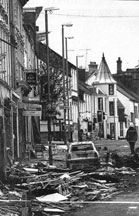
This coming Sunday is the first anniversary of the Omagh bomb. SEAMUS DUNN examines the legacy of that terrible day.
SAMUEL Beckett in one of his letters talked about '...the strange thing...that gives us the strength to live on and on with our wounds.'
The atrocity of Omagh one year ago was shocking and heart-breaking: its echoes and effects are still with us, and will be for a long time, and many there are struggling to live with their wounds.
But it was also different in that the public response was different. For once the people spoke without ambiguity or irony, because the bomb in Omagh defied their will as expressed in the referendum.
So the response had a new certainty, mutuality and anger in it that clearly surprised and shocked the bombers and their uncharacteristically reluctant public faces. The Agreement and the referendum empowered us all to say no with one voice.
Recent political failures clearly constitute a threat to that inclusive 'spirit of Omagh' and have generated both depression and pessimism. So it is important that we try to be honest about the current situation and root out the many current half-truths and self-serving analyses.
Someone once said that to every question that is complicated and difficult there is an answer that is simple, clear - and wrong.
Some - mainly external - commentators are now telling us that it is impossible for the two sides to live together, that the situation is hopeless and that the politicians need to start again and build a new political agreement that takes account of our inevitable and ineluctable social incompetence.
One part of this argument is the view that republicans hold fast to their all-Ireland prescription no matter what, and that their engagement in the recent attempts to negotiate a relationship was temporary, tactical and essentially fraudulent. And that they will not give up guns since they need them for the next step.
Is this true? As Seamus Mallon said, we could have found out. But the trouble with the pessimists has always been their patronising inability to see the possibility of change consequent upon social movement and public opinion.
Few nationalists who bought into the peace process were closet gunmen awaiting their moment. In practical politics the very process of involvement itself changes things, whatever the theoretical agenda, and there is lots of evidence that this was and is happening.
The other part of the argument is the view that unionists maintain a racial contempt for nationalists that is fundamental and visceral, and that their engagement in the process was, like that of republicans, essentially fraudulent.
This, it is argued, became evident when they refused to go to Stormont, and that the republican guns rescued them from a compromise with nationalists that in the end they could not face.
This in itself is racial and ignores the painful struggle going on within unionism to forge a new role and a new disposition for itself. Paisley, McCartney, Ross, Donaldson, Ervine, Drumcree, are all signals of the complexity and fissiparous nature of modern unionism.
Again, involvement in the practice of politics changes things away from their starting-point, and again it is happening, but it must be given time and room. To believe otherwise is simply to leave the devil out or the detail.
Of course we also know, from bitter experience, that when the talking stops the warriors get up on their horses again.
Those who say that violence never did stop are of course literally right: but they are also profoundly wrong.
We knew all along that it could not all stop at once, and that the unresolved anger and bitterness created by the long war would continue to haunt us for a time.
But we also knew that there was a spirit abroad in the land, epitomised by the referendum and demonstrated at Omagh, that denied the pessimists and professional Jeremiahs.
The great difficulty has been to generate an interpretative framework that makes sense of the whole, that leaves nothing out.
Once again the pessimists say the circle cannot be squared, often when they seem to mean that they cannot accept compromise and a negotiated relationship.
E. M. Forster said of India that it is a subject on which it is impossible to be too intricate: in the end we need a capaciousness of attitude that tolerates intricacy, because the things that separate us are also the things that bring us together.
And our response to Omagh exemplified that paradox because it gave us hope.
This coming Sunday is the first anniversary of the Omagh bomb. SEAMUS DUNN examines the legacy of that terrible day.
SAMUEL Beckett in one of his letters talked about '...the strange thing...that gives us the strength to live on and on with our wounds.'
The atrocity of Omagh one year ago was shocking and heart-breaking: its echoes and effects are still with us, and will be for a long time, and many there are struggling to live with their wounds.
But it was also different in that the public response was different. For once the people spoke without ambiguity or irony, because the bomb in Omagh defied their will as expressed in the referendum.
So the response had a new certainty, mutuality and anger in it that clearly surprised and shocked the bombers and their uncharacteristically reluctant public faces. The Agreement and the referendum empowered us all to say no with one voice.
Recent political failures clearly constitute a threat to that inclusive 'spirit of Omagh' and have generated both depression and pessimism. So it is important that we try to be honest about the current situation and root out the many current half-truths and self-serving analyses.
Someone once said that to every question that is complicated and difficult there is an answer that is simple, clear - and wrong.
Some - mainly external - commentators are now telling us that it is impossible for the two sides to live together, that the situation is hopeless and that the politicians need to start again and build a new political agreement that takes account of our inevitable and ineluctable social incompetence.
One part of this argument is the view that republicans hold fast to their all-Ireland prescription no matter what, and that their engagement in the recent attempts to negotiate a relationship was temporary, tactical and essentially fraudulent. And that they will not give up guns since they need them for the next step.
Is this true? As Seamus Mallon said, we could have found out. But the trouble with the pessimists has always been their patronising inability to see the possibility of change consequent upon social movement and public opinion.
Few nationalists who bought into the peace process were closet gunmen awaiting their moment. In practical politics the very process of involvement itself changes things, whatever the theoretical agenda, and there is lots of evidence that this was and is happening.
The other part of the argument is the view that unionists maintain a racial contempt for nationalists that is fundamental and visceral, and that their engagement in the process was, like that of republicans, essentially fraudulent.
This, it is argued, became evident when they refused to go to Stormont, and that the republican guns rescued them from a compromise with nationalists that in the end they could not face.
This in itself is racial and ignores the painful struggle going on within unionism to forge a new role and a new disposition for itself. Paisley, McCartney, Ross, Donaldson, Ervine, Drumcree, are all signals of the complexity and fissiparous nature of modern unionism.
Again, involvement in the practice of politics changes things away from their starting-point, and again it is happening, but it must be given time and room. To believe otherwise is simply to leave the devil out or the detail.
Of course we also know, from bitter experience, that when the talking stops the warriors get up on their horses again.
Those who say that violence never did stop are of course literally right: but they are also profoundly wrong.
We knew all along that it could not all stop at once, and that the unresolved anger and bitterness created by the long war would continue to haunt us for a time.
But we also knew that there was a spirit abroad in the land, epitomised by the referendum and demonstrated at Omagh, that denied the pessimists and professional Jeremiahs.
The great difficulty has been to generate an interpretative framework that makes sense of the whole, that leaves nothing out.
Once again the pessimists say the circle cannot be squared, often when they seem to mean that they cannot accept compromise and a negotiated relationship.
E. M. Forster said of India that it is a subject on which it is impossible to be too intricate: in the end we need a capaciousness of attitude that tolerates intricacy, because the things that separate us are also the things that bring us together.
And our response to Omagh exemplified that paradox because it gave us hope.
Further Information
Publisher: BELFAST TELEGRAPH
Ref: BT/0579
Published Date: 09-Sep-99
Related Images