HOAX CALLS PRESENT HUGE DANGER
Hoax calls present huge danger
Lives in danger each time telephone rings
The problem of hoax 999 calls is becoming so serious one police force in England is threatening to cut off telephones of persistent offenders. JANET DEVLIN reports how 999 operators in Northern Ireland cope with the life or death calls.
SATURDAY afternoon is usually a quiet time for British Telecom staff operating the 999 emergency telephone service.
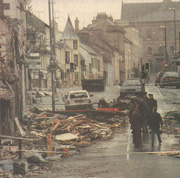
When a call about a bomb came through around 3.15pm on August 15 this year, operators had no immediate way of knowing whether it was genuine or not.
Yet, as the minutes ticked away, it became apparent that they were dealing with a major emergency and casualties on a scale never seen before.
They alerted police, fire and ambulance services, then started dealing with dozens of calls from distressed and confused relatives.
After helpline numbers were established, operators went on to cope with 999 calls from all round the province from people wanting to give blood or offer medical assistance.
"I was on duty when the Omagh calls started coming in and it was very hard," said Geraldine Newman, a BT team manager with 22 years" experience.
"It's especially difficult to be so far away from the scene and not be able to do anything physical to help - some of our staff were actually from Omagh - but you stay calm, you cope and you do your job.
"A few tears were shed afterward, but at the same time it was really wonderful the way the whole community rallied round to help."
The 999 operators are also in the frontline of helping the public cope with the sort of personal emergencies that come to us all sooner or later.
"One of our girls took the 999 call when Gordon Wilson died," said Geraldine. "She dealt with the call, and then she cried.
"We also have to deal with suicidal people - and that means staying on the line to provide comfort and support until we can get help to them.
"How to deal with 999 calls forms a big chunk of operator training. We don't have any special counselling service for operators - but there's always a cup of tea and time to talk it through."
One Ulster woman had a very special reason to thank a vigilant operator, whose sixth sense saved the day when a young child dialled 999.
The little boy sounded about three or four years of age and wasn't making much sense, yet he seemed very concerned about his mum and little sister.
The operator dispatched police and ambulance to the telephone number's address. Officers broke into the house to find the woman in a diabetic coma, collapsed on the floor on top of her baby daughter.
A few hours' more and it would have been too late, certainly for the woman and perhaps for the tiny girl as well.
All emergency calls go through the British Telecom operator service in Belfast, to a team of trained staff on duty every minute of every day of every year.
In Ulster, operators cope with around 750,000 of the free calls annually, peaking in July, around Halloween and the New Year.
Despite these facts, the 999 emergency telephone service is one we all take for granted - to the extent that, nationally at least, up to half of calls are hoaxes.
"It is a problem that is of very great concern," said Roy Catney, Operator Services Manager (Belfast). "It gives operators a lot of unnecessary work - and ties up hard-pressed emergency services.
"We class 999 calls as 'effective' or 'ineffective'. Ineffective calls can be deliberate hoaxes, misuse of the system, or calls which the fire, police or ambulance services would themselves class as ineffective.
"The vast majority of hoax calls are made by schoolchildren - any operator here can tell you when school gets out, in which area, and even what telephone boxes are used.
"The 999 calls take priority on our computer system over every other call. When a call comes in and all operators are already busy, a light flashes in the office and staff drop whatever call they're on to deal with the emergency.
Jackie Shannon is BT's emergency services liaison officer. She is about to relaunch a project aimed at educating schoolchildren on the folly of making hoax calls.
"We were able to compile statistics on which areas of Belfast yielded the highest number of hoax calls," she explained.
"Then we produced a video and pack to take into schools in those areas, accompanied by firemen and ambulance staff to talk to the kids.
"It's an educational process, really.
Any teacher interested is welcome to telephone me on 327327 for further information.
Lives in danger each time telephone rings
The problem of hoax 999 calls is becoming so serious one police force in England is threatening to cut off telephones of persistent offenders. JANET DEVLIN reports how 999 operators in Northern Ireland cope with the life or death calls.
SATURDAY afternoon is usually a quiet time for British Telecom staff operating the 999 emergency telephone service.
When a call about a bomb came through around 3.15pm on August 15 this year, operators had no immediate way of knowing whether it was genuine or not.
Yet, as the minutes ticked away, it became apparent that they were dealing with a major emergency and casualties on a scale never seen before.
They alerted police, fire and ambulance services, then started dealing with dozens of calls from distressed and confused relatives.
After helpline numbers were established, operators went on to cope with 999 calls from all round the province from people wanting to give blood or offer medical assistance.
"I was on duty when the Omagh calls started coming in and it was very hard," said Geraldine Newman, a BT team manager with 22 years" experience.
"It's especially difficult to be so far away from the scene and not be able to do anything physical to help - some of our staff were actually from Omagh - but you stay calm, you cope and you do your job.
"A few tears were shed afterward, but at the same time it was really wonderful the way the whole community rallied round to help."
The 999 operators are also in the frontline of helping the public cope with the sort of personal emergencies that come to us all sooner or later.
"One of our girls took the 999 call when Gordon Wilson died," said Geraldine. "She dealt with the call, and then she cried.
"We also have to deal with suicidal people - and that means staying on the line to provide comfort and support until we can get help to them.
"How to deal with 999 calls forms a big chunk of operator training. We don't have any special counselling service for operators - but there's always a cup of tea and time to talk it through."
One Ulster woman had a very special reason to thank a vigilant operator, whose sixth sense saved the day when a young child dialled 999.
The little boy sounded about three or four years of age and wasn't making much sense, yet he seemed very concerned about his mum and little sister.
The operator dispatched police and ambulance to the telephone number's address. Officers broke into the house to find the woman in a diabetic coma, collapsed on the floor on top of her baby daughter.
A few hours' more and it would have been too late, certainly for the woman and perhaps for the tiny girl as well.
All emergency calls go through the British Telecom operator service in Belfast, to a team of trained staff on duty every minute of every day of every year.
In Ulster, operators cope with around 750,000 of the free calls annually, peaking in July, around Halloween and the New Year.
Despite these facts, the 999 emergency telephone service is one we all take for granted - to the extent that, nationally at least, up to half of calls are hoaxes.
"It is a problem that is of very great concern," said Roy Catney, Operator Services Manager (Belfast). "It gives operators a lot of unnecessary work - and ties up hard-pressed emergency services.
"We class 999 calls as 'effective' or 'ineffective'. Ineffective calls can be deliberate hoaxes, misuse of the system, or calls which the fire, police or ambulance services would themselves class as ineffective.
"The vast majority of hoax calls are made by schoolchildren - any operator here can tell you when school gets out, in which area, and even what telephone boxes are used.
"The 999 calls take priority on our computer system over every other call. When a call comes in and all operators are already busy, a light flashes in the office and staff drop whatever call they're on to deal with the emergency.
Jackie Shannon is BT's emergency services liaison officer. She is about to relaunch a project aimed at educating schoolchildren on the folly of making hoax calls.
"We were able to compile statistics on which areas of Belfast yielded the highest number of hoax calls," she explained.
"Then we produced a video and pack to take into schools in those areas, accompanied by firemen and ambulance staff to talk to the kids.
"It's an educational process, really.
Any teacher interested is welcome to telephone me on 327327 for further information.
Further Information
Publisher: BELFAST TELEGRAPH
Ref: BT/0449
Published Date: 03-Oct-98
Related Images