LET US GRASP THIS CHANCE OF PEACE
Let us grasp this chance of peace
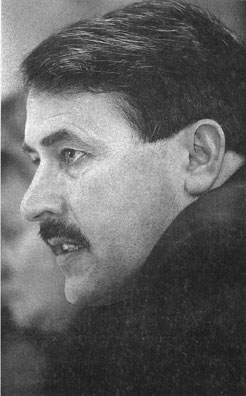
By Mitchel McLaughlin, chairperson of Sinn Fein
AT TIMES like this, it is very difficult to write with objectivity about the future of our island. There is something presumptuous in talking of politics with the memory, still horrifically fresh in our minds, of tiny coffins slipping into the brown earth.
The grieving families, friends, and relatives of the deceased and maimed of Omagh are in all our thoughts, and the enormity of the devastation will haunt us for many a year.
The decency, the compassion and the humanity of the families, and their heartfelt desire for lasting peace, touched all our hearts. It is an inspiration to strengthen and deepen the Peace Process. The people of Omagh, like all the people of Ireland, deserve better.
All of us must change. All of us, Irish republicans, members of the British and Irish Governments, unionists and nationalists, have a duty to ensure that such terrible actions never again occur. We have this moment in history, this fragile fleeting opportunity to end war and injustice on our island. And the moment must be seized.
No one expects, nor should they demand, that political parties give up their legitimate aspirations. We in Sinn Fein are very clear about our ultimate objective, but we are realistic enough to know that we have not yet created the conditions for a united Ireland.
Equally, unionist politicians must now begin to deal seriously with the proposition that the Union is no longer guaranteed in perpetuity, and that, like a united Ireland, it is a political option, to be considered, debated, and changed, if that is the wish of the people.
For many years now, republicans have conducted an ongoing analysis of every aspect of our struggle. Few people outside the republican family recognised the importance of our discussions. Our political opponents have characterised us as rigidly conservative and ideologically monolithic. Some were unwilling to acknowledge, others deliberately ignored, the passion and rigour of this internal debate that has energised our party in recent years.
Our internal debates have been costly. We have suffered the trauma of division. And yet, we have refused to be deflected from our course.
Change is the prerequisite of peace and I welcome and acknowledge that many unionists understand this argument. The cultural practices and demands of unionist communities will be weighed against the demands and wishes of nationalist communities, in turn our activities must not present provocative offence to unionists.
Inevitably, we will negotiate directly with the unionist politicians about our separate and shared aspirations. In time, a pragmatic acceptance of the current nature of our society, an awareness of the inevitabiliy of fundamental long-term change, plus a willingness to respect each other's opinions, will begin to ease the mistrust and suspicion that entangle our relationships.
There are certainties about the development of the outcomes of the Peace Process. But at this time there does exist, in embryonic form, a set of conditions to expedite our coming together in new arrangements.
The core of the Peace Process, indeed, the fundamental republican demand, the issue of Irish Independence, is addressed for the first time, in the Good Friday Agreement. The British Government has now accepted that Ireland's problems will be solved on the island of Ireland.
Our responsibility is to argue the case, as best we can, for the ending of partition and the coming together of both parts of this island in common purpose. There will be set-backs, and we may experience bitter blows from time to time, but that is the nature of a democratic process.
For our part Sinn Fein is committed to the Peace Process, and the British government has stated on numerous occasions that it has neither imperial ambitions nor strategic objectives in Ireland.
As we approach the year 2000 it is astounding to realise that there are still some unionists who vehemently oppose the granting of basic human and civil rights, who still believe that Catholics are second class.
Those who lead the 'No' campaign, it seems, are more interested in triumphalist confrontation than in healing the bitter wounds that we have all inflicted on each other.
However, unionists should not oppose the Equality Agenda. They should not feel uneasy about it. It threatens no one, and will benefit us all. Equality, constitutionally guaranteed, will remove many of the causes of conflict.
In dialogue with unionists, nationalists and the two governments, Sinn Fein intends to develop the Good Friday Agreement to its absolute outer limits, making it more and more comprehensive and definitive.
While it undoubtedly falls short of our ultimate goal of unity and independence, it has the potential, Sinn Fein believes, to move us closer to our objective.
And the vast bulk of republicans now accept that a process of political and constitutional transition has begun. We recognise that if we are to progress politically, we must convince the people of our policy, and we must also heed the voice of the people. We recognise, and understand, the suspicion and anger that motivates many unionists.
We know that some of their fears and scepticism are our responsibility. We wish to change all that. But unionists must accept that they too have created similar fears and resentments within the wider nationalist community.
Our society can only achieve stability when the truths are faced, the truths of our inhumanity to each other, and the truths of injustice, violence, discrimination, and cancerous sectarianism.
We, as republicans, know that the political struggle will be long and arduous. But that is the road we have chosen to travel, with complete confidence in our ability to realise our aspirations through democratic dialogue and eventual reconciliation of all the people of Ireland.
By Mitchel McLaughlin, chairperson of Sinn Fein
AT TIMES like this, it is very difficult to write with objectivity about the future of our island. There is something presumptuous in talking of politics with the memory, still horrifically fresh in our minds, of tiny coffins slipping into the brown earth.
The grieving families, friends, and relatives of the deceased and maimed of Omagh are in all our thoughts, and the enormity of the devastation will haunt us for many a year.
The decency, the compassion and the humanity of the families, and their heartfelt desire for lasting peace, touched all our hearts. It is an inspiration to strengthen and deepen the Peace Process. The people of Omagh, like all the people of Ireland, deserve better.
All of us must change. All of us, Irish republicans, members of the British and Irish Governments, unionists and nationalists, have a duty to ensure that such terrible actions never again occur. We have this moment in history, this fragile fleeting opportunity to end war and injustice on our island. And the moment must be seized.
No one expects, nor should they demand, that political parties give up their legitimate aspirations. We in Sinn Fein are very clear about our ultimate objective, but we are realistic enough to know that we have not yet created the conditions for a united Ireland.
Equally, unionist politicians must now begin to deal seriously with the proposition that the Union is no longer guaranteed in perpetuity, and that, like a united Ireland, it is a political option, to be considered, debated, and changed, if that is the wish of the people.
For many years now, republicans have conducted an ongoing analysis of every aspect of our struggle. Few people outside the republican family recognised the importance of our discussions. Our political opponents have characterised us as rigidly conservative and ideologically monolithic. Some were unwilling to acknowledge, others deliberately ignored, the passion and rigour of this internal debate that has energised our party in recent years.
Our internal debates have been costly. We have suffered the trauma of division. And yet, we have refused to be deflected from our course.
Change is the prerequisite of peace and I welcome and acknowledge that many unionists understand this argument. The cultural practices and demands of unionist communities will be weighed against the demands and wishes of nationalist communities, in turn our activities must not present provocative offence to unionists.
Inevitably, we will negotiate directly with the unionist politicians about our separate and shared aspirations. In time, a pragmatic acceptance of the current nature of our society, an awareness of the inevitabiliy of fundamental long-term change, plus a willingness to respect each other's opinions, will begin to ease the mistrust and suspicion that entangle our relationships.
There are certainties about the development of the outcomes of the Peace Process. But at this time there does exist, in embryonic form, a set of conditions to expedite our coming together in new arrangements.
The core of the Peace Process, indeed, the fundamental republican demand, the issue of Irish Independence, is addressed for the first time, in the Good Friday Agreement. The British Government has now accepted that Ireland's problems will be solved on the island of Ireland.
Our responsibility is to argue the case, as best we can, for the ending of partition and the coming together of both parts of this island in common purpose. There will be set-backs, and we may experience bitter blows from time to time, but that is the nature of a democratic process.
For our part Sinn Fein is committed to the Peace Process, and the British government has stated on numerous occasions that it has neither imperial ambitions nor strategic objectives in Ireland.
As we approach the year 2000 it is astounding to realise that there are still some unionists who vehemently oppose the granting of basic human and civil rights, who still believe that Catholics are second class.
Those who lead the 'No' campaign, it seems, are more interested in triumphalist confrontation than in healing the bitter wounds that we have all inflicted on each other.
However, unionists should not oppose the Equality Agenda. They should not feel uneasy about it. It threatens no one, and will benefit us all. Equality, constitutionally guaranteed, will remove many of the causes of conflict.
In dialogue with unionists, nationalists and the two governments, Sinn Fein intends to develop the Good Friday Agreement to its absolute outer limits, making it more and more comprehensive and definitive.
While it undoubtedly falls short of our ultimate goal of unity and independence, it has the potential, Sinn Fein believes, to move us closer to our objective.
And the vast bulk of republicans now accept that a process of political and constitutional transition has begun. We recognise that if we are to progress politically, we must convince the people of our policy, and we must also heed the voice of the people. We recognise, and understand, the suspicion and anger that motivates many unionists.
We know that some of their fears and scepticism are our responsibility. We wish to change all that. But unionists must accept that they too have created similar fears and resentments within the wider nationalist community.
Our society can only achieve stability when the truths are faced, the truths of our inhumanity to each other, and the truths of injustice, violence, discrimination, and cancerous sectarianism.
We, as republicans, know that the political struggle will be long and arduous. But that is the road we have chosen to travel, with complete confidence in our ability to realise our aspirations through democratic dialogue and eventual reconciliation of all the people of Ireland.
Further Information
Publisher: BELFAST TELEGRAPH
Ref: BT/0355
Published Date: 02-Sep-98
Related Images