COPING WITH AFTERMATH OF OMAGH
Coping with the aftermath of the Omagh nightmare
Sperrin Lakeland Trust has just presented the Government with a business plan on how it will deal with the full impact of the Omagh bomb. Today, two senior Trust managers who helped prepare the plan talk to WILLIAM ALLEN about the long term implications
IT was Sunday August 16 1998 and Audrey Duncan was tossing about on her bed trying to dispel the nightmare image of ten dead bodies.
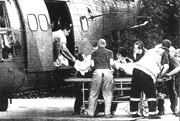
She had just returned from Tyrone County Hospital Omagh, working among the dead and maimed being ferried in by the busload after the bomb explosion.
And as she sought the impossible sleep, her memory repeatedly cast up that image of ten dead bodies she had identified at the TA Centre in Enniskillen eleven years ago.
"And my mind superimposed images from the Omagh bomb on top of that." she recalls.
Her experience was typical of many staff who worked at both atrocities, she says.
Audrey, Community Services Manager (Health Care), and Sue Prenter, Professions Allied To Medicine Manager, are part of a Trust team who put together a business plan dealing with the full implications of the Omagh bomb.
The plan covers everything from the immediate needs of traumatised staff and members of the public to the long term requirements of children who will outgrow one artificial limb after another.
Audrey says: "Nine staff were directly affected either through loss of relatives or injuries. But everyone was affected in some way. So we have set up staff support so they can talk formally or informally."
The devastation did not just affect those in the casualty department and theatres, but everyone at the hospital including the laundry workers
"To say the laundry workers were working with rivers of blood is not an exaggeration," says Sue.
There are so many people who can easily get overlooked, like the laundry workers, the hospital chaplains and the undertakers.
"It must have been hell, a horrendous nightmare for the undertakers. And the poor police who unwittingly shepherded people to where the bomb was - lambs to the slaughter."
The experts reckon the wounds are so deep that even the great healer, time will need at least a generation to fix them.
"So many people were affected and there was a wide range of injuries and emotional problems." says Sue.
We had 345 people here on the day, and that's not counting those who went directly to the Erne." says Audrey.
"Local GPs saw 2,000 in the days after the bomb. And I would say there are more people who have not sought help yet but will need it one day.
"We have set up a Community Trauma Recovery Team directly dealing with the bereaved, hospitalised, traumatised, those who were affected in any way, including those who helped out and saw things no one should ever have to see.
"Everyone's needs are different. People who are being discharged, for example, are responding in a different way. One woman went straight to the town centre while another is refusing to leave the house."
"There are so many different physical and emotional problems - and then you have these bomb hoaxes and phone calls and letters to relatives of the deceased." adds Sue. with more than a hint of anger in her voice.
"The people responsible for those are sick." "Not sick, evil," corrects Audrey
They declined to talk of the financial implications of the plan being studied by the DHSS but conceded it would cost "millions."
Audrey carries on: "People need amongst other medical help. things like housing adaptations, wheel chairs, equipment for those who lost limbs practical help in the house, extra tuition for children who can't get to school, family support where the main breadwinner has to give up work.
"And there are so many types of injury, head injuries, amputations, lacerations, loss of sight, perforated eardrums, very bad abdominal wounds. colostomies and so on." They accept that other services are currently suffering.
Asked if current facilities are adequate for all needs both women shake their heads.
"And people will need further treatment for some time," says Audrey.
"For instance, people who need skin grafting for shrapnel wounds or burns will be coming back time and again. And it takes some time to build a limb - they will be fitted at Musgrave Park - and we have young boys and girls who will need limbs for quite sometime as they outgrow them."
All patients will get the "best prosthesis (artificial limbs) the NHS can offer."
The knowledge gained from the experience will also be shared with any other area of the world that suffers a similar atrocity in the future.
"For the plan, one of the girls from the Western Health and Social Services Board surfed the Net for the effects of such atrocities." explains Sue.
'But there was nothing to look at - not even from the Oklahoma bomb."
"So the Trust is pooling together all information so details can be made available." says Audrey.
Meanwhile. Omagh's emotional response" is following its normal course.
"You have to give people time so their normal responses take over." concludes Audrey.
"Only when it becomes abnormal do you need intervention - like when the nightmares go on for month after month after month."
Sperrin Lakeland Trust has just presented the Government with a business plan on how it will deal with the full impact of the Omagh bomb. Today, two senior Trust managers who helped prepare the plan talk to WILLIAM ALLEN about the long term implications
IT was Sunday August 16 1998 and Audrey Duncan was tossing about on her bed trying to dispel the nightmare image of ten dead bodies.
She had just returned from Tyrone County Hospital Omagh, working among the dead and maimed being ferried in by the busload after the bomb explosion.
And as she sought the impossible sleep, her memory repeatedly cast up that image of ten dead bodies she had identified at the TA Centre in Enniskillen eleven years ago.
"And my mind superimposed images from the Omagh bomb on top of that." she recalls.
Her experience was typical of many staff who worked at both atrocities, she says.
Audrey, Community Services Manager (Health Care), and Sue Prenter, Professions Allied To Medicine Manager, are part of a Trust team who put together a business plan dealing with the full implications of the Omagh bomb.
The plan covers everything from the immediate needs of traumatised staff and members of the public to the long term requirements of children who will outgrow one artificial limb after another.
Audrey says: "Nine staff were directly affected either through loss of relatives or injuries. But everyone was affected in some way. So we have set up staff support so they can talk formally or informally."
The devastation did not just affect those in the casualty department and theatres, but everyone at the hospital including the laundry workers
"To say the laundry workers were working with rivers of blood is not an exaggeration," says Sue.
There are so many people who can easily get overlooked, like the laundry workers, the hospital chaplains and the undertakers.
"It must have been hell, a horrendous nightmare for the undertakers. And the poor police who unwittingly shepherded people to where the bomb was - lambs to the slaughter."
The experts reckon the wounds are so deep that even the great healer, time will need at least a generation to fix them.
"So many people were affected and there was a wide range of injuries and emotional problems." says Sue.
We had 345 people here on the day, and that's not counting those who went directly to the Erne." says Audrey.
"Local GPs saw 2,000 in the days after the bomb. And I would say there are more people who have not sought help yet but will need it one day.
"We have set up a Community Trauma Recovery Team directly dealing with the bereaved, hospitalised, traumatised, those who were affected in any way, including those who helped out and saw things no one should ever have to see.
"Everyone's needs are different. People who are being discharged, for example, are responding in a different way. One woman went straight to the town centre while another is refusing to leave the house."
"There are so many different physical and emotional problems - and then you have these bomb hoaxes and phone calls and letters to relatives of the deceased." adds Sue. with more than a hint of anger in her voice.
"The people responsible for those are sick." "Not sick, evil," corrects Audrey
They declined to talk of the financial implications of the plan being studied by the DHSS but conceded it would cost "millions."
Audrey carries on: "People need amongst other medical help. things like housing adaptations, wheel chairs, equipment for those who lost limbs practical help in the house, extra tuition for children who can't get to school, family support where the main breadwinner has to give up work.
"And there are so many types of injury, head injuries, amputations, lacerations, loss of sight, perforated eardrums, very bad abdominal wounds. colostomies and so on." They accept that other services are currently suffering.
Asked if current facilities are adequate for all needs both women shake their heads.
"And people will need further treatment for some time," says Audrey.
"For instance, people who need skin grafting for shrapnel wounds or burns will be coming back time and again. And it takes some time to build a limb - they will be fitted at Musgrave Park - and we have young boys and girls who will need limbs for quite sometime as they outgrow them."
All patients will get the "best prosthesis (artificial limbs) the NHS can offer."
The knowledge gained from the experience will also be shared with any other area of the world that suffers a similar atrocity in the future.
"For the plan, one of the girls from the Western Health and Social Services Board surfed the Net for the effects of such atrocities." explains Sue.
'But there was nothing to look at - not even from the Oklahoma bomb."
"So the Trust is pooling together all information so details can be made available." says Audrey.
Meanwhile. Omagh's emotional response" is following its normal course.
"You have to give people time so their normal responses take over." concludes Audrey.
"Only when it becomes abnormal do you need intervention - like when the nightmares go on for month after month after month."
Further Information
Publisher: BELFAST TELEGRAPH
Ref: BT/0225
Published Date: 24-Sep-98
Related Images