CHILDREN HAVE TO PLAY...
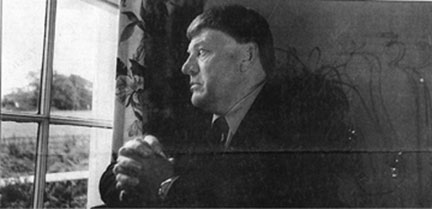
Lindy McDowell talks to Bill Harper, Principal of Omagh High School
HE lives just a few miles outside Omagh beyond country roads that gently narrow down to winding country lanes. The hedgerows spill over with the colour and lushness of late summer, and suddenly you come across the house with its carefully tended garden, a sea of bloom.
Night scented flowers have been planted around the little patio so that as you sit out there on a summer's evening, their perfume hangs in the air.
Words like "idyllic" were created for a place like this.
And you can't help being struck by the contrast. For it's in this garden, in this place of tranquility and peace that Bill Harper, principal of Omagh High School sits down to talk about bloody mass murder and pain and grief.
This time last week, Bill Harper was working in his garden, doing ordinary, normal, family things like trying to make hanging baskets for his son's new house. Earlier in the day, he'd gone down into the town and he'd bought all the materials he thought he'd needed. Only when he came back home, did he realise he'd forgotten something and he almost, almost decided to go into town again.
But the next day he was due to go to Belfast to pick up his grandchildren who were coming over from England and he knew he could nip into one of the big hardware stores there and get what he wanted.
"If I had gone into the town though," he notes quietly, "that would have left me at the scene at the time. I was just lucky. Others weren't so lucky."
Instead, at around 3.12pm when the bomb exploded in Omagh town, Bill Harper was busy working in his garage. He didn't even hear the blast. But the reverberations of that explosion will echo through his life forever.
Two current pupils and three former pupils of Omagh High School were among those killed. Eight pupils are still being treated in hospital.
And the sense of pain this grandfather and father-of-four feels is tangible.
"In a way, I'm your typical, archetypal headmaster, disciplining anyone who steps out of line," he says, "But at the same time, you're always focussed on doing the best you can for your pupils for the future.
"Everything's for the future. Even when you're disciplining a pupil, it's really about shaping them for the future. As a teacher you've always got your sights set that little bit further ahead.
"And it's just so awful," he adds, "it negates everything else when a young life like that is cut short and there is no future."
For the last 14 years Mr Harper has been headmaster of Omagh High School. Before that he was vice-principal of Omagh Academy for 18 years.
The enormity of the tragedy which has befallen his pupils and his school has not blinded him to the pain of others.
"Maybe we have suffered more than anyone else, but that was random," he says, "Our hearts go out equally to the other schools which have suffered. And above all to the parents of all the children and young people. We all feel the same grief. It's everybody's grief/'
And then his voice wavering with emotion, he pays tribute to the young people from Omagh High who lost their lives.
Alan Radford who was 16 and looking forward to his GCSE results...Lorraine Wilson just 15, who'd been working in the local Oxfam shop along with her friend Samantha McFarland. Samantha was 17, and had moved to the grammar school in Strabane just last year.
Then there was Deborah Ann Cartwright who left the school a few years back. She was 20 years old and had just landed a place in Manchester University, where she was going to study textile design.. And Esther Gibson who had left Omagh High just around the time he'd come to teach there.
"Those who died," he says,, "were ones about whom I would feel, 'Here are people who have been a ' success.'
They have the personality, the values and the character that you would wish young people to hold."
"Samantha and Lorraine were actually working for Oxfam last Saturday. These were girls who were concerned about the Third World and people less well off than themselves.
"Their school records show how they collected for charities like the RNLI and the USPCA. Samantha was a good horsewoman, so she was involved with Riding for the Disabled. They raised a considerable amount of money too, hundreds of pounds.
"Deborah Ann Cartwright was involved in community relations work. She brought Danish people over here on various schemes aimed at bringing young people together.
As soon as he heard about the bomb last Saturday, Bill Harper wanted to help.
"About 4.30 I went in to see if there was anything I could do and to give some blood. But I've had bypasses and my blood has aspirin in it and doesn't coagulate so it wasn't suitable.
"I then went round to the incident centre and stayed there for a couple of hours. It was only really setting up at that stage.
"There were lists of people being transferred to Enniskillen, he adds, "but I recognised nobody on the lists. I met another head like myself Colm O'Neill from Loretto Grammar School, and we both just stayed there and talked. He had been informed that one of his pupils had been seriously injured and at that stage that was all he knew. There was really nothing much we could do.
But as the horror unfolded, he was to learn of the role many of the young people he taught had played.
"I must say I am very proud of my own pupils, even some of the pupils who haven't always seen eye to eye with their headmaster, for the really heroic work they did in helping to move rubble and in trying to help people. I think one of the crumbs of comfort that you have is that something like this does bring out such good in people.
"You cannot help but be touched when you hear of the efforts that people make as they strive to help other people - the lengths they go to.
Since then he has spent a harrowing week, visiting relatives, attending funerals and trying to help pupils deal with the aftermath of this nightmare.
His own grandchildren arrived this week from England but he and his wife have been unable to devote much time to them. He was insistent though, that the planned visit should go ahead. "I hate to let terrorism control my life," he says firmly. His son and his fiancee have been looking after the children.
And so, since Monday, Bill Harper has been back at school. In the immediate aftermath of the bombing he opened it again as a centre where pupils could meet up and talk through their fears and experiences.
He's grateful to the office and teaching staff who have helped him provide this facility.
"The school nurse is there and she's been outstanding. She has a very good relationship with all the pupils in a way that a teacher can't have. I also have teachers there who have counselling certificates.
"People have offered professional counselling services but I'm slow to move in that direction. Obviously if pupils need counselling help that will be given to them. But one of the aims of the school is to make people work as a team, gain strength from working as a team and to develop individual self reliance.
"So through this terrible time I'm hoping that some of those qualities come through and that we'll be able to cope."
The opening of the centre has been a popular move with young people, many of whom got their examination results this week.
"The first day only one person came - a boy who had tried to move rubble, and had tried to save people.
"After a couple of days we were getting around 50 to 100 pupils.
"As they got their exam results some of the girls became very emotional. One girl got very good results including an A star. She just
dissolved into tears and said that she had worked very hard and she was relieved she had got these good grades but they just didn't seem to mean anything to her."
The centre he says, will stay open until school resumes.
But he is only too aware of the difficulties that may lie ahead when the new term starts.
It goes without saying that no tragedy on this scale has befallen the school community before.
"Over the years we've lost people from time to time, mainly in the security forces. Those deaths have been tragic too, but you're dealing with one at a time.
"The nearest I've come to anything like this would be the Enniskillen bombing when my counterpart there, a man I'd worked with many times trying to get some educational change was Ronnie Hill.
"Ronnie Hill is still lying in a coma 12 years on."
He says he believes the most fitting memorial to all those who died in Omagh would be that this would be the last atrocity of the Troubles.
But he adds: "I'm sure the people in Enniskillen hoped the same thing too."
In terms of helping his pupils cope he says: "I have a few ideas of my own about what to do. I'll ask the senior management team for ideas and I'll get a large input as to what I do from the pupils themselves.
"We will never forget our friends. We will never stop mourning for them and we will introduce some sort of plan that will recognise their contribution to the school."
But he stresses; "The school must go on and children have to play, work, smile, laugh, cry just as ordinary children. That's what I want to get back to, I really want them to go forward as strongly as possible. They will be able to cope I'm sure of that. And they will be helped anyway and every way we can."
But he adds: "We will go forward never forgetting those we have lost, loving them always. They will be with me all my life. I know that. I'll think of them always."
HE lives just a few miles outside Omagh beyond country roads that gently narrow down to winding country lanes. The hedgerows spill over with the colour and lushness of late summer, and suddenly you come across the house with its carefully tended garden, a sea of bloom.
Night scented flowers have been planted around the little patio so that as you sit out there on a summer's evening, their perfume hangs in the air.
Words like "idyllic" were created for a place like this.
And you can't help being struck by the contrast. For it's in this garden, in this place of tranquility and peace that Bill Harper, principal of Omagh High School sits down to talk about bloody mass murder and pain and grief.
This time last week, Bill Harper was working in his garden, doing ordinary, normal, family things like trying to make hanging baskets for his son's new house. Earlier in the day, he'd gone down into the town and he'd bought all the materials he thought he'd needed. Only when he came back home, did he realise he'd forgotten something and he almost, almost decided to go into town again.
But the next day he was due to go to Belfast to pick up his grandchildren who were coming over from England and he knew he could nip into one of the big hardware stores there and get what he wanted.
"If I had gone into the town though," he notes quietly, "that would have left me at the scene at the time. I was just lucky. Others weren't so lucky."
Instead, at around 3.12pm when the bomb exploded in Omagh town, Bill Harper was busy working in his garage. He didn't even hear the blast. But the reverberations of that explosion will echo through his life forever.
Two current pupils and three former pupils of Omagh High School were among those killed. Eight pupils are still being treated in hospital.
And the sense of pain this grandfather and father-of-four feels is tangible.
"In a way, I'm your typical, archetypal headmaster, disciplining anyone who steps out of line," he says, "But at the same time, you're always focussed on doing the best you can for your pupils for the future.
"Everything's for the future. Even when you're disciplining a pupil, it's really about shaping them for the future. As a teacher you've always got your sights set that little bit further ahead.
"And it's just so awful," he adds, "it negates everything else when a young life like that is cut short and there is no future."
For the last 14 years Mr Harper has been headmaster of Omagh High School. Before that he was vice-principal of Omagh Academy for 18 years.
The enormity of the tragedy which has befallen his pupils and his school has not blinded him to the pain of others.
"Maybe we have suffered more than anyone else, but that was random," he says, "Our hearts go out equally to the other schools which have suffered. And above all to the parents of all the children and young people. We all feel the same grief. It's everybody's grief/'
And then his voice wavering with emotion, he pays tribute to the young people from Omagh High who lost their lives.
Alan Radford who was 16 and looking forward to his GCSE results...Lorraine Wilson just 15, who'd been working in the local Oxfam shop along with her friend Samantha McFarland. Samantha was 17, and had moved to the grammar school in Strabane just last year.
Then there was Deborah Ann Cartwright who left the school a few years back. She was 20 years old and had just landed a place in Manchester University, where she was going to study textile design.. And Esther Gibson who had left Omagh High just around the time he'd come to teach there.
"Those who died," he says,, "were ones about whom I would feel, 'Here are people who have been a ' success.'
They have the personality, the values and the character that you would wish young people to hold."
"Samantha and Lorraine were actually working for Oxfam last Saturday. These were girls who were concerned about the Third World and people less well off than themselves.
"Their school records show how they collected for charities like the RNLI and the USPCA. Samantha was a good horsewoman, so she was involved with Riding for the Disabled. They raised a considerable amount of money too, hundreds of pounds.
"Deborah Ann Cartwright was involved in community relations work. She brought Danish people over here on various schemes aimed at bringing young people together.
As soon as he heard about the bomb last Saturday, Bill Harper wanted to help.
"About 4.30 I went in to see if there was anything I could do and to give some blood. But I've had bypasses and my blood has aspirin in it and doesn't coagulate so it wasn't suitable.
"I then went round to the incident centre and stayed there for a couple of hours. It was only really setting up at that stage.
"There were lists of people being transferred to Enniskillen, he adds, "but I recognised nobody on the lists. I met another head like myself Colm O'Neill from Loretto Grammar School, and we both just stayed there and talked. He had been informed that one of his pupils had been seriously injured and at that stage that was all he knew. There was really nothing much we could do.
But as the horror unfolded, he was to learn of the role many of the young people he taught had played.
"I must say I am very proud of my own pupils, even some of the pupils who haven't always seen eye to eye with their headmaster, for the really heroic work they did in helping to move rubble and in trying to help people. I think one of the crumbs of comfort that you have is that something like this does bring out such good in people.
"You cannot help but be touched when you hear of the efforts that people make as they strive to help other people - the lengths they go to.
Since then he has spent a harrowing week, visiting relatives, attending funerals and trying to help pupils deal with the aftermath of this nightmare.
His own grandchildren arrived this week from England but he and his wife have been unable to devote much time to them. He was insistent though, that the planned visit should go ahead. "I hate to let terrorism control my life," he says firmly. His son and his fiancee have been looking after the children.
And so, since Monday, Bill Harper has been back at school. In the immediate aftermath of the bombing he opened it again as a centre where pupils could meet up and talk through their fears and experiences.
He's grateful to the office and teaching staff who have helped him provide this facility.
"The school nurse is there and she's been outstanding. She has a very good relationship with all the pupils in a way that a teacher can't have. I also have teachers there who have counselling certificates.
"People have offered professional counselling services but I'm slow to move in that direction. Obviously if pupils need counselling help that will be given to them. But one of the aims of the school is to make people work as a team, gain strength from working as a team and to develop individual self reliance.
"So through this terrible time I'm hoping that some of those qualities come through and that we'll be able to cope."
The opening of the centre has been a popular move with young people, many of whom got their examination results this week.
"The first day only one person came - a boy who had tried to move rubble, and had tried to save people.
"After a couple of days we were getting around 50 to 100 pupils.
"As they got their exam results some of the girls became very emotional. One girl got very good results including an A star. She just
dissolved into tears and said that she had worked very hard and she was relieved she had got these good grades but they just didn't seem to mean anything to her."
The centre he says, will stay open until school resumes.
But he is only too aware of the difficulties that may lie ahead when the new term starts.
It goes without saying that no tragedy on this scale has befallen the school community before.
"Over the years we've lost people from time to time, mainly in the security forces. Those deaths have been tragic too, but you're dealing with one at a time.
"The nearest I've come to anything like this would be the Enniskillen bombing when my counterpart there, a man I'd worked with many times trying to get some educational change was Ronnie Hill.
"Ronnie Hill is still lying in a coma 12 years on."
He says he believes the most fitting memorial to all those who died in Omagh would be that this would be the last atrocity of the Troubles.
But he adds: "I'm sure the people in Enniskillen hoped the same thing too."
In terms of helping his pupils cope he says: "I have a few ideas of my own about what to do. I'll ask the senior management team for ideas and I'll get a large input as to what I do from the pupils themselves.
"We will never forget our friends. We will never stop mourning for them and we will introduce some sort of plan that will recognise their contribution to the school."
But he stresses; "The school must go on and children have to play, work, smile, laugh, cry just as ordinary children. That's what I want to get back to, I really want them to go forward as strongly as possible. They will be able to cope I'm sure of that. And they will be helped anyway and every way we can."
But he adds: "We will go forward never forgetting those we have lost, loving them always. They will be with me all my life. I know that. I'll think of them always."
Further Information
Publisher: BELFAST TELEGRAPH
Ref: BT/0197
Published Date: 22-Aug-98
Related Images