TEN YEARS ON THE HORROR RETURNS
Ten years on, the horror returns
TEN years ago this week eight soldiers were killed and 27 were injured in the Ballygawley bombing. At the end of the week in which the province has struggled to cope with the Omagh bomb PETER McVERRY looks at the legacy of another tragedy.
The roll call of the daed
THE eight soldiers killed at Ballygawley were :
Private Jayson Burfitt (21) from Bath in Avon.
Private Mark Anthony Norsworthy (18) from Plymouth.
Private Richard Greener (21) of Whitley Bay.
Private Stephen James Wilkinson (18) from Durham.
Private Jason Spencer Winter (20), of Taunton.
Private Blair Edgar Bishop (19) from Hereford.
Private Alexander Stephen Lewis (18) from Salisbury, Wiltshire.
Private Peter Lloyd Bullock (21) of Bristol.
ALAN Rainey, vice-chairman of Omagh District Council, paints a vivid picture of the terrible moments after the republican bomb attack.
This week he has been at the funeral of many of the Omagh victims, bringing back memories of Ballygawley.
Remembering the scenes ten years ago, he said: "I have never seen anything like it in my life and please God I never will have to see it again.
"There were bodies strewn all over the road. There were people running around stunned, screaming and bleeding and shouting for someone to come to their aid.
"If it had been animals it would have been bad enough but these were people."
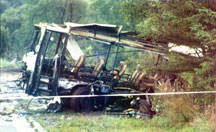
On August 20, 1988, eight soldiers were killed and another 27 injured when the IRA bombed their coach near Ballygawley.
Mr Rainey, a local farmer, was one of the first on the scene.
He said: "I prayed every day I would never see anything like that night at Ballygawley.
"If you are human at all there isn't a day goes by when the images don't flash through your mind. "The image that shocked me most back then was the sight of six body bags laid out on the road.
"Had we had all the bodies from the atrocity in Omagh laid out in body bags side by side I don't think any normal person could have lived with it.
As vice-chairman of the council, Mr Rainey has attended many of the Omagh funerals.
"I was in Donegal and the hundreds of young children grieving was awful. They were so heartsore in their grief.
"It is terrible when funerals become part of your daily routine, when you have to lay out your plans going from one to another and seeing how many you can fit in each day."
The eight soldiers murdered in the explosion were all unmarried privates, aged between 18 and 21.
All were members of the 1st Battalion of the Light Infantry, based at Omagh.
Their coach was just nine miles from their Omagh base when their unmarked 52-seater coach was blown off the road by the 200lb bomb.
The blast blew a huge crater in the road, 12ft wide and 6ft deep, with parts of the coach flung across a 100-yard radius.
Fermanagh South Tyrone MP Ken Maginnis was quickly on the scene and told how he found one soldier dying on a hay bale in a cowshed.
"Like any other young soldier, he used his training to crawl undercover into hiding after the blast but he lay there dying in front of us," he recalled.
Another victim's body lay at a road sign, with his family photograph album lying yards away.
The first to see the carnage and destruction were dozens of young people, members of local bands who had been travelling behind the coach.
They took off their coats, jumpers and shirts to cover some of the victims.
The injured were brought to Tyrone County Hospital where the senior consultant surgeon on duty was Dr Dominic Pinto.
He was on duty again last Saturday when the Omagh victims were flooding in.
"I thought the events of Ballygawley were bad enough. And I had been in East Africa and Uganda during the time of Idi Amin. witnessing many atrocities.
"When I came here I hoped I would not see the like of that again. Then came Ballygawley and I prayed that was the worst we would see.
"But Saturday's bomb was the worst. It was in our town with our people.
"In the Ballygawley bomb we could plan ahead and organise from the word go, particularly because the victims were soldiers who were trained in discipline.
"But the Omagh bomb hurt a huge number of people, women and children, who had no training in such situations.
"I hope I will never have to see anthing like that again."
TEN years ago this week eight soldiers were killed and 27 were injured in the Ballygawley bombing. At the end of the week in which the province has struggled to cope with the Omagh bomb PETER McVERRY looks at the legacy of another tragedy.
The roll call of the daed
THE eight soldiers killed at Ballygawley were :
Private Jayson Burfitt (21) from Bath in Avon.
Private Mark Anthony Norsworthy (18) from Plymouth.
Private Richard Greener (21) of Whitley Bay.
Private Stephen James Wilkinson (18) from Durham.
Private Jason Spencer Winter (20), of Taunton.
Private Blair Edgar Bishop (19) from Hereford.
Private Alexander Stephen Lewis (18) from Salisbury, Wiltshire.
Private Peter Lloyd Bullock (21) of Bristol.
ALAN Rainey, vice-chairman of Omagh District Council, paints a vivid picture of the terrible moments after the republican bomb attack.
This week he has been at the funeral of many of the Omagh victims, bringing back memories of Ballygawley.
Remembering the scenes ten years ago, he said: "I have never seen anything like it in my life and please God I never will have to see it again.
"There were bodies strewn all over the road. There were people running around stunned, screaming and bleeding and shouting for someone to come to their aid.
"If it had been animals it would have been bad enough but these were people."
On August 20, 1988, eight soldiers were killed and another 27 injured when the IRA bombed their coach near Ballygawley.
Mr Rainey, a local farmer, was one of the first on the scene.
He said: "I prayed every day I would never see anything like that night at Ballygawley.
"If you are human at all there isn't a day goes by when the images don't flash through your mind. "The image that shocked me most back then was the sight of six body bags laid out on the road.
"Had we had all the bodies from the atrocity in Omagh laid out in body bags side by side I don't think any normal person could have lived with it.
As vice-chairman of the council, Mr Rainey has attended many of the Omagh funerals.
"I was in Donegal and the hundreds of young children grieving was awful. They were so heartsore in their grief.
"It is terrible when funerals become part of your daily routine, when you have to lay out your plans going from one to another and seeing how many you can fit in each day."
The eight soldiers murdered in the explosion were all unmarried privates, aged between 18 and 21.
All were members of the 1st Battalion of the Light Infantry, based at Omagh.
Their coach was just nine miles from their Omagh base when their unmarked 52-seater coach was blown off the road by the 200lb bomb.
The blast blew a huge crater in the road, 12ft wide and 6ft deep, with parts of the coach flung across a 100-yard radius.
Fermanagh South Tyrone MP Ken Maginnis was quickly on the scene and told how he found one soldier dying on a hay bale in a cowshed.
"Like any other young soldier, he used his training to crawl undercover into hiding after the blast but he lay there dying in front of us," he recalled.
Another victim's body lay at a road sign, with his family photograph album lying yards away.
The first to see the carnage and destruction were dozens of young people, members of local bands who had been travelling behind the coach.
They took off their coats, jumpers and shirts to cover some of the victims.
The injured were brought to Tyrone County Hospital where the senior consultant surgeon on duty was Dr Dominic Pinto.
He was on duty again last Saturday when the Omagh victims were flooding in.
"I thought the events of Ballygawley were bad enough. And I had been in East Africa and Uganda during the time of Idi Amin. witnessing many atrocities.
"When I came here I hoped I would not see the like of that again. Then came Ballygawley and I prayed that was the worst we would see.
"But Saturday's bomb was the worst. It was in our town with our people.
"In the Ballygawley bomb we could plan ahead and organise from the word go, particularly because the victims were soldiers who were trained in discipline.
"But the Omagh bomb hurt a huge number of people, women and children, who had no training in such situations.
"I hope I will never have to see anthing like that again."
Further Information
Publisher: BELFAST TELEGRAPH
Ref: BT/0189
Published Date: 22-Aug-98
Related Images