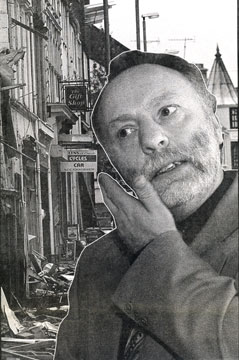
BRIAN KEENAN SAYS OMAGH BOMB DEFILES HUMANITY
EXCLUSIVE: BRIAN KEENAN, THE ULSTERMAN HELD HOSTAGE IN BEIRUT FOR 1,596 DAYS, SAYS THE OMAGH BOMB DEFIES HUMANITY
This is the nihilism of a caged creature
LAST Saturday my friend John McCarthy and I were sitting in my kitchen working on our book about our travels together in Chile.
We had turned off the radio and sequestered ourselves in silence to assist our endeavours as we pieced together the jigsaw of our shared experience.
Our discussions at one point wandered around the frightening regime of Pinochet and Salvador Allende's powerful but naive revolution and the sense of being alien in a strange land.
We had, of necessity, to rid ourselves of the cultural baggage of received information if we were to fully appreciate the place we had only dreamed of in our hostage days!
Inevitably, we were side-tracked and briefly our conversation turned on Ireland and the womb-child that the Belfast Agreement had promised.
It was full of latent potential but was stymied by the Pharisees in one camp, bad mouthing the representatives in the other, while at the same time carefully watching their own backs.
It was a pathetic fight and not worth much of our time. We quickly corrected our course and returned to the subject in hand.
We discussed how so many of the people we had met were relatives of the "disappeared". That enigmatic word recalled one memory for us. We had both been deeply impressed by the equanimity with which many Chileans spoke of their loss and grief.
One woman, who had lost a husband and two sons, murdered and disappeared, simply spoke of her experience with heroic and compassionate composure. "That was another time" she said.
I was amazed by the poignancy of her words framed in one of the calmest faces I have seen. I remember feeling envious and humbled by her.
We were enjoying our recollections and how being alien and unknown in Chile had opened us up and sensitised us in an unexpected way. I took up the thread of our conversation on Ireland again.
For me the events of the last few months, regardless of the bickering, were an equally heroic but tenuous movement in Northern Irelands' politics. It was a brave attempt to move our own troubled past into the pages of history.
I felt we were at last beginning to find the language and commitment to say with one voice, "That was another time".
It would have been a fitting epitaph to put all our historical, emotional and even spiritual griefs behind us.
For too long the spirit of our humanity had lain bleeding on the streets, penned up in prisons and internment camps or had been reduced to simply turning a blind eye to the complex issues that 30 years of war had thrown up.
But the first footholds in that brave new world we all hoped for would, in its own way, be like the book John and I were writing, encountering and resolving the experience of being alien in a strange land.
Nothing would be easy, but everything would be a discovery. New discoveries demand we find new resources. Reason is the objective facility behind our humanity. We were finding it again.
I knew it was there. Any struggle for justice, equality and empowerment always unearths a powerful quality of goodness and an urgency for accommodation. I believed it, too many people had witnessed it to me in Chile and in my own homeland.
The afternoon was filled with hilarious memories of our sometimes Quixotic travels and was lightened by my hopeful aspirations. We opened a bottle of wine to celebrate our efforts and returned to the sunlit garden.
Soon our respective partners joined us from their shopping expedition. John's friend had brought my son a rocking horse. He took to it like a jockey and we laughed as he rocked back and forward in delight.
Nothing could have been more pleasant. Sunlight, a hard afternoon's work completed, a glass of wine complemented by the companionship of friends and my child laughing excitedly with his new toy.
It wasn't until I switched on the 6 o'clock news that I was confronted with the events in Omagh. I spoke to John casually about it at first. "There's been a bomb in Omagh. Twelve people are dead."
But no sooner had I spoken than the strangeness and alienation we had talked about earlier began taking root.
As the details filtered in, I didn't want to hear them.
Whatever our talk of Chile I had never felt so alien in my life and I didn't want this hideous carnage to contaminate me or any of us.
In comparison to the experience of being opened up in Chile, everything was closing down, like an old movie projector that has run out of power.
I had seen it all before and the hurt was crippling me. I went to sit alone in the tiny room that is my study.
I wrote viciously, hoping that writing would transport me away from the horror. I filled the page with single words, blasphemous adjectives and half-baked metaphors, anything to let go of something I couldn't take hold of.
But it was no use. For half an hour I sat there, caving in, and trying to rebuild myself with words. My page was lined with a crippled scrawl.
Earlier that afternoon, I had mentioned to John when commenting on the petulant foot-dragging of some politicans that, when the dinosaurs feel the chill wind of their own extinction, they will insist on having their last roar.
But the cataclysmic events in Omagh were not the roar of political defiance or some anachronistic political justification. This was an obscene scream of the most perverse moral squalor.
Every revolutionary movement has some fabric of morality in it. Indeed, many revolutionary movements insist on proclaiming a new, more meaningful morality.
But the slaughter in Omagh was a defilement of humanity. All the icons and heroes of Irish republicanism were discredited that afternoon. Their bloodstained halos lay crushed with the rubble and the dying.
That evening as we drove to our pre-arranged dinner, I was asked what I had written.
Slowly I began to read my mediocre attempts to collect the chaos of my thoughts. But the words would not come out.
I pushed down the window, pretending it was hot. The air didn't fill my lungs and my tongue seemed swollen and paralysed in my mouth.
Between the pretence of being too hot and coughing, I was weeping, the way men do, concealing their emotion behind some other action.
John reached from behind me and touched my shoulder. It was a gesture of ancient understanding and sympathy. My wife too reached a hand from the steering wheel to comfort me.
For those few minutes the car was a cauldron of compassion and quiet. But I wanted only an ejector seat, to be gone out of the world and to come back slowly. I am still descending.
A few weeks ago I gave a lecture in Belfast and was describing how the events of Bloody Sunday in Derry had caused a psychic rupture in my own and in our collective understanding of our political culture. It will take generations of anguish to come to terms with that slaughter.
But in Omagh, three generations of one family were extinguished in an instant, and the unborn died among the living. It will be impossible to come to terms with that dreadful separation.
The next day John and I watched the news reports, equally dazed and equally angry by the media's obsession with filling up the empty spaces in their coverage.
Some of it was trite and trivial, smudging the raw edge of the horror with oppressive banalities.
But I remembered one item. A clergyman was speaking, his shirt hung open and the white collar of his priestly vocation hung helplessly at his throat.
Everything challenged his calling. He tried to speak, grasping for words and with his face melting like a candle. I knew something of what he was experiencing.
He told of comforting the families who had come to the makeshift morgue. He said something about trying to match their description of missing relatives "... with the bits inside to see if they had what the grief-stricken people were looking for".
As the day progressed, universal opprobrium marked every comment. There would be no hiding place in the hearts and minds of everyone on this island.
I heard talk of a "bungled operation" and accepted that it very probably was. But this changed nothing, for everything was changed, changed beyond all recognition.
I thought back to yesterday's conversation and the bungled, hard-boiled attempts of certain politicians to ostracise other politicians and felt, like so many I am sure that a shadow of responsibility was creeping ominiously over their pathetic feuding.
It was obvious that the perpetrators of this horrendous profanity against the innocent and against the whole people of Ireland had irredeemably wrapped themselves in the winding cloths of perdition and self delusion and would suffocate in their rhetoric of evasion. Ultimately they would rot, along with their contemptible ideology.
But I sensed my thinking was turning too much inward. It is a human failing to want to point the finger of accusation. But it will not do.
One lesson I have learned, is that the invective of rage and retribution resolves nothing, for we all have been made to sup from that bitter chalice too long.
Some philosophy, the school of which I can't recall, defined man by his "ability to promise".
Because we have the facility of reason, because we have the capacity for vision and because we believe that evil cannot ultimately succeed, we can and must project ourselves into the promise and make it our reality.
Peace is not achieved in the twinkling of an eye, but is rather in a continual state of becoming.
The true revolutionary is a lover, not a warrior. He is energized by the sole object of his concern, and that is the whole of the social realm.
However, all too often the language of such passionate commitment is met with the cat-calls of cynicism, or most cynical of all, this act of callous barbarity.
This is the nihilism of a caged creature who can only bark and snarl at those who come to give him his freedom.
His consciousness is subterranean. He has lived too long a covert half-life. He is prince of his own darkness. Ultimately he is afraid of freedom!
A commitment to a meaningful peace means putting mankind in the supreme place, not leaving a bag of homemade explosive in a shopping precinct. The political machine must serve man. rather than he be subject to it.
For peace to be more than an eloquent echo, for peace to be a vision and a promise coloured with a palpable and potential reality, we must harness the most courageous of human qualities.
The patience to listen, the strength to resist violence wherever it comes from and in whatever guise it presents itself, and that most powerful of all, the will to survive, to overcome and to go beyond the puerile ideologies of yesterday.
Omagh has not, I believe, been simply tagged on to the litany of atrocities that has hall-marked our past.
It has, I hope, given us the watershed that finally defines our evolution out of the quagmire of history.
The carnage at Omagh will strengthen our resolve to say with one voice "Never Again".
But let me not forget. For memory is an inalienable obsession and a cherished thing.
As a memorial to those taken from us, I can only quote the words of Brian Patten:
A man lives for as long as we carry him inside us
For as long as we carry the harvest of his dreams
For as long as we ourselves live
Holding memories in common, a man lives.
This is the nihilism of a caged creature
LAST Saturday my friend John McCarthy and I were sitting in my kitchen working on our book about our travels together in Chile.
We had turned off the radio and sequestered ourselves in silence to assist our endeavours as we pieced together the jigsaw of our shared experience.
Our discussions at one point wandered around the frightening regime of Pinochet and Salvador Allende's powerful but naive revolution and the sense of being alien in a strange land.
We had, of necessity, to rid ourselves of the cultural baggage of received information if we were to fully appreciate the place we had only dreamed of in our hostage days!
Inevitably, we were side-tracked and briefly our conversation turned on Ireland and the womb-child that the Belfast Agreement had promised.
It was full of latent potential but was stymied by the Pharisees in one camp, bad mouthing the representatives in the other, while at the same time carefully watching their own backs.
It was a pathetic fight and not worth much of our time. We quickly corrected our course and returned to the subject in hand.
We discussed how so many of the people we had met were relatives of the "disappeared". That enigmatic word recalled one memory for us. We had both been deeply impressed by the equanimity with which many Chileans spoke of their loss and grief.
One woman, who had lost a husband and two sons, murdered and disappeared, simply spoke of her experience with heroic and compassionate composure. "That was another time" she said.
I was amazed by the poignancy of her words framed in one of the calmest faces I have seen. I remember feeling envious and humbled by her.
We were enjoying our recollections and how being alien and unknown in Chile had opened us up and sensitised us in an unexpected way. I took up the thread of our conversation on Ireland again.
For me the events of the last few months, regardless of the bickering, were an equally heroic but tenuous movement in Northern Irelands' politics. It was a brave attempt to move our own troubled past into the pages of history.
I felt we were at last beginning to find the language and commitment to say with one voice, "That was another time".
It would have been a fitting epitaph to put all our historical, emotional and even spiritual griefs behind us.
For too long the spirit of our humanity had lain bleeding on the streets, penned up in prisons and internment camps or had been reduced to simply turning a blind eye to the complex issues that 30 years of war had thrown up.
But the first footholds in that brave new world we all hoped for would, in its own way, be like the book John and I were writing, encountering and resolving the experience of being alien in a strange land.
Nothing would be easy, but everything would be a discovery. New discoveries demand we find new resources. Reason is the objective facility behind our humanity. We were finding it again.
I knew it was there. Any struggle for justice, equality and empowerment always unearths a powerful quality of goodness and an urgency for accommodation. I believed it, too many people had witnessed it to me in Chile and in my own homeland.
The afternoon was filled with hilarious memories of our sometimes Quixotic travels and was lightened by my hopeful aspirations. We opened a bottle of wine to celebrate our efforts and returned to the sunlit garden.
Soon our respective partners joined us from their shopping expedition. John's friend had brought my son a rocking horse. He took to it like a jockey and we laughed as he rocked back and forward in delight.
Nothing could have been more pleasant. Sunlight, a hard afternoon's work completed, a glass of wine complemented by the companionship of friends and my child laughing excitedly with his new toy.
It wasn't until I switched on the 6 o'clock news that I was confronted with the events in Omagh. I spoke to John casually about it at first. "There's been a bomb in Omagh. Twelve people are dead."
But no sooner had I spoken than the strangeness and alienation we had talked about earlier began taking root.
As the details filtered in, I didn't want to hear them.
Whatever our talk of Chile I had never felt so alien in my life and I didn't want this hideous carnage to contaminate me or any of us.
In comparison to the experience of being opened up in Chile, everything was closing down, like an old movie projector that has run out of power.
I had seen it all before and the hurt was crippling me. I went to sit alone in the tiny room that is my study.
I wrote viciously, hoping that writing would transport me away from the horror. I filled the page with single words, blasphemous adjectives and half-baked metaphors, anything to let go of something I couldn't take hold of.
But it was no use. For half an hour I sat there, caving in, and trying to rebuild myself with words. My page was lined with a crippled scrawl.
Earlier that afternoon, I had mentioned to John when commenting on the petulant foot-dragging of some politicans that, when the dinosaurs feel the chill wind of their own extinction, they will insist on having their last roar.
But the cataclysmic events in Omagh were not the roar of political defiance or some anachronistic political justification. This was an obscene scream of the most perverse moral squalor.
Every revolutionary movement has some fabric of morality in it. Indeed, many revolutionary movements insist on proclaiming a new, more meaningful morality.
But the slaughter in Omagh was a defilement of humanity. All the icons and heroes of Irish republicanism were discredited that afternoon. Their bloodstained halos lay crushed with the rubble and the dying.
That evening as we drove to our pre-arranged dinner, I was asked what I had written.
Slowly I began to read my mediocre attempts to collect the chaos of my thoughts. But the words would not come out.
I pushed down the window, pretending it was hot. The air didn't fill my lungs and my tongue seemed swollen and paralysed in my mouth.
Between the pretence of being too hot and coughing, I was weeping, the way men do, concealing their emotion behind some other action.
John reached from behind me and touched my shoulder. It was a gesture of ancient understanding and sympathy. My wife too reached a hand from the steering wheel to comfort me.
For those few minutes the car was a cauldron of compassion and quiet. But I wanted only an ejector seat, to be gone out of the world and to come back slowly. I am still descending.
A few weeks ago I gave a lecture in Belfast and was describing how the events of Bloody Sunday in Derry had caused a psychic rupture in my own and in our collective understanding of our political culture. It will take generations of anguish to come to terms with that slaughter.
But in Omagh, three generations of one family were extinguished in an instant, and the unborn died among the living. It will be impossible to come to terms with that dreadful separation.
The next day John and I watched the news reports, equally dazed and equally angry by the media's obsession with filling up the empty spaces in their coverage.
Some of it was trite and trivial, smudging the raw edge of the horror with oppressive banalities.
But I remembered one item. A clergyman was speaking, his shirt hung open and the white collar of his priestly vocation hung helplessly at his throat.
Everything challenged his calling. He tried to speak, grasping for words and with his face melting like a candle. I knew something of what he was experiencing.
He told of comforting the families who had come to the makeshift morgue. He said something about trying to match their description of missing relatives "... with the bits inside to see if they had what the grief-stricken people were looking for".
As the day progressed, universal opprobrium marked every comment. There would be no hiding place in the hearts and minds of everyone on this island.
I heard talk of a "bungled operation" and accepted that it very probably was. But this changed nothing, for everything was changed, changed beyond all recognition.
I thought back to yesterday's conversation and the bungled, hard-boiled attempts of certain politicians to ostracise other politicians and felt, like so many I am sure that a shadow of responsibility was creeping ominiously over their pathetic feuding.
It was obvious that the perpetrators of this horrendous profanity against the innocent and against the whole people of Ireland had irredeemably wrapped themselves in the winding cloths of perdition and self delusion and would suffocate in their rhetoric of evasion. Ultimately they would rot, along with their contemptible ideology.
But I sensed my thinking was turning too much inward. It is a human failing to want to point the finger of accusation. But it will not do.
One lesson I have learned, is that the invective of rage and retribution resolves nothing, for we all have been made to sup from that bitter chalice too long.
Some philosophy, the school of which I can't recall, defined man by his "ability to promise".
Because we have the facility of reason, because we have the capacity for vision and because we believe that evil cannot ultimately succeed, we can and must project ourselves into the promise and make it our reality.
Peace is not achieved in the twinkling of an eye, but is rather in a continual state of becoming.
The true revolutionary is a lover, not a warrior. He is energized by the sole object of his concern, and that is the whole of the social realm.
However, all too often the language of such passionate commitment is met with the cat-calls of cynicism, or most cynical of all, this act of callous barbarity.
This is the nihilism of a caged creature who can only bark and snarl at those who come to give him his freedom.
His consciousness is subterranean. He has lived too long a covert half-life. He is prince of his own darkness. Ultimately he is afraid of freedom!
A commitment to a meaningful peace means putting mankind in the supreme place, not leaving a bag of homemade explosive in a shopping precinct. The political machine must serve man. rather than he be subject to it.
For peace to be more than an eloquent echo, for peace to be a vision and a promise coloured with a palpable and potential reality, we must harness the most courageous of human qualities.
The patience to listen, the strength to resist violence wherever it comes from and in whatever guise it presents itself, and that most powerful of all, the will to survive, to overcome and to go beyond the puerile ideologies of yesterday.
Omagh has not, I believe, been simply tagged on to the litany of atrocities that has hall-marked our past.
It has, I hope, given us the watershed that finally defines our evolution out of the quagmire of history.
The carnage at Omagh will strengthen our resolve to say with one voice "Never Again".
But let me not forget. For memory is an inalienable obsession and a cherished thing.
As a memorial to those taken from us, I can only quote the words of Brian Patten:
A man lives for as long as we carry him inside us
For as long as we carry the harvest of his dreams
For as long as we ourselves live
Holding memories in common, a man lives.
Further Information
Publisher: BELFAST TELEGRAPH
Ref: BT/0168
Published Date: 21-Aug-98
Related Images