REPUBLICAN DISSIDEDENTS JOIN FORCES AT GRAVESIDE
Republican dissidents join forces at graveside
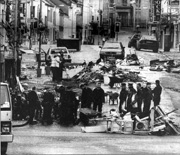
Omagh felt the sharp end of IRA splinters on Saturday. Security Correspondent CHRIS THORNTON traces how the fracturing of Northern Ireland's oldest terrorist group led to its worst massacre
THERE'S nothing quite like a funeral to stir republican passions, and it was over the coffin of Ronan MacLochlainn that the dissident republican alliance which aims to replace the Provisional IRA at the forefront of the so-called 'armed struggle' was probably cemented.
MacLochlainn (27), a Belfast-born father of three, had come to live in Dublin as a toddler, when his mother, Roisin, went over the border to escape questioning by the RUC about the IRA murders of three soldiers in 1973.
He had died near Dublin as well, shot dead by Garda officers on May 1 this year as he joined the attempted robbery of a security van in Co Wicklow.
MacLochlainn was killed in what was a fundraising attempt by former Provisional IRA members who set themselves up in opposition to the peace process, and his funeral - watched closely by Garda Special Branch officers - brought together all strands of republicans who opposed the peace process.
The list of mourners who filed past his coffin read like a Who's Who of republican dissidents. Bernadette Sands, whose republican credentials were enshrined by the hunger strike death of her brother Bobby, was there with her partner, Dundalk man Mickey McKevitt.
She was joined by others, like herself, linked to the anti-Agreement 32 County Sovereignty Committee, including ousted Sinn Fein member Francie Mackey. Republican Sinn Fein President Ruairi O'Bradaigh paid his respects as well.
The mourners also included the hard men: leading figures in the so-called Real IRA - the group to which MacLochlainn belonged - senior members of the Continuity IRA, and leaders of the INLA.
Such a gathering was significant because, in the view of some mainstream republicans, it had been beyond possibility. All the dissidents had in common their opposition to the IRA ceasefire and Sinn Fein's entry into talks, but they also had long opposed each other.
"Every one of these groups thinks they have the republican Holy Grail," explained one Provisional, "and every one of them thinks no one else can have it."
But something changed around the time Ronan MacLochlainn was buried, if not actually at his funeral itself. The dissidents rallied around the latest to offer himself as a blood sacrifice for Ireland.
Francie Mackey gave the graveside oration, and praised MacLochlainn for remaining true to the republican cause. Others like him, he said, had a duty to do "whatever is necessary" to prevent the dilution of Irish sovereignty.
As the IRA ceasefire became more stabilised following its renewal last year, it was accepted among the security forces, and even many republicans, that the Provisionals would eventually split; most members supported the "peace strategy" to varying degrees, but there was a hardcore who could never come to terms with the absence of violence.
The first signs that there was a new armed campaign with any vigour emerged late in 1996 and sporadically through 1997 with a series of relatively small bomb attacks in Belfast and along the western border.
The group behind the attacks was the Continuity IRA, a group which had split from the Provisionals in 1986 in a row over republican principles. The group includes a number of experienced terrorists but had remained largely inactive while the Provisionals' campaign operated.
But even as the Continuity IRA became in the public mind the chief architects of republican violence, security force intelligence analysts were telling RUC Chief Constable Ronnie Flanagan and Garda Commissioner Pat Byrne that a greater danger was building.
Their suspicions had been sparked by a car bomb which exploded in Markethill, Co Armagh, on September 16, 1997, at a moment of extreme political sensitivity: just as the Ulster Unionist Party was about to sit down in the same talks process as Sinn Fein.
Unlike most Continuity IRA bombs, the Markethill device contained fairly sophisticated bomb components and a Semtex primer. It was apparent that either the Provisional IRA was engaging in back door attacks or some of its members were prepared to work independently.
The expected split came in November at a crucial IRA summit meeting in Gweedore, Co Dongegal. The bulk of the IRA leadership voted to continue their ceasefire and support Sinn Fein's involvement in the talks, and those who opposed the decision walked out.
The defectors were a minority, but reflected a significant body of terrorist experience. They include the quartermaster general, who had been in charge of all weapons; a woman who was a member of the IRA executive, one of its senior ruling bodies; and at least one senior bombmaker.
The chief of staff - effectively the IRA's most senior commander - also left, but he is not believed to have become deeply involved with the other dissidents.
Their departure and the subsequent formation of the group called the Real IRA coincided with the emergence of the 32 County Sovereignty Committee, now known as the 32 County Sovereignty Movement.
That group denies any connection with the Real IRA, although several of the original committee members have been arrested in connection with explosives finds. They have also denied any link to the Omagh bomb, but RUC Chief Constable Ronnie Flanagan said within hours of the massacre that the police investigation was focusing on people associated with the 32 County Sovereignty Committee.
Security analysts believed - and have now been proven correct - that the defecting Provisionals formed the most significant dissident threat. They are skilled bombmakers - reported recently to have developed a new detonator operated by mobile phone - and have attempted to use
deadly barrack Duster mortars.
As yet, they do not have the resources to mount a sustained campaign of violence. But gardai believe they have been recruiting effectively in the Republic, and have the means to meet their short term objective: bringing down the Good Friday Agreement and dragging the main body of the IRA back to war.
The Real IRA has exhibited little interest in dallying in politics, but at the same time they have shown acute political awareness. As the build-up to the Good Friday Agreement intensified earlier this year, they repeatedly under-mined sensitive moments in the peace process with bomb attacks.
Then they went quiet. After the Agreement was reached, intense Garda surveillance intercepted a number of attacks aimed at wrecking the referendum.
Practically every effort to attack Northern Ireland was thwarted, along with bids to bomb England and the raid in which Ronan MacLochlainn died.
"Of course, we're delighted," said a Garda source back in June. "But we're not going to say so publicly sooner or later, they could get through."
Two months ago, the Real IRA was a terrorist group that could build powerful bombs but could not plant them. Through some form of intelligence - a high level informer, smart surveillance, or both -- their attacks were being stopped.
But the coming together of the republican groups that shared Ronan MacLochlainn's graveside appeared to herald a change in tactics: co-operation.
Then on June 24, the day obefore elections to the new Assembly, an explosion wrecked the centre of Newtownhamilton, Co Armagh. The bomb had all the hallmarks of having been made by the Real IRA, but there was one curious aspect to the attack: it was claimed by the INLA, a group which had never before built a large car bomb.
The fears of co-operation appeared to have become a reality. A further attack in Banbridge, Co Down, seemed to confirm that the combined efforts had found a way to get bombs through.
Over the past two weeks, security force intelligence indicated that this new republican alliance would try again. Security gates were closed and checkpoints mounted in a number of areas along the border in an attempt to intercept the bomb.
It would appear that the bombers, thwarted in a number of other areas, moved further away from the border until they reached Omagh. There is reason to believe that 'Continuity IRA members may have co-operated on the attack, since the town sits in that group's area of operations.
The attack on a town with a significant nationalist �population - even a Sinn Fein mayor - may yet back-fire.
Omagh is on the doorstep of the IRA's Tyrone Brigade, often bitterly hardline republicans who have - some believed against the odds - remained largely loyal to the Provisional leadership in the choice of politics over the gun.
This could upset a delicate republican balance. As the dissidents became more open, it was reported that some senior Provisionals favoured violent action to stop their defiance.
But it was clear to most analysts that they could not strike against them: the IRA could never be seen to "do the Brits work for them", and such attacks could deepen unease among loyal Provisionals while creating sympathy for the dissidents. Omagh, however, may have blown those barriers away.
Omagh felt the sharp end of IRA splinters on Saturday. Security Correspondent CHRIS THORNTON traces how the fracturing of Northern Ireland's oldest terrorist group led to its worst massacre
THERE'S nothing quite like a funeral to stir republican passions, and it was over the coffin of Ronan MacLochlainn that the dissident republican alliance which aims to replace the Provisional IRA at the forefront of the so-called 'armed struggle' was probably cemented.
MacLochlainn (27), a Belfast-born father of three, had come to live in Dublin as a toddler, when his mother, Roisin, went over the border to escape questioning by the RUC about the IRA murders of three soldiers in 1973.
He had died near Dublin as well, shot dead by Garda officers on May 1 this year as he joined the attempted robbery of a security van in Co Wicklow.
MacLochlainn was killed in what was a fundraising attempt by former Provisional IRA members who set themselves up in opposition to the peace process, and his funeral - watched closely by Garda Special Branch officers - brought together all strands of republicans who opposed the peace process.
The list of mourners who filed past his coffin read like a Who's Who of republican dissidents. Bernadette Sands, whose republican credentials were enshrined by the hunger strike death of her brother Bobby, was there with her partner, Dundalk man Mickey McKevitt.
She was joined by others, like herself, linked to the anti-Agreement 32 County Sovereignty Committee, including ousted Sinn Fein member Francie Mackey. Republican Sinn Fein President Ruairi O'Bradaigh paid his respects as well.
The mourners also included the hard men: leading figures in the so-called Real IRA - the group to which MacLochlainn belonged - senior members of the Continuity IRA, and leaders of the INLA.
Such a gathering was significant because, in the view of some mainstream republicans, it had been beyond possibility. All the dissidents had in common their opposition to the IRA ceasefire and Sinn Fein's entry into talks, but they also had long opposed each other.
"Every one of these groups thinks they have the republican Holy Grail," explained one Provisional, "and every one of them thinks no one else can have it."
But something changed around the time Ronan MacLochlainn was buried, if not actually at his funeral itself. The dissidents rallied around the latest to offer himself as a blood sacrifice for Ireland.
Francie Mackey gave the graveside oration, and praised MacLochlainn for remaining true to the republican cause. Others like him, he said, had a duty to do "whatever is necessary" to prevent the dilution of Irish sovereignty.
As the IRA ceasefire became more stabilised following its renewal last year, it was accepted among the security forces, and even many republicans, that the Provisionals would eventually split; most members supported the "peace strategy" to varying degrees, but there was a hardcore who could never come to terms with the absence of violence.
The first signs that there was a new armed campaign with any vigour emerged late in 1996 and sporadically through 1997 with a series of relatively small bomb attacks in Belfast and along the western border.
The group behind the attacks was the Continuity IRA, a group which had split from the Provisionals in 1986 in a row over republican principles. The group includes a number of experienced terrorists but had remained largely inactive while the Provisionals' campaign operated.
But even as the Continuity IRA became in the public mind the chief architects of republican violence, security force intelligence analysts were telling RUC Chief Constable Ronnie Flanagan and Garda Commissioner Pat Byrne that a greater danger was building.
Their suspicions had been sparked by a car bomb which exploded in Markethill, Co Armagh, on September 16, 1997, at a moment of extreme political sensitivity: just as the Ulster Unionist Party was about to sit down in the same talks process as Sinn Fein.
Unlike most Continuity IRA bombs, the Markethill device contained fairly sophisticated bomb components and a Semtex primer. It was apparent that either the Provisional IRA was engaging in back door attacks or some of its members were prepared to work independently.
The expected split came in November at a crucial IRA summit meeting in Gweedore, Co Dongegal. The bulk of the IRA leadership voted to continue their ceasefire and support Sinn Fein's involvement in the talks, and those who opposed the decision walked out.
The defectors were a minority, but reflected a significant body of terrorist experience. They include the quartermaster general, who had been in charge of all weapons; a woman who was a member of the IRA executive, one of its senior ruling bodies; and at least one senior bombmaker.
The chief of staff - effectively the IRA's most senior commander - also left, but he is not believed to have become deeply involved with the other dissidents.
Their departure and the subsequent formation of the group called the Real IRA coincided with the emergence of the 32 County Sovereignty Committee, now known as the 32 County Sovereignty Movement.
That group denies any connection with the Real IRA, although several of the original committee members have been arrested in connection with explosives finds. They have also denied any link to the Omagh bomb, but RUC Chief Constable Ronnie Flanagan said within hours of the massacre that the police investigation was focusing on people associated with the 32 County Sovereignty Committee.
Security analysts believed - and have now been proven correct - that the defecting Provisionals formed the most significant dissident threat. They are skilled bombmakers - reported recently to have developed a new detonator operated by mobile phone - and have attempted to use
deadly barrack Duster mortars.
As yet, they do not have the resources to mount a sustained campaign of violence. But gardai believe they have been recruiting effectively in the Republic, and have the means to meet their short term objective: bringing down the Good Friday Agreement and dragging the main body of the IRA back to war.
The Real IRA has exhibited little interest in dallying in politics, but at the same time they have shown acute political awareness. As the build-up to the Good Friday Agreement intensified earlier this year, they repeatedly under-mined sensitive moments in the peace process with bomb attacks.
Then they went quiet. After the Agreement was reached, intense Garda surveillance intercepted a number of attacks aimed at wrecking the referendum.
Practically every effort to attack Northern Ireland was thwarted, along with bids to bomb England and the raid in which Ronan MacLochlainn died.
"Of course, we're delighted," said a Garda source back in June. "But we're not going to say so publicly sooner or later, they could get through."
Two months ago, the Real IRA was a terrorist group that could build powerful bombs but could not plant them. Through some form of intelligence - a high level informer, smart surveillance, or both -- their attacks were being stopped.
But the coming together of the republican groups that shared Ronan MacLochlainn's graveside appeared to herald a change in tactics: co-operation.
Then on June 24, the day obefore elections to the new Assembly, an explosion wrecked the centre of Newtownhamilton, Co Armagh. The bomb had all the hallmarks of having been made by the Real IRA, but there was one curious aspect to the attack: it was claimed by the INLA, a group which had never before built a large car bomb.
The fears of co-operation appeared to have become a reality. A further attack in Banbridge, Co Down, seemed to confirm that the combined efforts had found a way to get bombs through.
Over the past two weeks, security force intelligence indicated that this new republican alliance would try again. Security gates were closed and checkpoints mounted in a number of areas along the border in an attempt to intercept the bomb.
It would appear that the bombers, thwarted in a number of other areas, moved further away from the border until they reached Omagh. There is reason to believe that 'Continuity IRA members may have co-operated on the attack, since the town sits in that group's area of operations.
The attack on a town with a significant nationalist �population - even a Sinn Fein mayor - may yet back-fire.
Omagh is on the doorstep of the IRA's Tyrone Brigade, often bitterly hardline republicans who have - some believed against the odds - remained largely loyal to the Provisional leadership in the choice of politics over the gun.
This could upset a delicate republican balance. As the dissidents became more open, it was reported that some senior Provisionals favoured violent action to stop their defiance.
But it was clear to most analysts that they could not strike against them: the IRA could never be seen to "do the Brits work for them", and such attacks could deepen unease among loyal Provisionals while creating sympathy for the dissidents. Omagh, however, may have blown those barriers away.
Further Information
Publisher: BELFAST TELEGRAPH
Ref: BT/0038
Published Date: 17-Aug-98
Related Images