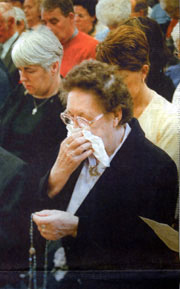
TOWN COMES OUT TO PRAY
Stunned into silence, a town comes out to pray
THERE had been little sleep in Omagh overnight and it was under grey skies that they emerged from their homes to pray together.
Ashen-faced churchgoers slowly made their way to the cluster of churches at the top end of the town from early morning yesterday.
Methodist, Church of Ireland and Catholic places of worship all stand within yards of each other on a hilltop in the town centre.
But the sense of shock was still palpable as sombre parishioners streamed into St Joseph's Hall beside the Catholic Church of the Sacred Heart.
More than 800 turned out for the usually sparsely attended early mass, still trying to take in the scale of yesterday's events.
They heard parish priest Fr Michael Keaveny announce that one of their flock had been lost in the huge bomb explosion.
Geraldine Breslin a young married woman, died in hospital early yesterday at the Royal Victoria Hospital.
Some of the congregation sat with their heads in their hands, others stared ahead vacantly.
Only one or two wept as Fr Keaveny spoke of the 'senselessness' of the massacre.
"This was no religious war," he said.
"From the point of view of the people who suffered there was no distinction, Catholic and Protestant, young and old. There was no question of wanting to get one side rather than another.
"The whole thing sounds so terrible, so stupid, so foolish, so senseless."
Small clusters of men stood outside, hands-in-pockets, murmuring among themselves, shaking their heads in disbelief.
As the churchgoers emerged, few were willing to discuss their feelings. Some said they just could not take the horror in.
One parishioner, Patrick Darcy, said: "I feel diminished as an Irishman that other Irishmen could come to this town and scatter the blood of Irish men, women and children over these streets."
He had brought his three grandchildren, Sean (9), Conor (6) and two-year-old Joe Cartan because they wanted to share their condolences with other parishioners.
It was an act of 'complete barbarism', according to Mr Darcy, but he said he hoped it would not damage the peace process.
Two elderly women choked back tears as they said they never believed they would see such horror in the town where they have lived all their lives.
"This is the worst ever in Northern Ireland," said Margaret Taggart.
"Everybody is affected, there's no one untouched by this. It's unbelievable."
Vera Turbitt said feelings were mixed between revulsion at the scale of human loss and relieffor those who had escaped injury.
Her son Damien, a hairdresser, was in his shop only yards from the spot where the bomb went off.
Damien joined his mother and described how he was at the scene of the explosion within seconds.
"It was the nearest thing to a horror movie that I've ever witnessed. Kids, blood streaming from the heads. I'll never forget it," he said.
He added he had not slept and had spent the night pacing the floor, unable to take in what had happened.
"I've been through 11 bombs but nothing like this. I'm still completely numb." he said.
THERE had been little sleep in Omagh overnight and it was under grey skies that they emerged from their homes to pray together.
Ashen-faced churchgoers slowly made their way to the cluster of churches at the top end of the town from early morning yesterday.
Methodist, Church of Ireland and Catholic places of worship all stand within yards of each other on a hilltop in the town centre.
But the sense of shock was still palpable as sombre parishioners streamed into St Joseph's Hall beside the Catholic Church of the Sacred Heart.
More than 800 turned out for the usually sparsely attended early mass, still trying to take in the scale of yesterday's events.
They heard parish priest Fr Michael Keaveny announce that one of their flock had been lost in the huge bomb explosion.
Geraldine Breslin a young married woman, died in hospital early yesterday at the Royal Victoria Hospital.
Some of the congregation sat with their heads in their hands, others stared ahead vacantly.
Only one or two wept as Fr Keaveny spoke of the 'senselessness' of the massacre.
"This was no religious war," he said.
"From the point of view of the people who suffered there was no distinction, Catholic and Protestant, young and old. There was no question of wanting to get one side rather than another.
"The whole thing sounds so terrible, so stupid, so foolish, so senseless."
Small clusters of men stood outside, hands-in-pockets, murmuring among themselves, shaking their heads in disbelief.
As the churchgoers emerged, few were willing to discuss their feelings. Some said they just could not take the horror in.
One parishioner, Patrick Darcy, said: "I feel diminished as an Irishman that other Irishmen could come to this town and scatter the blood of Irish men, women and children over these streets."
He had brought his three grandchildren, Sean (9), Conor (6) and two-year-old Joe Cartan because they wanted to share their condolences with other parishioners.
It was an act of 'complete barbarism', according to Mr Darcy, but he said he hoped it would not damage the peace process.
Two elderly women choked back tears as they said they never believed they would see such horror in the town where they have lived all their lives.
"This is the worst ever in Northern Ireland," said Margaret Taggart.
"Everybody is affected, there's no one untouched by this. It's unbelievable."
Vera Turbitt said feelings were mixed between revulsion at the scale of human loss and relieffor those who had escaped injury.
Her son Damien, a hairdresser, was in his shop only yards from the spot where the bomb went off.
Damien joined his mother and described how he was at the scene of the explosion within seconds.
"It was the nearest thing to a horror movie that I've ever witnessed. Kids, blood streaming from the heads. I'll never forget it," he said.
He added he had not slept and had spent the night pacing the floor, unable to take in what had happened.
"I've been through 11 bombs but nothing like this. I'm still completely numb." he said.
Further Information
Publisher: BELFAST TELEGRAPH
Ref: BT/0036
Published Date: 17-Aug-98
Related Images