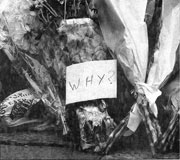
WHAT HAVE THEY DONE TO THE TOWN I KNOW SO WELL?
What have they done to the town I know so well?
As Ulster reels from the sickening horror of the bomb, native Omagh man NEIL JOHNSTON tells of his personal sadness.
SO the killers have come and inflicted savagery beyond belief on the people of sweet Omey town.
My town. My people. My God, what have they done to them? Today, as the death toll mounts, I am still finding it difficult to take in the enormity of this crime against humanity.
The sneer barbarity of it is beyond words. Whatever you say, you say nothing.
Omagh is where I grew up, went to school, entered journalism. The streets where I wandered as a boy and a teenager and a cub reporter are part of my life. Market Street, High Street, Courthouse Hill, Dublin Road.
This is the town that shaped me, where my brothers and sisters still live, and to which I love to return because there, to quote the song, everybody knows your name and they're always glad you came.
Omagh is home. And until Saturday, I never knew just how deep my love for it is. What I do know is that that love is even greater now as
Omagh grieves disbelievingly in its agony.
I would want my fellow townspeople to know that I am grieving with them, and So, I am certain, are Omagh exiles all over the world.
As I write, the names of the dead and injured are starting to come through. They are names with which I am familiar, names which are part of my past.
I have stood beside them in pubs, I have been in their shops, I have nodded to them in the same street that ran red with the blood of innocents on Saturday afternoon.
Speaking to relations and friends about what happened, I am given images of horror which I know will remain indelibly engraved on my memory for the rest of my life.
Hearing the blast, a man cycles a mile into town to find out what has happened.
He comes back an hour later, goes into the kitchen and doesn't even take a seat. He sits on the kitchen floor with his head between his hands.
He weeps. Then he tells of how he saw the bodies of women lying across children. Their instinctive reaction was to protect the young.
A doctor has spent long hours at the hospital treating the injured. When he has done all he can, he goes back to join his friends and someone buys him a brandy. He drinks it, and it is then that his tears, pent up for so long, begin to flow.
If a doctor, well used to dealing professionally, with human misery, can be so affected, what must the aftermath of the devastation be like for the people of Omagh, whether their injuries were physical or mental.
The legacy of trauma and shock, and its treat-ment, will remain for years.
Those of us watching from afar could only look on in helpless mourning at the television interviews with survivors and eye witnesses struggling to come to terms, and find words for, the sheer horror of what they had seen.
Exiles like myself can find no adequate message of comfort for the families of the victims of this foul act of wanton wickedness.
I never thought that one day I would be quoting in a profoundly sad context the words of the best known ballad about my native and beloved Omagh.
But I do so now, and they are both sincerely felt and true.
"My heart is aching for sweet Omey town."
As Ulster reels from the sickening horror of the bomb, native Omagh man NEIL JOHNSTON tells of his personal sadness.
SO the killers have come and inflicted savagery beyond belief on the people of sweet Omey town.
My town. My people. My God, what have they done to them? Today, as the death toll mounts, I am still finding it difficult to take in the enormity of this crime against humanity.
The sneer barbarity of it is beyond words. Whatever you say, you say nothing.
Omagh is where I grew up, went to school, entered journalism. The streets where I wandered as a boy and a teenager and a cub reporter are part of my life. Market Street, High Street, Courthouse Hill, Dublin Road.
This is the town that shaped me, where my brothers and sisters still live, and to which I love to return because there, to quote the song, everybody knows your name and they're always glad you came.
Omagh is home. And until Saturday, I never knew just how deep my love for it is. What I do know is that that love is even greater now as
Omagh grieves disbelievingly in its agony.
I would want my fellow townspeople to know that I am grieving with them, and So, I am certain, are Omagh exiles all over the world.
As I write, the names of the dead and injured are starting to come through. They are names with which I am familiar, names which are part of my past.
I have stood beside them in pubs, I have been in their shops, I have nodded to them in the same street that ran red with the blood of innocents on Saturday afternoon.
Speaking to relations and friends about what happened, I am given images of horror which I know will remain indelibly engraved on my memory for the rest of my life.
Hearing the blast, a man cycles a mile into town to find out what has happened.
He comes back an hour later, goes into the kitchen and doesn't even take a seat. He sits on the kitchen floor with his head between his hands.
He weeps. Then he tells of how he saw the bodies of women lying across children. Their instinctive reaction was to protect the young.
A doctor has spent long hours at the hospital treating the injured. When he has done all he can, he goes back to join his friends and someone buys him a brandy. He drinks it, and it is then that his tears, pent up for so long, begin to flow.
If a doctor, well used to dealing professionally, with human misery, can be so affected, what must the aftermath of the devastation be like for the people of Omagh, whether their injuries were physical or mental.
The legacy of trauma and shock, and its treat-ment, will remain for years.
Those of us watching from afar could only look on in helpless mourning at the television interviews with survivors and eye witnesses struggling to come to terms, and find words for, the sheer horror of what they had seen.
Exiles like myself can find no adequate message of comfort for the families of the victims of this foul act of wanton wickedness.
I never thought that one day I would be quoting in a profoundly sad context the words of the best known ballad about my native and beloved Omagh.
But I do so now, and they are both sincerely felt and true.
"My heart is aching for sweet Omey town."
Further Information
Publisher: BELFAST TELEGRAPH
Ref: BT/0018
Published Date: 17-Aug-98
Related Images