THE SLAUGHTER: WAS IT DELIBERATE?
THE SLAUGHTER: WAS IT DELIBERATE?
Had the killers planned a mass slaughter of innocent people, or did they botch their warning?
Security Correspondent Chris Thornton reports.
IT was, according to one witness, like cattle going to slaughter.
What warning the victims had, had driven many of them from a place of actual safety to seek refuge in the most dangerous place of all.
The bombers had specified, in two coded warnings to UTV's newsroom, that a 5001b device had been left outside Omagh's court-house.
In the next 40 minutes, the security forces cleared the area around the courthouse, and began checking cars to see if they were stolen, or carried false number plates.
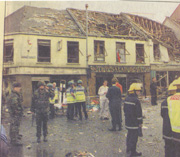
The cordon they threw up made it inevitable that 400 yards away, the junction of Market Street and the Dublin Road - already filled with shoppers - was crowded.
The clinical detail about the way explosions happen meant that when the bomb went off there, the force was contained by the high buildings along the street. It made the impact on the vulnerable flesh in between all the worse.
The human detail, the effects of that instant of explosion, is more difficult to comprehend.
What is not difficult to imagine is the period up to the point of explosion. Despite the alert up the street, it was an ordinary shopping Saturday in Omagh. Mothers pushed prams in and out of shops. Teenagers stood on the corner and chatted. People sipped tea, watching the world bustle along the street.
And someone parked a maroon Vauxhall Cavalier on the street, turned his back on the destruction to come, and walked away.
It will matter little to the dead, but the question was inevitable in the aftermath: did the bombers set out to commit the massacre, or did they botch their warning?
Before Omagh, the republican dissidents called the Real IRA had not claimed a single life in the ten months they have spent setting off mortars and bombs.
Clearly the had attempted to kill members of the Security forces before, and were reckless about the danger to civilians, but Saturday's attack was a savage escalation in their campaign.
There is some question over why the bombers would issue any warning, if they intended to kill civilians. A no-warning bomb would have been just as deadly.
But if the massacre was deliberate, the wrong warnings may have been an attempt to kill security forces, by putting the bomb at their expected cordon.
Or, at the most vicious level, the warnings may have been a particularly awful death trap, designed to bring as many civilians as possible to the area close to the bomb. The attackers would have known that in Omagh, many nationalists would be among the dead.
If the attack was a bungled attempt to repeat the series of town centre bombings, it shows incredible incompetence among people who are supposed to be experienced terrorists.
Under such circumstances, the warning given was horribly inaccurate, or the terrorists who planted the bomb, left it in the wrong place.
But if they had intended to blow up the courthouse, experienced bombers would have reserved a parking space for the car carrying the bomb, by leaving an advance car.
In a pre-arranged move, the advance car would have driven off, leaving the space open as the bomb car arrived.
The RUC clearly believes the attack was intentional. Chief Constable Ronnie Flanagan said he "can only conclude that the misleading nature of that warning was quite deliberate."
Mr Flanagan said he believed the bombers orchestrated the carnage.
"I can only conclude that what was on the minds of those who planted this device was the bloody murder that they perpetrated."
Had the killers planned a mass slaughter of innocent people, or did they botch their warning?
Security Correspondent Chris Thornton reports.
IT was, according to one witness, like cattle going to slaughter.
What warning the victims had, had driven many of them from a place of actual safety to seek refuge in the most dangerous place of all.
The bombers had specified, in two coded warnings to UTV's newsroom, that a 5001b device had been left outside Omagh's court-house.
In the next 40 minutes, the security forces cleared the area around the courthouse, and began checking cars to see if they were stolen, or carried false number plates.
The cordon they threw up made it inevitable that 400 yards away, the junction of Market Street and the Dublin Road - already filled with shoppers - was crowded.
The clinical detail about the way explosions happen meant that when the bomb went off there, the force was contained by the high buildings along the street. It made the impact on the vulnerable flesh in between all the worse.
The human detail, the effects of that instant of explosion, is more difficult to comprehend.
What is not difficult to imagine is the period up to the point of explosion. Despite the alert up the street, it was an ordinary shopping Saturday in Omagh. Mothers pushed prams in and out of shops. Teenagers stood on the corner and chatted. People sipped tea, watching the world bustle along the street.
And someone parked a maroon Vauxhall Cavalier on the street, turned his back on the destruction to come, and walked away.
It will matter little to the dead, but the question was inevitable in the aftermath: did the bombers set out to commit the massacre, or did they botch their warning?
Before Omagh, the republican dissidents called the Real IRA had not claimed a single life in the ten months they have spent setting off mortars and bombs.
Clearly the had attempted to kill members of the Security forces before, and were reckless about the danger to civilians, but Saturday's attack was a savage escalation in their campaign.
There is some question over why the bombers would issue any warning, if they intended to kill civilians. A no-warning bomb would have been just as deadly.
But if the massacre was deliberate, the wrong warnings may have been an attempt to kill security forces, by putting the bomb at their expected cordon.
Or, at the most vicious level, the warnings may have been a particularly awful death trap, designed to bring as many civilians as possible to the area close to the bomb. The attackers would have known that in Omagh, many nationalists would be among the dead.
If the attack was a bungled attempt to repeat the series of town centre bombings, it shows incredible incompetence among people who are supposed to be experienced terrorists.
Under such circumstances, the warning given was horribly inaccurate, or the terrorists who planted the bomb, left it in the wrong place.
But if they had intended to blow up the courthouse, experienced bombers would have reserved a parking space for the car carrying the bomb, by leaving an advance car.
In a pre-arranged move, the advance car would have driven off, leaving the space open as the bomb car arrived.
The RUC clearly believes the attack was intentional. Chief Constable Ronnie Flanagan said he "can only conclude that the misleading nature of that warning was quite deliberate."
Mr Flanagan said he believed the bombers orchestrated the carnage.
"I can only conclude that what was on the minds of those who planted this device was the bloody murder that they perpetrated."
Further Information
Publisher: BELFAST TELEGRAPH
Ref: BT/0006
Published Date: 17-Aug-98
Related Images